Friday, February 12, 2016

Ash Wednesday Yr C Feb 10 2016

Today we begin our journey, pitch our tent, quiet our spirits, listen. We begin by remembering. We remember who we are and whose we are. We remember that we are marked as Christ's own forever at baptism, and that same marking, that same cross, is retraced on our foreheads this day with ashes. Remember that you are dust, and to dust you shall return. 

Why do we do this Ash Wednesday, Lent, Holy Week thing year after year?Why isn't just once enough? We do it again because we so quickly forget. We forget who we are and to whom we belong. We forget that we are created in God's image. 

We forget that we are born to die, that we are all in this together. We don't often talk about death in polite company, this day we look at death and say, I belong to Jesus,death does not win, love wins. On this day we embrace our mortality and remember that the God who creates us, the God who yearn for relationship, calls us to Godself at the end of our time on this earth, ashes to ashes, dust to dust. 

On this day birth and baptism, dying and death, come together in one brief moment of messiness and humanness, and we are marked with the sign of the cross, the sign that we do not belong to ourselves but that we belong to God.

We forget that we are loved abundantly, we forget that we are the delight of God's life. And as we forget, we have a tendency to place ourselves front and center, and we forget that God is God and we are not. And to help you remember, take one of those rocks you saw when you came in, take it and put it in your pocket or your purse, and carry it with you all through Lent, carry it with you and remember who and whose you are.

This season of Lent beginning with Ash Wednesday is brilliant really. In it we have the opportunity to do nothing. That's really all we have to do. We are invited to spend some time in the quiet each day, and do nothing. No one, not even you, can reproach you for it, because you can just say to them or to yourself that that's what you're doing for Lent. Go ahead, give it a try. Spend 10 minutes each day, sitting in your chair, sitting in the quiet. You may even have more than 10 minutes, but start there. 

Some of you may say to me or to yourselves, I can't do that, I'm too busy, I've got kids, I'll do something else for Lent, like give up gum, or candy, or chocolate, do that too, but also give 10 minutes to the quiet, and see what happens. Pitch your tent, make camp, give it 10 minutes a day.

God is already calling us into relationship, sometimes we need to make room. God shows up, all the time, we though are often just too busy, or too loud, to notice. 

It may take a while, it may take the whole 40 days, but you may make room for remembering who you are. You may make room for remembering that you belong to God, that you have been marked as Christ's own forever. As that reality dawns on you, as the reality of God's amazing and abundant love takes hold in you, as you remember that Love wins, you may feel compelled to respond. You may feel the need to ask for forgiveness, for that which you have done or left undone. You may feel the need to forgive someone in your life. You may need to lay down that which is killing you. You may feel the need to serve, or to give. You may feel the need to give something up, put something aside. Because sometimes, we need to clear our hearts so that we can make space for God.

On the other hand, you may be in a place where you feel bereft. Feeling God's love is just not where you're at. Relinquish control, let go, trust yourself to be a part of something beyond yourself. Open up the quiet space, be connected to the community of faith, into your hands oh Lord, I commend my spirit. 

Lent isn't just the lead up to the party at Easter. It's actually much more like life itself. We get cleaned up, all ready to go, and the next thing you know we fall back into the mud. Life is Hard, it's messy, just like these ashes, this smudge reminds us of who we are and whose we are, loved, imperfect, forgiven. Everyone one of us the same before God, ashes to ashes, dust to dust. There is no getting out of it, there are no distinctions.

I invite you now to consider this journey of Lent. I invite you to consider embracing the quiet. I invite you to think about that which you need to set aside so that you may enter a Holy Lent. 

Saturday, February 6, 2016

Last Epiphany Yr C Feb 7 2016


Last Epiphany Yr C Feb 7 2016 Audio

Then from the cloud came a voice that said, "This is my Son, my Chosen; listen to him!" This is my Son, my Chosen; listen to him. At the very beginning of these Sundays after Epiphany we heard the same voice at Jesus' baptism say "you are my Son, the Beloved; with you I am well pleased." In that story John the baptizer was there to show how important that event was, and in this story Moses and Elijah show up to let us know that this event is really important, and Peter and James and John are there to witness this transfiguration. The stories we have been hearing these 
Sundays have been showing us who Jesus is. Jesus, the carpenter's son, Jesus, the boy who reads from the scroll in the synagogue, Jesus, the one who would be hurled off the cliff, Jesus, the beloved, listen to him. 

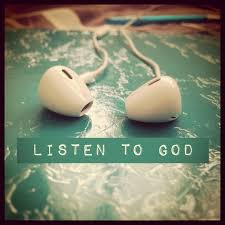
In the midst of the cacophony that surrounds us, in our work, in our school, as we play, in our homes, at our tables, we are to listen. Can we even do that, can we even listen to Jesus? Where do we listen? How do we listen When do we listen? It seems like a fairly small ask, listen to him, and yet we do everything we can to not listen. We fill our spaces with sound and noise and motion. We fill our days with stuff to do, errands to run, accomplishments to fulfill. That is what our lives are made of. We wear our earbuds, we listen to our Pandora stations, we are inundated with sound. 
I don't think that is necessarily bad, but I do think we don't really know what to do with quiet and silence. I also don't think that it is only in silence that we can hear God. God will have us listen, and sometimes God knocks us around so that we do. But I do think our spirits' yearn for quiet.  

Maybe, as we begin our shift from the glory of Epiphany through this moment of transfiguration that transforms time, to the journey of Lent, we may choose to find some time to listen.

We may listen to stories of Jesus. The gospel readings we will hear are not stories about sweet, gentle Jesus, but about strong, brave Jesus who calls us to be like him. Jesus is tempted by the devil in the wilderness, Jesus tells the truth about Herod's depravity and Pilate's oppression, Jesus shows us what real love looks like, and that Love always wins. 
Last week I told you that this life is about flying boldly and courageously, these stories of Jesus show us what that looks like. Read the stories, tell the stories, know the stories of Jesus. During Lent this year you might find a way to listen to the stories of Jesus each day.

We may listen to God in prayer. Prayer is really about listening to God. It is good to thank God, and ask God, and bless God and bless people and things. But really, prayer is about listening. Prayer is about carving out some time to intentionally listen to God's movement in our lives. My personal mantra is, "more quiet, less words." But, my favorite author, Madeleine L'engle, says it much more beautifully in her poem "Word". I'll read it for you.

I, who live by words, am wordless 
when I try my words in prayer. 
All language turns to silence. 
Prayer will take my words 
and then reveal their emptiness. 
The stilled voice learns to hold its peace, 
to listen with the heart
to silence that is joy, is adoration.
The self is shattered, 
all words torn apart
In this strange patterned time of contemplation
That, in time, breaks time, breaks words, breaks me,
And then, in silence, leaves me healed and mended.
I leave, returned to language, 
for I see
through words, even when all words are ended.
I, who live by words, 
am wordless when I turn to the Word to pray. Amen.
(quoted in Praying Our Days: 
A Guide and Companion by Bishop Frank T. Griswold)

I do encourage you to find the time to pray, to sit in silence, and to listen. Now, when I was a younger mother, and exhausted most of the time, I would try to sit still for a while, and listen in prayer. I would inevitably dose off. And I believe in a God who believes in me, and I believe there is a time and a season for everything, that was my season for dosing off prayer, this is my season for attentive silence. You need to find your own kind of silence. And if you need words, there are plenty in your prayer book, use them. Those of you with young children at home might consider praying the Lord’s Prayer together each day especially during Lent. Maybe before or after meals, at bedtime, even in the car (if that is when you have quality time together).

We may listen to God in other people around us and around the world. Jesus listened and responded to the people around him and calls us to listen to the people around us and those all around the world who need us to hear them. What do we hear from people around us and around the world, that transforms us? How do we listen to the needs of others 
and respond in ways that truly help? Sometimes when we listen to the needs of others, our own world is disrupted, we are transformed in the listening. Listening, deeply listening to others, changes us. Another of my favorite authors, C. S. Lewis writes, "I pray because I can't help myself. I pray because I'm helpless. I pray because the need flows out of me all the time, waking and sleeping. It doesn't change God, it changes me." 

As you listen to God, You may want to respond to God's voice, God's love. How may you do that? What might you do? What will your Lenten discipline be? I know that the older children in Sunday school will be talking about collecting their coins and where they want to give them. Maybe we can follow their lead and give, there is so much need right here in our community, and there is need around the world. Episcopal Relief and Development is a project that you might think about.

Listen to God, listen whether you can hear or not, God will show up. 

Saturday, January 30, 2016

4 Epiphany Yr C Jan 31 2016


4 Epiphany Yr C Jan 31 2016 Audio

On a Saturday afternoon, when I was in elementary school, all of us would load up the yellow school buses, our moms and maybe our dads, and all the kids, would head downtown Minneapolis for the Shrine Circus. What an adventure, people squished together to get in, people squished together in their seats. The smell of cotton candy wafting through the air, hot dogs, and cracker jacks. All of those light up whirring toys tempting us, calling to us, and our moms saying no. At least my mom saying no. But it's the trapeze that I am imagining today. The men and women climbing all the way to the top of the big top, swinging the swings back and forth. One person on each swing, swinging back and forth. And then the flyer, hands clasped to the swinger, swings back and forth, until it's time to let go and fly. That's it, right there, flying through the air, exhilarating and frightening all at the same time. 

That's the place Jesus puts us. That's where this story puts us. It continues the story we began to hear last week, Jesus takes up the scroll in his neighborhood synagogue, the place he grew up, the place he crawled around on the floor as a kid, the place he played with his friends, the place he learned to read. His friends and his parent's friends in the synagogue were thinking, this is Joseph's son, isn't he a nice boy. And he knows his Bible so well. 

And then as Jesus is reading from the prophet Isaiah, he claims that he himself is in the line of the prophets. He is a prophet like Elija and Elisha. And just like that the story takes a dramatic shift. The story had always been told about events in the future, the messiah will come, the messiah will be a political event, and all of a sudden the tense changes from Messiah's fulfillment in the future, to now, this is happening now. It gets really tense. And it surely doesn't look anything like any of them had imagined. 

And that's where we are, like the trapeze flyer, we have left one swing behind, and have not yet grasped the other one. We live in this place of exhilaration and fright all at one time. We live in this presence that Jesus gives us. The past has been, the future is yet, and Jesus pulls us squarely into the present, and claims that God's love and grace are available to you right here and right now. Not only is it available to you, it is available to everyone, God's love knows no bounds.

And the reading from first Corinthians shows us what we are doing while we are flying. We are loving. And if we are not loving, we are falling. 

The good news though, might actually be about the net, the net that is always there under those flyers. Now, you may think the net is there to catch you when you miss the connection, and that is helpful. But I would suggest it's even more than that. I suggest the net is there to make us bold and courageous. Without the net we tend to be timid, and you can't be timid and fly, the net helps us to love boldly and courageously. The net helps us to let go and live the life of love that Jesus invites us to live, not in the past, not in the future, but right now. 

Love is patient and kind, love is not envious or boastful or arrogant or rude. Love does not rejoice in wrongdoing but in the truth. Love bears all things, believes all things, hopes all things, endures all things, Love wins. 

And the net reminds us there is a cost to flying, there is a cost to following Jesus. Because the Word of God is for all people including the poor and the oppressed, the outcast and the sinner, those we love and those we hate, you and me, the Word of God threatened and continues to threaten those who are in positions of power. Jesus tells stories that show God’s grace, available to all, not to just some. Like rain, God's grace falls touching all – Gentiles as well as Jews, insiders as well as outsiders. To speak and act in God’s name sets one apart, and sets one up for ridicule, sets one up to be thrown over the cliff.

And the net also reminds us that forgiveness is about living boldly and courageously. Loving, loving as first Corinthians encourages us to love, does not mean that we get it perfect or even right. But not loving, not even trying, is to not even live at all. We may miss our mark, but you can't miss if you don't fly, you can't miss if you don't Love. The net reminds us that when we miss, God's forgiveness and grace is there to catch us. 

When they realized what Jesus was saying, they got angry, is this not just Joseph's son? Who does he think he is? They led him to the cliff so that they could hurl him off. Now, in the movies what would be really exciting is the hero hurled off the cliff, and somehow he flies, or is rescued with a lot of special effects. But Jesus doesn't get rescued in a dramatic sort of way, instead, he passes through the midst of them and goes on his way. And that too is bold and courageous.

Jesus is in our midst, Jesus is fully and completely present with us. Jesus didn't get somehow whisked off the cliff, and Jesus doesn't get whisked off the cross. That's not the way the story goes. After some pain and suffering, Jesus dies on the cross. Pain and suffering are a part of living and loving. The new life that is offered goes through the cross, not around it, and Jesus is not magically whisked off of it or out of it. 

Nor are we. We might fall or fail when we are living and loving boldly and courageously, and as we hit the net there's nothing that guarantees that we don't get hurt, it may even kill us. But that's not the end of the story, because you and I know that Love wins.

The claim that Jesus makes, that God's kingdom is fulfilled in the present, in our presence, is transformational. We are partners with Jesus in kingdom building, and we have our roadmap in Corinthians, "And now faith, hope, and love abide, these three; and the greatest of these is love." And as partners with Jesus we love boldly and courageously. We remember that love is not a way we feel, but that love is what we do. It seems to me, in these days, loving boldly and courageously is hard work. But we've already acknowledged there's no guarantee for easy. This call is to live and do mercy, compassion, and justice. There is so much injustice happening in the world around us. God's love calls us to do it differently. And God's love helps us to fly. Let's fly together. Amen. 

Saturday, January 16, 2016

2 Epiphany Yr C Jan 17 2016


2 Epiphany Yr C Jan 17 2016 Audio

When we listened to the first verses of the gospel of John just a couple weeks back, we were reminded that the gospel writer very explicitly patterned the beginning of his story after the very beginning of the story in Genesis. The first verses of John are "In the beginning was the Word, and the Word was with God, and the Word was God. He was in the beginning with God. All things came into being through him, and without him not one thing came into being. What has come into being in him was life, and the life was the light of all people. The light shines in the darkness, and the darkness did not overcome it." And the first words of Genesis are "In the beginning when God created the heavens and the earth, the earth was a formless void and darkness covered the face of the deep, while a wind from God swept over the face of the waters. Then God said, ‘Let there be light’; and there was light. And God saw that the light was good."

The gospel writer is very intentionally setting the stage to say something about God, and the story we have before us today does just that. God, who is creator of all that is, seen and unseen, and who calls the creation good, God, who calls the Word into being, is the same God who is the God of abundance. 

On the third day of this wedding that Jesus, his mother, and all his friends were attending, the wine ran out. Probably just poor planning on the part of the host, most wedding celebrations lasted a week. Jesus' mother seems to be in a position that she knows right away the wine was gone, maybe it was the wedding of a relative or close friend and she was helping out with the arrangements. Mary believes that Jesus can do something about that, and said to the servants, "Do whatever he tells you." Standing right there were six stone jars that held the water for washing feet and other ceremonial washings, Jesus had them filled to the brim. Each of those stone jars probably held between 20 and 30 gallons of water, for a total of about 150 gallons. That's enough water to fill a very large bath tub, or the trough that will water your horses for a few days, it's a lot of water.

When the steward tasted the water that had become wine, he was astonished that the bridegroom had saved the good wine until now, the third day. An abundance of good wine for the celebration. An abundance of good wine flowing out and over the celebration.

John presents us with story after story that show forth God's presence, some people even call them miracles. Each story points to God's presence with creation, God's presence in humanity, God's presence in and through and among us. God's presence as the Love that you and I know wins. But you and I also know the whole story, and we know it does not go well all the time. We know that creation turns away from God, that's why John the Baptist continually calls us to repent, to turn our hearts and minds and souls back to God. We know that Jesus' journey brings us to the sadness and suffering of the cross. We know that to be the story of our lives as well. Each one of us experiences the sadness and suffering of living and dying. But we also know that that is not the end of the story. Each story in the gospel of John brings us closer to Jesus' death, each story brings us closer to the grief of the death of a child. Because it is, you see, the death of a child. Mary empowers her son in this story, and grieves at the death of her son on the cross. 

And I believe God grieves as well. I believe the death of Jesus breaks God's heart, and I believe the death of each of God's children breaks God's heart.

Sometimes I think we wish for magic instead of hope for miracles, we wish for resuscitation instead of resurrection. And yet in this time when we want to fight violence with more guns, we forget about God's tears. In this time when we want to sling accusations instead of offer compassion, we forget about God's tears. In this time when we want to acquire and to consume to the detriment of this rock we live on, we forget about God's tears.
As I reflected again on this story of the water turned to wine, it occurred to me that the water in these jugs is God's tears. The abundance of God's tears is matched only by the abundance of God's love. God's tears flow as freely as the wine. 

Many in our communities and maybe in our families, wonder about where God is. Where is God when children are killed? Where is God in tragedy? Where is God when people mistreat others because of race, or gender, or sexuality? People assume God is absent from school, or work, or play, but they are wrong. You see, that is the miracle of incarnation, it's not magic. That is the miracle of God's tears made into wine, it's not magic. It is God with us. God whose son hung on a cross. God whose heart breaks. God whose tears heal. God's abundance flowing freely into life.  

Love wins. Love is worth it, even in grief God's love splashes into everything else. We want the messiah who rescues us and those we love from death, we want magic. But what we get is a God who has gone into grief deeper than most of us, and who walks with us in the midst of the mess and pain of this life. The God who makes this life new and worth living.

In the midst of God's abundant love we respond. We respond by working to change unjust systems. We respond by loving even when we see those who hate. We respond to violence with peace. We respond to tragedy with compassion. We respond to hopelessness with hope. We shine the light in dark places. We offer love over hate, freedom over oppression. 

Our country celebrates Martin Luther King Jr. tomorrow. Our church prays this collect, Almighty God, by the hand of Moses your servant you led your people out of slavery, and made them free at last: Grant that your Church, following the example of your prophet Martin Luther King, may resist oppression in the name of your love, and may secure for all your children the blessed liberty of the Gospel of Jesus Christ; who lives and reigns with you and the Holy Spirit, one God, now and for ever. Amen.

Our response to God's abundant love and God's tears of grief, matters. Bearing God's love and God's light into the world, matters. Walking with those who have lost hope, matters. You see, that's where miracles happen. That's where Love wins. Amen.

Saturday, January 9, 2016

Feast of the Epiphany (trans) Jan 10 2016

Feast of the Epiphany (trans) Jan 10 2016 Audio

Every good fairy tale begins with once upon a time. As the tale progresses we hear of princesses, princes, witches, fairy god-mothers, good and evil, and happily ever afters. But sometimes people mistake God's story for a fairy tale. For them God is a magician who will swoop down and rescue them from bad decisions. Or God is someone with whom a bargain can be made. God, if you get me out of this mess, then I will go to church every Sunday. This would be the transactional God. And there's the God of certainty, just like in the fairy tale, good and evil are very clear, you can tell them apart by the color they wear. And, as long as the rules are followed, as long as the other remains the other, as long as good and evil are kept separate, we will live happily ever after and all our wishes will come true.

There was a movie not long ago, Into the Woods, a fairy tale mash-up that leads the viewer on a journey through the deep, dark woods. Little Red Riding Hood, Cinderella, Jack and the Beanstalk, Rapunzel, and the Bakers, discover that the journey is not necessarily one of happily ever after, but of joy and pain and suffering. It is a fairy tale that is as much unlike a fairy tale as is our story of incarnation, love, and resurrection. The journey into the woods is fraught with tragedy and deception, broken promises and wishes come true, good that looks like evil and evil that looks like good. Family trees that are organic and families that arise from death and new birth.

Now, I love a good fairy tale, a fantasy story even better, Fairy tales and anti-fairy tales may teach us truths, and show us the precariousness of life, but the Jesus story is not a fairy tale, it is the truth. It is the Divine Love Story, in which the God of all creation shows up in human history, Emmanuel, God is with us. We are in the midst of incarnation, the baby born in a barn, born to change the world, born to bring new life, new light, new hope. The world is about to turn. And today we are invited into the woods with the magi, we are invited to this journey with Jesus, with all it's twists and turns, with all it's chaos and messiness, in danger and in light.

These magi, who show up for this birth, are there so that we may see the significance of this baby, this birth. These magi show us that there will be some time when political tyrants will be overthrown. These magi show us that brutal power exercised to control the weak and the vulnerable will be toppled. And these magi show us that those in power need be afraid, because the one who is to overthrow them is here.

The story we have before us today, this story of the wise ones from the east who follow the Light to the child born in a barn, helps us to see the cosmic importance of this birth. This birth happened in a particular place at a particular time in the context of a particular tribe, but the arrival of these wise ones from the east shows us that it wasn't just for a particular people at a particular time in a particular tribe. Matthew's intent in telling this story is to show us that this birth changes the world, the wise ones from the east know that, and they know the importance of keeping the birth from Herod, so they go home by another way.

God seems to do whatever it takes to reach out to and embrace all people. God announces the birth of the Messiah to shepherds through angels on Christmas, to Magi via a star on Epiphany, and to the political and religious authorities of God’s own people in through visitors from the East. From a manger, where a child lies wrapped in bands of cloth, God’s reach, God’s embrace in Jesus, gets bigger and bigger and bigger. Jesus eats with outcasts and sinners. Jesus touches people who are sick and people who live with pain and suffering. Jesus even calls the dead back to life. Ultimately, Jesus draws all people to himself as he is lifted up on the cross. In Jesus, no one is beyond God’s embrace.

And, maybe these magi are like Cinderella, or Jack, or Little Red Riding Hood, or the Bakers. Maybe all of them show us that incarnation, God showing up in our lives, calls us to respond to life's circumstances, the sadness and tragedy that we encounter, with the same kind of love that God has for us, God's beloved. Incarnation, God showing up, calls us to show up for others, not because we have something they do not, like power and prestige, or all the right answers, but because we are just like them, broken and flawed, hungry and tired. God, born in a barn, vulnerable and cold, calls us to show up for others because we are all alike, in need of the assurance of the absolute and abundant love that is only God's. With the magi, we carry that love into the world, not because of who we are or what we possess, but because we are loved.

Perhaps our journey is not so different from that of the magi, with their turns sometimes into safety, sometimes into precarious territory. Perhaps our journey is not so different from those who go into the woods. Sometimes we may be needing to ask for directions, sometimes divine guidance may be so obvious that we could not miss our destination. Sometimes we may be looking for those with whom to travel, those who are like us, broken and lost, needing family and friends to help us find the way.

If ever in our lives our long journeys do lead us precisely to the place we have been seeking, to the place where we see Jesus, may we like them also rejoice, becoming overwhelmed with our joy.  But always on the way, may we show forth the love that wins, may we give freely in response to that love. May we follow Jesus and show up to feed one another.

Sometimes we go into the woods and are overwhelmed by the fear, and the dark. Sometimes we read our newspapers and become overwhelmed by the brutality of our neighbors, the fear of our nations. Sometimes we get overwhelmed and exasperated by the huge need of so many in in our community, our city, our nation, our world. And in those dark places we wish it were different. But wishing only works in fairy tales. Our call is to respond to the God who shows up in our lives and in our community of faith. As we respond, as we with the magi go home by the way of love, and compassion, and mercy, we with God are capable of changing the world. That's what incarnation is. Showing up, walking the way, going into the woods, and bringing with us all that we are, all that we have, not because we have more or better, but because we are loved. Love changes us, together, we change the world.

Saturday, January 2, 2016

2 Christmas Jan 3 2016


2 Christmas Jan 3 2016 Audio

One of the funny things about our liturgical year is that it isn’t necessarily chronological. So today we find ourselves with this strange collection of readings from the prophet Jeremiah, and the teenage Jesus and his family at the Temple. Next week we go backwards in time to celebrate the feast of the Epiphany, and  the arrival of the Magi. The question I brought to these texts we have in front of us today was what does the prophet Jeremiah have to say to us, and what does Joseph, who we hear so little from or about, have to say to us today. 

First I think it is important to remember some things about prophets and prophecy. Prophets talk a lot about the future, but are not predictors of the future. Their task was not to predict the historical future. It was much later Christian tradition that made this a central feature of Old Testament prophecy.

The prophets’ primary task was to call the people as a community to accountability and responsibility in their relationship with God. The prophets were mediators of the covenantal relationship between the people of Israel and God. Prophets helped the people understand what was expected of them in that relationship. In doing so, they often interpreted history, the flow of events, in light of relationship with God. They tried to understand how God was at work in certain historical events, and how the people should respond to those events. That meant that frequently the prophets were very much concerned about the present, and how the people should live in the present as God’s people. Even when they spoke about the future, it was for the purpose of calling people to be responsible before God in the present. Specifically, Jeremiah saw the destruction of Jerusalem and the Holy Temple, and his mission was to bring courage and hope to the Israelites, and to keep them from returning to idolatry. 

How is God at work? What is God up to? How are we being called to be responsible before God today? These are questions appropriately asked as we continue to wonder about incarnation. The incarnation, God bursting into our lives as a baby, shows us that God continues to be up to something. The gospel story today is a fascinating one. It’s about the only story we get of Joseph, and of Joseph and Mary parenting Jesus. The fascinating part for me is that at the same time it is a story about Jesus teaching his elders, it’s also a story about an ordinary father and mother worried about an ordinary teenage son. How many of you have been in that place? Where is he? He’s late, and your first thought is that he’s dead in ditch somewhere. You say that to him as soon as he comes through the door in the midst of your worry and your anger, and the response is, you don’t have to worry about me, I’m just fine, all I was doing was solving the problems of the world with my friends. 

What is God up to? What is God up to in our lives? How are we being called to be responsible before God today? How does God with us, possibly assuage our worry? These are questions to be asked on the global level, as well as the personal level. I have no definitive answers, but I have spent some time wondering….

It seems to me, maybe it seems to you as well, that we are living in a time when money and wealth seem to be possessed by a few, while the rest work harder and harder and don't seem to get too far. It seems to me, if Jeremiah were observing these happenings today, he may speak to us about greed. It seems to be, maybe it seems to you as well, that we are living in a time when hatred runs rampant in our communities, our cities and our country. 

Jeremiah may remind us that these things are another manifestation of idolatry; it is greed that values money or possessions more than God. It is hatred and exclusion that allow us to keep those with whom we disagree out of our lives and make us think our way of doing and thinking is God's way.  

What happens is that we become the center of our efforts, we only please ourselves, converting ourselves into our own god. Accumulation of wealth, of things and stuff, or rightness, or exclusion, cuts us off from God and from one another. The accumulation of more moves to the center of our existence, and more is never enough. Whenever what we want to get drives our decisions and the way we treat people, we succumb to the seduction of greed, we become prisoner to the illusion that we are in control. Idolatry, no matter what it's manifestation, leads us to believe that we are god, and god is an illusion. We forget that God is God, and we are not. We forget that loss and death are a natural part of life. We forget that even what looks like death leads to new life, and following God’s way leads to new life. 

What is God up to? How are we being called to be responsible before God today? What does incarnation have to do with any of it? I return now to Joseph and Mary. The parents who just like you and me worry about their teenage son, how different are Joseph and Mary from you, or from me? Don’t we want more than anything for our children to be happy, to be safe, to be normal, to be successful, to have more than us. And yet Jesus turns out by all measurements of the world to be unhappy, surely not safe or normal, and success seems like it is not death on a Roman cross. 

The prophets call us to witness to God’s activity in our individual lives, as well as our lives as a people. Joseph and Mary call us to experience Jesus’ full humanity with all the struggles and all the pain and all the joy. And therein lies the incarnation. Our value is not based on who we are, it is not based on what we have, as individuals or as a church or even as a country. Our value is not based on being normal, or being right, or being successful. It is based on being created in the image of God, and it is based on the love of the creator who is fully human and fully divine. 

Incarnation is the reality of our creator showing us the way. Incarnation points us to the collective memory of the prophets, who call us to be responsible before God in the present, incarnation points us to the future to show us what life, death and resurrection are all about. Incarnation calls us to live in the present, where at every moment we live with the possibility that God is with us, God is in our midst. Incarnation calls us to live in relationship, relationships that show every person is created in God’s image and every person is worthy of respect and dignity. 

Alleluia! To us a child is born; come let us adore him.

Friday, December 25, 2015

Christmas 2015


Christmas 2015 Audio
There's a wonderful video wandering its way around youtube, called An Unexpected Christmas. If you haven't seen it yet, you may want to look it up. As the story is told, the little angel exclaims "that's brilliant, they won't be expecting that!" God decides it's time to send his son to help the people remember that God loves them. But how will they pay attention, seeing as how it's clear they haven't been paying much attention. God decides the way to get the people's attention is to send something so surprising, so unexpected, the people would have to take notice. That's brilliant, they won't be expecting that!
It seems to me that we've put Christmas in a nicely wrapped package with a beautiful bow, and completely lost the surprising and the unexpected. We've tried so hard to experience Christmas as a time of romance and nostalgia we've pushed the astonishment of the inconceivable incarnation under the rug. We get so absorbed in the stuff of Christmas we've lost the unreasonableness of a baby born in a barn. A baby born in poverty to parents uncertain of their own future. Parents who soon will have to flee their home to avoid persecution. A baby who would be king, born in the muck and the mud of a stable. That's brilliant, they won't be expecting that!
This story that we tell as each Christmas comes and goes, the story of the baby born in the manger, the angels singing and the shepherds coming to see him, the wise men who read the stars and recognize this world changing event. This story is not about comfort, or nostalgia or romance. It is about God who loves us absolutely and abundantly, and who wants us and all of creation to know that Love wins. It is about God who loves us absolutely and abundantly, and who wants to meet us flesh to flesh. It is about God who loves us absolutely and abundantly, and who wants us to join with Mary as she says yes to the difficulty and pain and joy of new life and new birth.
They won't be expecting that! Mary says, he scatters the proud in the thoughts of their hearts, he brings down the powerful from their thrones, and lifts up the lowly, he fills the hungry with good things, and sends the rich away empty.
We continue to experience much violence far away and near, we wonder about how to make peace in our homes, our communities, our countries. This Christmas event, this wonderful counselor, mighty God, everlasting father, prince of peace, shows us the way. This Christmas event, this Galilean carpenter, shows us the way. This Christmas event, these angels and shepherds and prophets, show us the way. This Christmas event, shows us the way.
Christmas is about God showing us the way to love. Christmas is about God showing us the way to peace. Christmas is about God showing us the way to hope. God shows us through this birth, this new life, this new beginning, this powerless baby and these powerless parents in this ordinary stable. God came to dwell with humanity to show us about love. God comes to dwell with us in the flesh so that in the flesh we live life fully and completely. Emmanuel, God with us in the flesh. God came to be with us in the flesh not to relieve us of the mess and the muck of this life, the suffering and the pain of this life, but in the flesh God stands by our side, takes our hand, sometimes even carries us, and loves us. That's brilliant, they won't be expecting that!
And that kind of love changes us, we can't help but be changed. God in the flesh reminds us in our flesh that we don't need to be perfect because we are perfectly loved. We don't need to consume and acquire to possess worth, we are enough just the way we are created. God in the flesh reminds us in our flesh that we don't need to gain attention to earn God's love, God has already loved us into ourselves. That's brilliant, they won't be expecting that!
Transformation happens in our lives as we take seriously the love that God shows us in the flesh. Our hearts expand, our hearts break, we give, we receive, we grow, we die. We do not despair, or lose hope, we do not harm, we work for the good of the others with which we share this rock, because we know that love wins. Transformation happens in our lives as we take seriously the love that God shows us in the flesh. We come here on this night/morning seeking God in the flesh, and we receive God in the flesh, Jesus, in the bread and the wine around this table, at these steps, and we are made into that flesh which God is. We are made into God's body in the world. That's brilliant, they won't be expecting that!
We go home, and share our own meals, we gather around our own tables, we spend time together, we give and receive presents. And we go out into the world bearing God's love, bearing the light that grows and grows and grows. We go out into the world as God's transformed body, God's flesh in our flesh, making a difference in every dark corner, in the places that need healing and wholeness and love. We go out into the world as God's body, God's flesh in our flesh, and we show the world that love wins. That's brilliant, they won't be expecting that!
This birth more than 2000 years ago matters as much to us today as it did then because there continues to be those who don*t understand the nature of God*s love for all of God*s creation. There are people who continue to think that hate can defeat love, there are those who continue to think that violence is a solution when we disagree, but we know differently. We know that the God who created all that is seen and unseen, the God of love, dreams for us a world in which all people are treated with dignity and respect and compassion. The God of love, who comes to us as a baby born in a barn, who comes to us as the child who must flee it*s home, who comes to us as the one whose arms of love embrace the hardwood of the cross, dreams for us a world in which we keep Christ in Christmas, by feeding the hungry, clothing the naked, forgiving the unforgivable, welcoming the stranger and the unwanted, caring for the sick, loving our enemies.

We are to be the surprise, we are to do the unexpected. We are to say yes with Mary to this inconceivable incarnation. We are to say yes to God made really present in you. We are the light bearers, we are the peace bearers, we are the love bearers. Amen.   

Nineteenth Sunday after Pentecost, Proper 22 Yr A October 4 2026, Sts. Martha and Mary, Eagan

Nineteenth Sunday after Pentecost, Proper 22 Yr A October 4 2026, Sts. Martha and Mary, Eagan Exodus 20:1-4, 7-9, 12-20, Psalm 19, Philippia...