Showing posts with label mercy. Show all posts

Saturday, February 22, 2025

February 23, 2025, Meetinghouse Church, God’s Amazing Grace, Jonah 3:1-10, Luke 15:11-24


February 23, 2025, Meetinghouse Church, Rev. Dr. Kathy Monson Lutes

God’s Amazing Grace, Jonah 3:1-10, Luke 15:11-24


Let the words of my mouth and the meditation of my heart

    be acceptable to you,

    O Lord, my rock and my redeemer.


What a story Jonah tells us. A storm, a big fish, and as Christian reminded us last week, a city of truly horrible people, all in our bible, our sacred scripture. And we just heard Lisa read, God saw the Ninevites’ efforts to renounce their evil behavior. And God relented, God relented. Well, that sure made Jonah mad. It’s hardly believable, most of us are with Jonah on this one. How could God relent? They were monsters, and monsters have no place in God’s kingdom, right? 


Monsters. We have so much trouble with this. How can God relent, and not punish those who are monsters? We see it all the time in our news delivered to our inboxes. Monsters who we want to see punished for what they’ve done, those who gun down innocent people, those who kidnap and torture, those who put people who are “other” into detainment camps. These are people and regimes to be feared, and they should be punished, never to be granted compassion or mercy. Isn’t that what justice is all about? 


Or the ones who have lived a life of causing misery for others, the ones who have done unspeakable harm to others, the ones who have never said or been sorry in their entire life, they surely do not deserve forgiveness, or mercy. Or how about the one who just disagrees with us? That person who can’t see it your way? 


Again, as Christian reminded us last week, Jonah needs to be reminded who the God of Israel is. We need to be reminded who God is. God doesn’t act like an expected vengeful, punishing God. Instead, this God relents. Again and again the Old Testament witnesses to the fact that God is responsive to God’s creatures. As people change, as history develops, God is responsive to what is happening. God’s will is to save God’s people. God will always act in ways that bring God’s people back to Godself. God’s dream is to bring all creation to Godself, Ninevites, Israel, Jonah, you, me. Even when repentance doesn’t look like what we expect it to look like. This is a story about that God. This is a story about the God of love, the God of wholeness, the God who desires us to be in relationship with God, with creation, with one another. 


This is not a story about vengeance or punishment, but instead, God shows forth God’s amazing love and grace. 


And then, to make love, and mercy, and grace, even more clear, God takes on our skin, God shows up. God walks, laughs, and even dies among us. God breaks through our lives, our experience, the holy stoops into our lives and meets us in our ordinary places. Jesus takes it all to himself, binding us to God's presence in all times and all places. Jesus bears God's life into our world. 


Where does the holy meet you? Around your kitchen table, as you grab one moment for all of you to be together in the midst of your busy and distracted lives. In the hospital room at the birth of a child. Falling in love. A quiet night at home with your beloveds. In the deep grief of the death of one you love. In joy and companionship. The veil between us and the holy is lifted, God takes on our skin, and we, every one of us, monsters included, are part of God’s kindom. 


This incarnation is so important Jesus can’t stop talking about it. Consider a shepherd who leaves his sheep to find the one that is lost, and when that sheep is found, he lays it over his shoulders and rejoices. Or a woman who has lost a coin, she lights a lamp, sweeps the house, and searches carefully until she finds it. And when she does, she calls together her friends and neighbors to rejoice.


Or the  man who has two sons. One of those sons demands his inheritance and runs off with it only to squander it all on debauchery and loose living. This son realizes his folly and returns home. While he is still far off, his father sees him and is filled with compassion. His father orders a party, a celebration, because the son was dead and is alive again; he was lost and is found. 


Does not God rejoice with the Ninevites, does not God rejoice with you and me, we have been lost, and we are found. We have so much trouble with this grace. Whether we identify with the older or the younger son, we have trouble accepting the grace freely given. It’s the same for the Ninevites as for us. Grace is not earned, but freely given. Grace is forgiving and nourishing.


We often have trouble accepting the intimacy of love no matter what, from this God who is willing to bring those nasty Ninevites back into Godself, or to run out into the field to welcome us home. But we forget that this is a God who freely chooses us. God continually chooses God’s people even when we have apparently wandered far away.


There is nothing we can do that will keep us from God’s embrace, from God’s love, from God’s grace. And yet, we are so good at keeping our gaze away from all of that. Repent means to turn around, so maybe sin is when we turn away from God, sin is when we set our sights on that which is not God, sin is when we fool ourselves into believing that God does not care. God cares, God loves, God embraces, all we have to do is turn around and let the embrace enfold us.


Have you ever felt like that one who is lost? Have you ever wandered, wondered, if you would ever be found again, scooped up in the arms of anyone who loves you? You may know what that embrace feels like. But maybe not, maybe that return and embrace is yet to come. The one who waits, the shepherd, Jesus, anticipates your return.


The joy of the one who welcomes back the lost, and the celebration that ensues, shows us what the Kingdom of God looks like. It includes the outcasts and sinners, it includes the expanse of time and space. It includes the fellowship we have around our kitchen tables, our communion tables, and our soup kitchen tables. It includes even the one who would rather not be included.


I’m reminded of a movie I watched with my kids, over and over. Hook, with Robin Williams, the kingdom table is piled high with all the wild and wonderful things that can be imagined. And the people sitting at that table, are lost boys, battered, bruised, lost, and found.


God’s kingdom table is populated with all those who have turned from God and returned to God. God’s kingdom table is populated with all those younger children who have been reckless, and all those older children who have been loyal. God’s kingdom table is populated with all those who stand on the margins and look in, and those in the center whose gaze is nearsighted. God’s kingdom table is populated with those who wish to be first, and those who are always last. God’s kingdom table is populated with all of us who are scooped up by the joyful, compassionate one, and ride on those shoulders all the way to the celebration. 


And what’s so very difficult about it is that most of the time we are pointing in the approximate direction, not the opposite direction, but almost the direction of God. We are full of good intentions. You know what this is like, But the reality is that we are human, and we will continue to make mistakes, we will continue to suffer the consequences of our decisions to turn away from God. We will continue to miss the mark. The Good News is that in the midst of our mess, God never gives up on us, God never gives up on us, God takes us back, even when we give up on ourselves, even when we give up on each other.


God’s love is available to all, even those who don’t look like us, act like us, sing like us, pray like us. Our job as followers of Jesus is to go out and be God’s light and life in the world. Our job as followers of Jesus is to proclaim by word and example the Good News of God’s amazing and abundant love. We must carry into the world God’s love and the reality of God’s forgiveness; we must show that no one is ever outside of God’s embrace.


And, we may invite them to the party. We may invite them to this place where we gather together to celebrate God with us, where we are made into God’s body as we pray together, as we hear the word together, as we turn our sights back toward God, as we stand side by side and receive the gift of bread and wine, the gift of life, and are transformed into the people God creates us to be.


I think these stories from the bible that we hear today, and all that Jesus says and does, asks us to consider what kind of party we throw and who is really welcome at the banquet. 


And what kind of people God calls us to be. Not only are we people who are God’s beloveds, we are people who bring our tarnished, messy, forgiven selves into this place of worship.  We are called to welcome all 


Beloved God,

you love us even when we don’t deserve to be loved;

you extend your grace even when we cannot see clearly enough 

to be full of grace ourselves;

you put on our skin so that we may follow you.

Forgive us

when it seems we have done the unforgivable.

Forgive us 

when we look with disdain at those who can’t possibly be forgiven.

Help us

turn our eyes, and our hearts to you.

Help us

reach out to your beloveds, those who sit with us in these pews (seats) 

and those who are not yet in these pews (seats) 

and show forth your love, and mercy, and compassion.

Oh God of grace, 

we pray this in your most holy name.

Amen. 


Saturday, January 28, 2023

4 Epiphany Yr A January 29 2023


4 Epiphany Yr A January 29 2023

Micah 6:1-8, 1 Corinthians 1:18-31, Matthew 5:1-12, Psalm 15


I am convinced the prophetic voices we hear in today’s readings can guide our walk with Jesus. We must listen to them. In Matthew’s gospel is Jesus’ sermon on the mount. This is the opening proclamation of the ministry to follow, and in it Jesus shows us what the kingdom of God looks like. In God’s kingdom, you are blessed, and the purpose and focus of Jesus ministry is to bless. So one of the ways we follow Jesus is blessing. The other prophetic text we hear today is Micah. We’ll begin there.


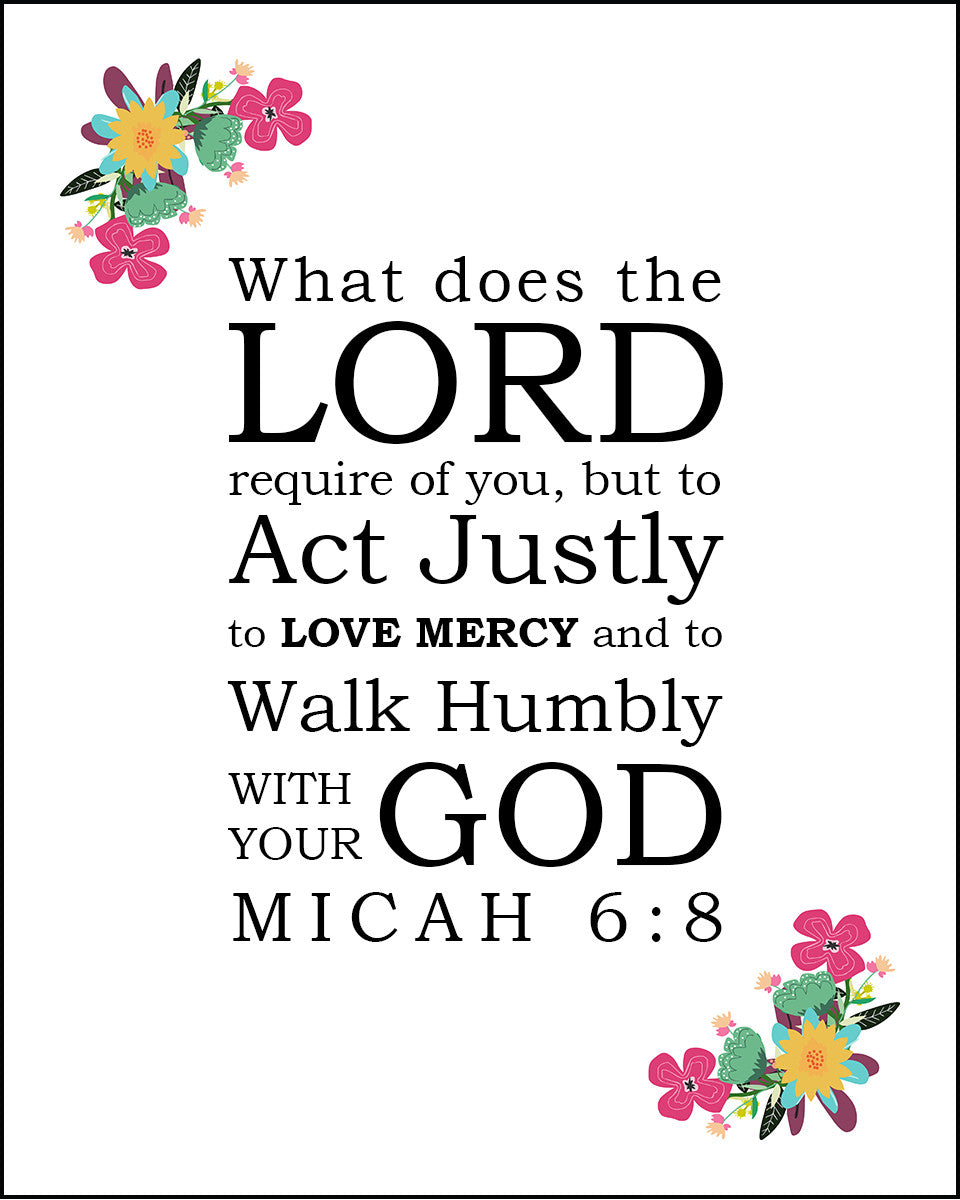
The last verses of what we hear from Micah are what we are most familiar with. I want to put those verses into some context. What we have is a sort of trial, with an indictment, and then sarcasm, a bit of a long-suffering Lord. In that voice we hear, “O my people, what have I done for you? All I've done for you is to bring you up from the land of Egypt, I redeemed you from the house of slavery; I sent before you Moses, and Aaron, and Miriam.” As if. And then the voice of the Lord calls us to remember, we are to remember what happened and to remember the saving acts of the Lord. And thirdly, how shall we come before the Lord? Shall we bring burnt-offerings, rivers of oil, our first-born child? And then there it is, what the Lord really needs of us is to do justice, and to love kindness, which is also mercy, and to walk humbly with our God. 


Do justice, love kindness, and walk humbly with our God. Wow. This is what God’s kingdom looks like, and this is also what it means to follow Jesus. Humbly isn’t quite an accurate translation, it should be more like walk intentionally, walk deliberately, with your God. Do justice, love kindness, and walk intentionally with God.


So then we move into how to recognize blessing in Matthew. We’ve heard these beatitudes so many times, haven’t we. You know, for a long time I taught children using Godly Play. Godly Play is a way to tell the sacred bible stories. So, I’d tell this story about Jesus teaching his friends when the children were in first grade, and then they’d hear it again in second grade, and by third grade they’d say, we’ve heard that one before! And I’d respond with, of course you have, but what’s different about it this time? Because you see, each time we hear these sacred stories, we are in a different place and a different time, so we hear something different from them. Friends, we are in a different place and a different time, we must hear these beatitudes differently.


Jesus is speaking directly to his disciples with this teaching. You and I are really just eavesdropping. Jesus is teaching his disciples about how to recognize blessing. Not, who is blessed, or how to bless, but how to recognize what God has already blessed. God has already blessed the poor in spirit, and theirs is the kingdom of heaven. God has already blessed those who mourn, and they will be comforted. God has already blessed the meek, and they will inherit the earth. God has already blessed those who hunger and thirst for righteousness, and they will be filled. God has already blessed the merciful, and they will receive mercy. God has already blessed the pure in heart, and they will see God. God has already blessed the peacemakers, and they will be called children of God. God has already blessed those who are persecuted for righteousness’ sake, and theirs is the kingdom of heaven. And God has already blessed those who are reviled and persecuted.


You see, our job, as followers of Jesus is to get with the program, God is already doing great things, our job is to see that and join forces. And what’s so hard about this is God has also already blessed those who we would not think are blessed. In our world, when we think of someone who is blessed we most often think of someone who is wealthy or powerful or famous or successful or beautiful or enviable. Blessing, at least according to the standards of this world, is most often of the material kind. Blessing is missing the close call, or getting something someone else doesn’t get. But that’s not what is revealed in Matthew’s story about Jesus teaching the disciples. God blesses those in need.


So now we have these two scriptures that are presented to us together on this day, in this church, in this community, in this country, and the question I ask of them is what does it have to do with us? What do these pieces of scripture have to do with following Jesus?


Following Jesus is about is doing justice, loving kindness, and walking intentionally with God. Following Jesus is to recognize blessing when it is staring us in the face. I think recognizing blessedness is about walking with God. I think recognizing blessedness has something to do with living in a community, a church of hospitality, a place where people of all stripes can come and find justice, and kindness and mercy.


Friday was International Holocaust Remembrance Day. When I was a kid in civics class, we learned about the Holocaust, and I remember being frightened and disgusted. In my own life I cannot come to terms with how people can do such horrible things to other people. And I learned that we learn about such atrocities, to never let it happen again. I have been to the Dachau Concentration Camp Memorial Site, I have been to the Holocaust Memorial in Washington DC, and I believe following Jesus is about offering hospitality and sanctuary to all who come seeking refuge from violence and persecution in their own countries. And I know that seems like it is way outside our control, so the question I bring to these texts today is, right here in our church, right here in our community, how do we follow Jesus by doing justice, loving kindness, and walking intentionally with God. How do we follow Jesus by recognizing blessing when it is staring us in the face?


So that’s what I want us to consider. What is it you can do, today, tomorrow, and the next day, to offer hospitality to the people you sit next to in these pews, to the people who walk by our church daily, to the people who are in our neighborhood and community. What is in your hands? How can you walk with God and be that light that shines in this darkness? How can you be a partner in God’s blessing?


Friends, we follow Jesus because we are convinced of God’s love for us, God’s love for all of creation. We follow Jesus because we are convinced that Love wins. We come here, to this place and we offer our own brokenness to be forgiven and healed, we are filled with bread and wine that are Jesus’ body and blood. In the mystery that is God’s love for us, we recognize blessing, we receive mercy, and we enact justice. You are loved, go out into the world to do the work you are called to do, to love and serve as faithful witnesses of Christ our Lord. Amen.

Sunday, October 24, 2021

Twenty-Second Sunday after Pentecost Proper 25 Oct 24 2021


Twenty-Second Sunday after Pentecost Proper 25 Oct 24 2021

Job 42:1-6, 10-17, Psalm 34:1-8, (19-22), Hebrews 7:23-28, Mark 10:46-52


We take up with the gospel of Mark again in the shadow of Jerusalem, on the way to the cross. We've been on this road for a while now, partners with those in the story who are also on the way. Before the followers of Jesus were called Christians, they were, as we are, people of the way. This story of the blind Bartimaeus is the last story of Jesus’ ministry before the cross, the passion, and resurrection. I think this story of Bartimaeus is in stark contrast to the story that we heard last week, the story about James and John. James and John ask Jesus for power and status, Bartimaeus asks Jesus for healing. God lavishes love on them all, Jesus calls them as followers, and yet each of them must let go of something they’ve been holding on to live fully free, fully alive.


"What do you want me to do for you?" Jesus asks Bartimaeus, it’s the same question that Jesus asked James and John only a moment ago in the story, and that we talked about last Sunday. But the gulf between the request that James and John make, and the request Bartimaeus makes is cavernous. James and John were somewhat confused, remember, they ask Jesus for power, they think the kingdom is about a seating chart at a party. But Bartimaeus, Bartimaeus asks to see. Nothing like the power and status, the place at the table that James and John were all about, and what’s more is that Bartimaeus wasn’t even officially a disciple.


Imagine Bartimaeus, sitting in the road, probably at the main gate of Jericho, day after day, all day, in the hot sun, begging. But Bartimaeus knows who Jesus is, he’s listened to the talk, he calls out to Jesus, Son of David, have mercy on me. Let me see.


Two things here that are so unlike the James and John story, or the story of the earnest young man, which we also heard a couple weeks ago. First, the request, have mercy on me, heal me. Second, the ramifications of that healing, what it means to follow Jesus.


Have mercy on me, Bartimaeus asked, mercy. You know what mercy means? A heart for other people’s troubles. Bartimaeus was asking Jesus to have a heart for his troubles. That’s all, hear me, see me, and if you’ve got it in you, heal me. And that’s what Jesus did, Jesus heard him, Jesus saw him, and having a heart for his trouble, Jesus healed Bartimaeus.


So once Bartimaeus is healed, what does he do? Bartimaeus’ profession is begging. Once he is healed, his life is changed, he can’t go on begging anymore, so he follows Jesus. Just like the others, he gets up and follows. Bartimaeus exchanges a life of begging, a life of blindness, a life of being on the margins, for this life of following Jesus. And you and I know where that’s going, straight to the cross.


No matter how much we think we have, no matter our wealth, our status, our power; or no matter what we think we don’t have, our lack of health, our lack of wealth, our lack of support, we leave it all behind when we follow Jesus, none of that matters. We get so wrapped up in our own shortcomings, or we spend so much time valuing our worth by what others think is important, that we forget that we are God’s beloveds, and we forget to have mercy, a heart for other people’s troubles.


Jesus calls us to follow, Jesus calls us to surrender things that poison us, or things that keep us from seeing what is around us, Jesus calls us to be merciful, to have a heart for other people’s troubles. Jesus' call to us, the call to be followers, is to open ourselves up, to surrender the stuff that insulates us from our neighbors, to let Love win. Being healed isn't easy for us. Anne Lamott, in her book, Almost Everything, Notes on hope, writes, ”Being healed is finally recognizing your loveliness in Jesus’ eyes and finally letting yourself be loved, and finally letting go whatever it is you’re sick and tired of, because you can’t control it anyway.”


That is the risk in being healed. We can’t control it. That is the risk in letting Jesus change you, you can’t control it. Life will never, can never be the same. But out of what seems like death, and letting go is a death of something, comes resurrection. 


We cling so desperately to that which we believe is our identity, no matter how healthy or unhealthy; it's nearly impossible to give that up to an identity as beloved of God. Letting go of what we believe defines us to take on our true identity as God’s beloved, is hard. But unless and until we let die what is killing us, we can never be healed, we will never be transformed into the new person in Christ. The Good News is that when we make room for Love to interrupt our precisely organized patterns, we make room for Love to change our path; we make room to go home by a different way. And there will be new life in ways we can hardly begin to imagine.


As we listen to this story of Bartimaeus, there is another hard truth to listen to. Healing doesn’t look like what we expect it to look like. In the pages we hold between our hands, we read of the ones whose diseases were cured, because what fun is it to write about the ones who were not. But the truth is healing cannot be controlled. Not all are healed of their obvious or maybe not so obvious disease. Most of us are in that group, most of us cannot tell a story about a personal miraculous healing, some of you can, but not most of us. Most of us tell stories about the pain and difficulty of disease that is our own or our loved ones. Most of us live with chronic pain and addiction. Most of us live with broken bodies and broken hearts. This is what it means to be human. So the hard truth is that we are God’s beloveds. 


You see, I believe the healing in Bartimaeus’ story is not so much regaining sight, but in being restored to the community. In every one of the healing stories, that is the point. Jesus calls us from the margins back into the community. Bartimaeus is called, and healed, and follows Jesus. We are called, healed in obvious ways and not so obvious ways, and we follow Jesus. Not in a transactional sense, but in a deepening sense. The journey to the cross is as difficult as it is exhilarating; following Jesus is not for the faint of heart. But the good news is that we are all in this life together. When we are in this life together, the burden of a broken heart and a broken body becomes a bit lighter. Hope is born in and among us, Jesus is born in and among us. 


And that is where mercy and love grow. Mercy and love and compassion grow out of the broken places. It’s like when you are hiking on the granite rocks of Lake Superior, and in the middle of all that hard rock, there is a fissure, a crack, and out of the crack there is a tree. The good news is seeing, seeing, the grace, the joy, the wonder, in all that life throws at us. And unlike Bartimaeus and the others, we know the end of the story. We know that resurrection happens. We know that life always wins over death. We know that we are part of resurrection. There is hope.


Saturday, October 31, 2020

All Saints November 1 2020


All Saints November 1 2020

Revelation 7:9-17, Psalm 34:1-10, 22, 1 John 3:1-3, Matthew 5:1-12

Struggling, striving, to be one too. I love this day, I feel so connected to the cloud of witnesses, the communion of saints. Why do I feel All Saints so deeply? I don’t think it’s because I want to be a saint, or I think I have any degree of perfection. It’s because I want to be among those who follow Jesus, I want to be among those who stand up for love, and compassion, and mercy, and I know I cannot do that alone. I listen to these names, names of the long dead and names of the recently dead, and I wonder, do I measure up? Do I act justly when the time comes, am I merciful in judgment, can I be compassionate when I with those with whom I passionately disagree?

This cloud of witnesses helps me along, holds me up, keeps me accountable, makes me want to do better. Each one of these in this cloud of witnesses changed their particular piece of the world, not necessarily by doing fabulous, extravagant things, but by stepping into the space in which they were needed, when called. By stepping up to love. By using their voice and being brave. Not heroic, but faithful.

Do you have saints in your life? Not perfect people, people perfectly loved. There’s a piece by Linda Hogan, an indigenous writer, who is currently the Chickasaw Nation's Writer in Residence. And at All Saints time it lands on me with all sorts of sense and wonder. She has written, “Suddenly all my ancestors are behind me. ‘Be still’ they say. ‘Watch and listen. You are the result of the love of thousands.’” 

That empowers me, emboldens me to put one foot in front of the other, each day, and speak love into dark and lonely spaces, and there have definitely been some dark and lonely spaces in these past months. It feels like my voice joins all the voices before me, and together we sing a song of the saints of God. Because being a saint is not about being superhuman. It may be about having a super power though. The super power of love, the super power of the love of all those who have gone before us to show us the way, and those who will come after us to carry on.

I wonder about the saints we named today, and so many others whom we did not name. I wonder if they knew they were a saint, or if all they knew was God’s love for them and for others. I think they didn’t know they were saints. I think they were just like you and me. I think they took seriously the call to love God, and to love one another. I think they woke up in the morning, just like you and me, and asked God to help them carry Jesus’ light into all the dark places of their lives.

Who are the saints you know, and have known? Not perfect people. But people putting one foot in front of the other and stepping into the space of love and bringing the light of Jesus with them. I think a lot about my mom who died nearly six years ago now. My mom wasn’t perfect, she was as ornery as an Irish woman comes. There was always room at my mother’s table. Even if she didn’t like you, you got fed. She prepared meals at church, and put on quite a spread for funeral luncheons. And for years she was in charge of the Loaves and Fishes meal once a month. Mom would never consider herself any more than a person that said yes to pitching in and helping. She never thought of herself as brave or courageous, or particularly compassionate. But she stepped up when she heard the call, often it was the call on the telephone… we need you to….bring a hotdish, we need you to… be in be president of the women’s club…we need you.

I think what’s really true is that the phone call, or these days the email, is much louder than God’s still, small voice. And stepping into the space of love and compassion, responding to God’s call, is much more like providing a meal, or wearing a mask, or sticking with your pod, than it is about saving the world.

If we are indeed the result of the love of thousands, which I believe we are, then what is the task we bear today? It’s not about heroics, but definitely the super powers of love and compassion. We are the saints of God; we are the ones who give rise to the thousands who come after us. Our task today is to follow Jesus. Our call is to Love God, love others, show it. Getting up every morning, giving thanks for the day, putting one foot in front of the other, and shining the Christ light into all of the dark places, makes a difference. We are joined together, we are joined with the cloud of witnesses, and our witness matters, our actions matter. They lived not only in ages past; there are hundreds of thousands still; the world is bright with the joyous saints who love to do Jesus’ will. You can meet them in school, or in lanes, or at sea, in church, or in trains, or in shops, or at tea; for the saints of God are just folk like me, and I mean to be one too. 

Sunday, May 31, 2020

Feast of Pentecost Yr A May 31 2020 (Sunday after the murder of George Floyd, riots in Minneapolis)


Feast of Pentecost Yr A May 31 2020 (Sunday after the murder of George Floyd, riots in Minneapolis)
Acts 2:1-21, 1 Corinthians 12:3b-13, John 20:19-23, Psalm 104:25-35, 37

What does one say on the Feast of Pentecost, a joyous celebration? This day when we celebrate Spirit, like the rush of mighty wind and tongues of fire. The Holy Spirit, the gift of God’s continuing presence with God’s beloveds, you and me and every one of us, regardless of the color of our skin, the lilt of our voice, the health of our bank accounts. What does one say about Holy Spirit, when my home, Minneapolis Minnesota, is under siege? (and my son is on the front line)

What can be said? Kyrie Eleison, O Lord have mercy.

Holy Spirt, descend upon us, meet the fire of human pain and want and need,
with your fire of justice. Kyrie Eleison, O Lord have mercy.

Holy Spirit, descend upon us, meet the fire of outrage at not being heard, not being seen, not being believed, with your fire of compassion. Kyrie Eleison, O Lord have mercy.

Holy Spirit, descend upon us, meet the fire of self-righteous privilege,
with your fire of refinement. Kyrie Eleison, O Lord have mercy.

Holy Spirit, descend upon us, meet the fire of destruction and looting,
with your fire of merciful judgement. Kyrie Eleison, O Lord have mercy.

Holy Spirit, descend upon us, meet the fire of hate,
with your fire of love. Kyrie Eleison, O Lord have mercy.

Holy Spirit, descend upon us, ignite the fire that was placed in us at our baptism, the fire to resist evil in all its insidious and racist forms, the fire to proclaim by word and example your Good News; the Good news that not one of God’s creations is outside of God’s love, the good news that Jesus is all in all. The fire that seeks and serves Christ in all persons, loving our neighbor, all our neighbors, and especially those who have been systematically excluded from a path of progress, as ourselves. The fire that strives for justice and peace among all people, the fire that respects the dignity of every human being. Kyrie Eleison.

How does one speak of the Holy Spirit? Very carefully. Like the murmuring of a dove’s song, like the rushing fire of refinement, a burning bush that is not consumed. If we took the Holy Spirit seriously, we’d all be on fire. So, we will stop speaking of the Holy Spirit, and instead, we will let the Holy Spirit have its way with us.

The kingdom of God imagines a very different future from the reality in which we find ourselves. A world in which each person can walk down the street and be safe, a world in which each person can walk into the grocery store and not be stalked. We must be on fire with the proclamation that systems must be just. We must be a part of the change. Holy Spirit set us on fire for justice, peace, and love.

Kyrie Eleison.

Saturday, October 27, 2018

23 Pentecost Proper 25 Yr B Oct 28 2018


We take up with the gospel of Mark again in the shadow of Jerusalem, on the way to the cross. We've been on this road for a while now, partners with those in the story who are also on the way. Before the followers of Jesus were called Christians, they were, as we are, people of the way. This story of the blind Bartimaeus is the last story of Jesus’ ministry before the cross, the passion, and resurrection. I think this story of Bartimaeus is in stark contrast to the story that we heard last week, the story about James and John. James and John ask Jesus for power and status, Bartimaeus asks Jesus for healing. God lavishes love on them all, Jesus calls them as followers, and yet each of them must let go of something they’ve been holding on to live fully free, fully alive.

"What do you want me to do for you?" Jesus asks Bartimaeus, it’s the same question that Jesus asked James and John only a moment ago in the story, and that we talked about last Sunday. But the gulf between the request that James and John make, and the request Bartimaeus makes is cavernous. James and John were somewhat confused remember, they ask Jesus for power, they think the kingdom is about a seating chart. But Bartimaeus, Bartimaeus asks to see. Nothing like the power and status, the place at the table that James and John were all about, and what’s more is that Bartimaeus wasn’t even officially a disciple.

Imagine Bartimaeus, sitting in the road, probably at the main gate of Jericho, day after day, all day, in the hot sun, begging. But Bartimaeus knows who Jesus is, he’s listened to the talk, he calls out to Jesus, Son of David, have mercy on me. Let me see.

Two things here that are so unlike the James and John story, or the story of the rich young man, which we also heard a couple weeks ago. First, the request, have mercy on me, heal me. Second, the ramifications of that healing, what it means to follow Jesus.
Have mercy on me, Bartimaeus asked, mercy. You know what mercy means? A heart for other peoples troubles. Bartimaeus was asking Jesus to have a heart for his troubles. That’s all, hear me, see me, and if you’ve got it in you, heal me. And that’s what Jesus did, Jesus heard him, Jesus saw him, and having a heart for his trouble, Jesus healed Bartimaeus.

So once Bartimaeus is healed, what does he do? Bartimaeus’ profession is begging. Once he is healed, his life is changed, he can’t go on begging anymore, so he follows Jesus. Just like the others, he gets up and follows. Bartimaeus exchanges a life of begging, a life of blindness, for this life of following Jesus. And you and I know where that’s going, straight to the cross.

No matter how much we think we have, no matter our wealth, our status, our power; no matter what we think we don’t have, our lack of health, our lack of wealth, our lack of support, we leave it all behind when we follow Jesus. We get so wrapped up in our own shortcomings, or we spend so much time valuing our worth by what others think is important, that we forget that we are God’s beloveds, and we forget to have mercy, a heart for other people’s troubles.

Jesus calls us to follow, Jesus calls us to surrender things that poison us, or things that keep us from seeing what is around us, Jesus calls us to be merciful, to have a heart for other people’s troubles.  Jesus' call to us, the call to be followers, is to open ourselves up, to surrender the stuff that insulates us from our neighbors, to let Love win. Being healed isn't easy for us. Last night, I had the privilege of hearing Anne Lamott talk about her new book, Almost Everything, Notes on hope, and all her wisdom really, Anne said, “when you’re sick and tired of being sick and tired, it’s time to surrender.” Being healed is like that; it’s finally recognizing your loveliness in Jesus’ eyes and finally letting yourself be loved, and finally letting go whatever it is you’re sick and tired of, because you can’t control it anyway.

But there is risk involved in being healed. There is risk involved in letting Jesus change you. Life will never, can never be the same. Out of what seems like death, letting go sometimes feels like death, comes resurrection. We cling so desperately to that which we believe is our identity, no matter how healthy or unhealthy; it's nearly impossible to give that up to an identity as beloved of God. Letting go of what we believe defines us to take on our true identity as God’s beloved, is hard. But unless and until we let die what is killing us, we can never be healed, we will never be transformed into the new person in Christ. The Good News is that when we make room for Love to interrupt our precisely organized patterns, we make room for Love to change our path; we make room to go home by a different way. And there will be new life in ways we can hardly begin to imagine.

Bartimaeus is called, and healed, and follows Jesus. But the journey to the cross is as difficult as it is exhilarating; following Jesus is not for the feint of heart. It was only a very short period of time between Bartimaeus being healed, being restored to the community, and Jesus’ passion, suffering, death and resurrection. But the good news is that we are all in this life together. The good news is that we are capable of mercy and love. The good news is seeing, seeing, the grace, the joy, the wonder, in all that life throws at us. Unlike Bartimaeus and the others, we know the end of the story. We know that resurrection happens. We know that life always wins over death. We know that we are part of resurrection. There is hope.

Following Jesus is not about having the right answers; it’s not about being perfect. Following Jesus is seeing healing right in front of us; following Jesus is having a heart for other people’s troubles. Following Jesus is being transformed, being changed; becoming the creation that God calls us to be. Following Jesus is loving our neighbor, our neighbors who don’t look like us or worship like us.

Friday, October 6, 2017

18 Pentecost Proper 22 Yr A Oct 8 2017


This is not a pretty parable. Matthew is talking mighty tough. A landlord purchases land, makes some improvements, and then leaves. After an undetermined amount of time, he sends his representatives to collect what is owed him. Instead of the tenants handing over what is owed, they beat and kill the landlord’s representative, not just one, but two, and then they kill his son. How can this even begin to reveal the kingdom of God?

This absent landlord, who knows how long he’s been away, finally sends in some of his people to check on the place. Maybe the tenants thought he’d permanently gone away, maybe they thought he’d just never return; maybe they thought he was dead. You’d think that after the first murder, the landlord would quit. Well, that landlord is just crazy. And, what’s even crazier is this landlord sending his own son, after all this violence, as if something about that is going to change. As if people who have been beating and killing are just going to stop being violent because they just decided they don’t want to do that anymore.

Crazy indeed, crazy love. It’s not just crazy; it’s crazy love. The kind of love that brooks no reason, that will listen to no counter argument, and that will never, ever give up, risking even violence, rejection, and death in order to testify to God’s commitment to these tenants…and to us.

It sounds to me a lot like us, as tenants I mean. Such violence, such injustice, such foolishness. And God’s crazy love for us never, ever, ends. Makes me want to cry really, and I believe God weeps every time we, God’s children, turn to violence to solve our problems or to exert power. How can we go on being so violent, when we have a God whose love for us, for all creation is so amazing, so abundant. How can God continue to love us, when we keep on falling down, when we keep on blaming, mistreating, and hurting one another?

But we really are just like these tenants. The tenants carry on the work of the vineyard. It’s not fair is it? To do all the work and the landowner gets all the profits. The tenants are entitled to a piece of the pie, the tenants are entitled to some of the profit, why not kill the landowner’s son and get the inheritance? This parable highlights our own human sense of justice and righteousness and even entitlement. We are the tenants. But in this parable, that is not the landowner’s, God’s, sense of justice and righteousness.

We hear this story all the time. About how unfair this life is. It’s that transaction with God again. If you work hard, and do everything right, your reward should be wealth and happiness and blessings from God, we think that’s what’s fair. But that’s not the truth. The truth is that many of us work hard, and pain, and suffering, and tragedy is still part of our lives. We are not entitled to success, or happiness, or even blessedness. We sometimes even talk about what we deserve or don’t deserve. We work hard, we deserve a good life, we deserve recognition. We deserve a life free from pain, free from heartache. But that’s not the way God works, it’s not the way scripture shows us and it’s not the way our lives show us. We experience pain and heartache, and we experience happiness and fullness of life.

Maybe Matthew tells this kind of a violent story because we cannot hear, truly hear, the stories that show us God’s compassion, God’s mercy and justice. Maybe Matthew tells this kind of a violent story because Matthew knows we are a violent people. But you know what? I don’t want to be that way. I don’t want us to be a people who don’t pay attention to God, to Spirit, to Love. I don’t want us to be an entitled people, an exceptional people. I don’t want us to be a violent people. I don’t want us to go on and on watching people getting killed, and begin to accept that as normal. I don’t want to see it anymore.

I want us to be a compassionate people. A merciful people. A just people. I want us to be people who love one another and care for each other, whether or not someone deserves love and care. I want us to follow Jesus, the one who shows us how love, the one who shows us how forgiveness and healing work. The one who gave everything, so that we may have life. So that we may have life, not wealth, not happiness, but life.

So how do we do that? How do we be a community of compassion, and of mercy, and of justice? Do not be afraid. Indeed, it is fear that gives rise to violence. Fear of the ones who are different from us, fear of losing what we have, fear of losing our loved ones and fear of losing our very lives.

You see, we are all broken, and it is that very brokenness that makes us compassionate, or hateful. I’m reading a book, Just Mercy, by Bryan Stevenson. When we gather at Diocesan Convention, we’ll take time to talk about this book. In it are many stories of incarceration, and many times I have cried as I listened to the stories of people whose lives have turned for the worst, and yet who continue to have faith, hope, and compassion. One story in particular though illustrates our brokenness, and the compassion or hatefulness that results.

Bryan Stevenson tells the reader about a guard at the prison where he is visiting a client. The client, Avery, is there because after a life of foster care filled with emotional and sexual abuse, he hears the demons in his head and that results in stabbing a man and killing him. Mr. Stevenson regularly visits the prison as the legal counsel, he reports to the warden and then is signed in, all according to the proper procedure. The first time Mr. Stevenson encounters this particular prison guard, he is questioned extensively, bullied, and then subjected to a strip search, all against the law. Mr. Stevenson had seen a truck in the parking lot, a truck with confederate flag stickers plastered all over it. The prison guard makes sure Mr. Stevenson knows that is his truck. Mr. Stevenson listens to Avery, but the only thing Avery wants is a chocolate milk shake. Each time Mr. Stevenson sees Avery in prison, Avery asks for a chocolate milk shake, and Mr. Stevenson replies that he cannot get a milk shake into the prison. After many visits and much work, a court date is set for an appeal of Avery’s conviction, with the evidence of Avery’s upbringing in the foster care system. That same prison guard is the one who brings Avery to court each time, and he listened to the proceedings. When Mr. Stevenson encounters that guard again at the prison, he approaches with trepidation, but the guard is a changed man. He tells Mr. Stevenson of his own abuse in the foster care system. He says he thought he was the only one who had been treated that way, and realized Avery was treated even more poorly and violently than he. The guard learned compassion as he looked into the eyes of the one he had judged a loser. He learned to respect the Bryan Stevenson, the lawyer who was helping so many on death row. He even stopped at a Wendy’s on the way back to the prison after court one day, to buy Avery a chocolate milk shake.

We are all broken by something. We have all hurt someone and have been hurt. It is in that place of our brokenness, that makes us compassionate or hateful. Our brokenness is the source of our common humanity. We have a choice, to be compassionate or to be hateful. Embracing our brokenness, leads to mercy. Jesus comes into that place of brokenness and says, let go of the hate, let go of the bitterness. Do not take revenge or retribution. Instead, know that we are all in this together, you have been dealt a life that is yours, filled with good fortune or bad, filled with love or abuse. You are capable of extreme compassion, you are capable of forgiveness.

Jesus’ love is the love that is unreasonable, it is the love that will never, ever give up, risking the violence showered upon him, the rejection of his friends, and death on a cross. And on that cross, Jesus loved, saying, forgive them, they don’t know what they are doing.


We know, that love takes a decision. We know that compassion means doing something. Look into the eyes of the ones you are afraid of, and be transformed. And then, get to work. Work to relieve the suffering and pain of another, and your problems will begin to feel small. Work to change laws that are unjust, work so that our community is compassionate. And bring a chocolate milk shake to someone this week. Amen.

Fifteenth Sunday after Pentecost, Proper 18, Yr A, Sept. 6 2026, Sts. Martha and Mary, Eagan MN

Rev. Dr. Kathy Monson Lutes Fifteenth Sunday after Pentecost, Proper 18, Yr A, Sept. 6 2026, Sts. Martha and Mary, Eagan MN Exodus 12:1-14, ...