Showing posts with label compassion. Show all posts

Sunday, July 21, 2024

Ninth Sunday after Pentecost Proper 11 Yr B July 21 2024, St. Martha and Mary, Eagan


Ninth Sunday after Pentecost Proper 11 Yr B July 21 2024, St. Martha and Mary, Eagan

Jeremiah 23:1-6, Psalm 23, Ephesians 2:11-22, Mark 6:30-34, 53-56


So there’s been some Taylor Swift mania going on these days. I really didn’t know who she was until recently, when there was some hullabaloo around football and her, and I have some interest in football. So, in order to educate myself, I watched some videos of both football and Taylor Swift. And you know what blows me away? She is an impressive entertainer, she puts on quite a show, but what really blows me away are the people, the tens of thousands of people who gather in massive stadiums, usually meant for football, who come out to watch her. Thousands of people singing the lyrics to her songs in unison. Listening to her preach a gospel of empowerment, self-love, beauty, worthiness, and success. I get it now. In this age of social media, with sound bites of 280 characters or less, filled with venom, misunderstanding, hatred, cowardice, she sings for 5 to 10 minutes with the whole arena singing with her, a message of female ambition. Whether that makes you cringe, or it makes you pump your fist in victory, she commands a crowd. I’m not judging good or bad, right or wrong here, just observing, for Taylor Swift, whether you like it or not, it’s all about her.


But what I’m also observing is the rock star Jesus and his band in Mark’s gospel. Who by the time we get this far into it, is commanding huge crowds. I’m not trying to set this up as a contrast in values, but I am trying to set this up in a context of clarity. Jesus isn’t a great entertainer, as some would wish their preachers to be. He’s not even a great preacher, he probably wouldn’t have been selected by the call committee who states, “not only do we want a great administrator, and someone who can attract young families with children, we also want someone who can preach exciting sermons.” Jesus, as we know, did not run a successful show, to all the world, Jesus looked like a failure. 


Jesus attracted crowds by incarnating a new way, a way of love that crossed boundaries and demanded compassion. A way of love that was concerned with feeding and providing for everyone, including widows, orphans, Greeks, and Jews. A way of love that healed the sin sick soul of all who encountered the beloved community that was rising up to empower not themselves, but the least of them, the lost, the broken in body and in heart. 


Let’s take a look at where we find ourselves in Mark’s gospel. The lectionary reading we have today, from the 6th chapter of Mark, is broken up. As chapter 6 opens, Jesus leaves his hometown due to a lack of faith there, he takes the apostles with him, and commissions them to go out 2 x2 into the neighboring towns and villages to minister in his name, trusting in the hospitality that the villagers may offer. Then, inserted into this narrative, we heard it last week, is the grisly story of the beheading of John the Baptist. Today we catch up with the feeding story. This is where Jesus crosses boundaries and encounters the great crowds that have been building around him. We skip over the debate about who should feed that crowd, definitely a sermon for another day. We skip over the story about walking on water, again, a sermon for another day, and we finish with the story about Jesus being recognized and people begging Jesus to heal them, even if it was just to touch the fringe of his cloak. From here on out, for much of Mark’s gospel, we follow Jesus and his posse, crossing boundaries and healing people. 


Jesus intended to rest with the apostles for a leisurely retreat, but Jesus was recognized and was filled with compassion for those who found him. 


So let us rest here, even if Jesus and his companions could not. Compassion, what does that look like? Compassion seems to be in short supply these days. Compassion, used in this context is that gut reaction that makes your insides need to move. Compassion here identifies a profoundly intense emotional response that viscerally propels the one feeling compassion into action on behalf of others. 


Friends, this is what it means to build the kingdom, compassion. Talk about taking the bible seriously, talk about following Jesus, talk about the beloved community… all of it arcs toward the kind of compassion that is action on behalf of others. Story after story shows us Jesus acting on behalf of others, healing, tending, feeding, putting back together broken hearts and broken lives.


What are we to do? How are we called to be in our own lives as people who follow Jesus? In a present reality that seems so cynical, so critical, so cruel, what does it look like to cross boundaries of comfort into the discomfort of compassion? In the feeding of the five thousand story, even Jesus' disciples were all bent out of shape over who was responsible for feeding everyone. They asked Jesus, who’s gonna feed all these people gathered on this hillside. Jesus did not say, well, they should pull themselves up by their own bootstraps and feed themselves. Jesus' response to the disciples was, you are. You guys go figure it out, these people are hungry and you need to figure out a way to feed them. 


Feeding people is compassionate. Clothing people is compassionate. Housing people is compassionate. Healing people is compassionate. Caring about people is compassionate. Jesus’ mission, therefore our mission, is not about success, entertainment, or putting on a good show, our mission is about contributing to the beloved community by being compassionate. 


What does compassion look like? Compassion says, “I’m with you.“ Compassion says, “I am here to help.“ Compassion says, “Cast your burden on me.“ So here’s a very simple story about compassion. I live by myself, I wake up early in the morning and go to the YMCA for my daily swim. The first person that speaks to me is the woman who sits at the desk at the Y. Every morning she looks at me, greets me with a smile and says “good morning.” I’m hardly awake yet, but I smile back. After my swim, when I am awake, she sends me out the door with “have a great day.” It might not seem like much, but because she has shown up for me in that little way, she sets me on a course of compassion and I am sent into the world to show up for others with compassion.


Thanks be to God. Amen.


Saturday, January 28, 2023

4 Epiphany Yr A January 29 2023


4 Epiphany Yr A January 29 2023

Micah 6:1-8, 1 Corinthians 1:18-31, Matthew 5:1-12, Psalm 15


I am convinced the prophetic voices we hear in today’s readings can guide our walk with Jesus. We must listen to them. In Matthew’s gospel is Jesus’ sermon on the mount. This is the opening proclamation of the ministry to follow, and in it Jesus shows us what the kingdom of God looks like. In God’s kingdom, you are blessed, and the purpose and focus of Jesus ministry is to bless. So one of the ways we follow Jesus is blessing. The other prophetic text we hear today is Micah. We’ll begin there.


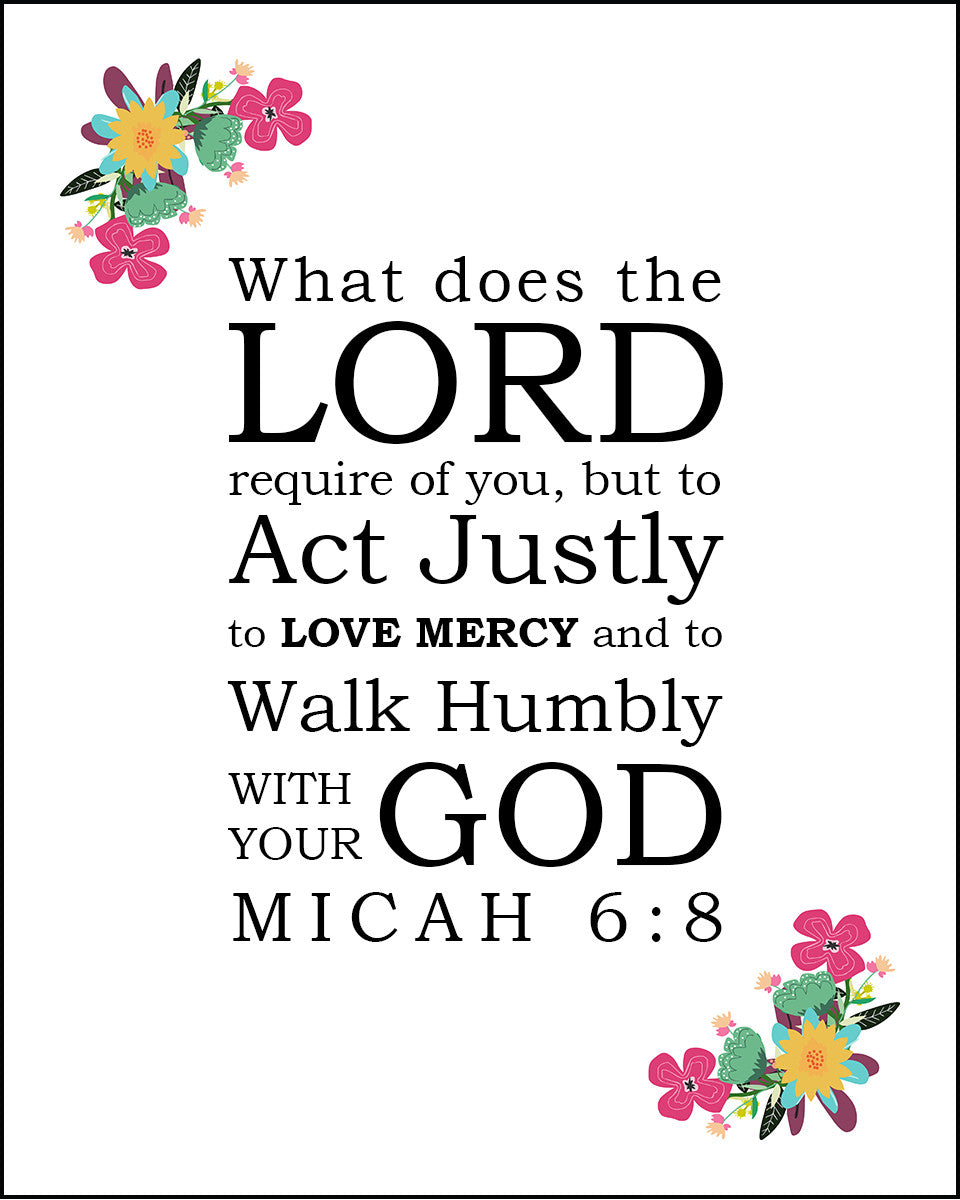
The last verses of what we hear from Micah are what we are most familiar with. I want to put those verses into some context. What we have is a sort of trial, with an indictment, and then sarcasm, a bit of a long-suffering Lord. In that voice we hear, “O my people, what have I done for you? All I've done for you is to bring you up from the land of Egypt, I redeemed you from the house of slavery; I sent before you Moses, and Aaron, and Miriam.” As if. And then the voice of the Lord calls us to remember, we are to remember what happened and to remember the saving acts of the Lord. And thirdly, how shall we come before the Lord? Shall we bring burnt-offerings, rivers of oil, our first-born child? And then there it is, what the Lord really needs of us is to do justice, and to love kindness, which is also mercy, and to walk humbly with our God. 


Do justice, love kindness, and walk humbly with our God. Wow. This is what God’s kingdom looks like, and this is also what it means to follow Jesus. Humbly isn’t quite an accurate translation, it should be more like walk intentionally, walk deliberately, with your God. Do justice, love kindness, and walk intentionally with God.


So then we move into how to recognize blessing in Matthew. We’ve heard these beatitudes so many times, haven’t we. You know, for a long time I taught children using Godly Play. Godly Play is a way to tell the sacred bible stories. So, I’d tell this story about Jesus teaching his friends when the children were in first grade, and then they’d hear it again in second grade, and by third grade they’d say, we’ve heard that one before! And I’d respond with, of course you have, but what’s different about it this time? Because you see, each time we hear these sacred stories, we are in a different place and a different time, so we hear something different from them. Friends, we are in a different place and a different time, we must hear these beatitudes differently.


Jesus is speaking directly to his disciples with this teaching. You and I are really just eavesdropping. Jesus is teaching his disciples about how to recognize blessing. Not, who is blessed, or how to bless, but how to recognize what God has already blessed. God has already blessed the poor in spirit, and theirs is the kingdom of heaven. God has already blessed those who mourn, and they will be comforted. God has already blessed the meek, and they will inherit the earth. God has already blessed those who hunger and thirst for righteousness, and they will be filled. God has already blessed the merciful, and they will receive mercy. God has already blessed the pure in heart, and they will see God. God has already blessed the peacemakers, and they will be called children of God. God has already blessed those who are persecuted for righteousness’ sake, and theirs is the kingdom of heaven. And God has already blessed those who are reviled and persecuted.


You see, our job, as followers of Jesus is to get with the program, God is already doing great things, our job is to see that and join forces. And what’s so hard about this is God has also already blessed those who we would not think are blessed. In our world, when we think of someone who is blessed we most often think of someone who is wealthy or powerful or famous or successful or beautiful or enviable. Blessing, at least according to the standards of this world, is most often of the material kind. Blessing is missing the close call, or getting something someone else doesn’t get. But that’s not what is revealed in Matthew’s story about Jesus teaching the disciples. God blesses those in need.


So now we have these two scriptures that are presented to us together on this day, in this church, in this community, in this country, and the question I ask of them is what does it have to do with us? What do these pieces of scripture have to do with following Jesus?


Following Jesus is about is doing justice, loving kindness, and walking intentionally with God. Following Jesus is to recognize blessing when it is staring us in the face. I think recognizing blessedness is about walking with God. I think recognizing blessedness has something to do with living in a community, a church of hospitality, a place where people of all stripes can come and find justice, and kindness and mercy.


Friday was International Holocaust Remembrance Day. When I was a kid in civics class, we learned about the Holocaust, and I remember being frightened and disgusted. In my own life I cannot come to terms with how people can do such horrible things to other people. And I learned that we learn about such atrocities, to never let it happen again. I have been to the Dachau Concentration Camp Memorial Site, I have been to the Holocaust Memorial in Washington DC, and I believe following Jesus is about offering hospitality and sanctuary to all who come seeking refuge from violence and persecution in their own countries. And I know that seems like it is way outside our control, so the question I bring to these texts today is, right here in our church, right here in our community, how do we follow Jesus by doing justice, loving kindness, and walking intentionally with God. How do we follow Jesus by recognizing blessing when it is staring us in the face?


So that’s what I want us to consider. What is it you can do, today, tomorrow, and the next day, to offer hospitality to the people you sit next to in these pews, to the people who walk by our church daily, to the people who are in our neighborhood and community. What is in your hands? How can you walk with God and be that light that shines in this darkness? How can you be a partner in God’s blessing?


Friends, we follow Jesus because we are convinced of God’s love for us, God’s love for all of creation. We follow Jesus because we are convinced that Love wins. We come here, to this place and we offer our own brokenness to be forgiven and healed, we are filled with bread and wine that are Jesus’ body and blood. In the mystery that is God’s love for us, we recognize blessing, we receive mercy, and we enact justice. You are loved, go out into the world to do the work you are called to do, to love and serve as faithful witnesses of Christ our Lord. Amen.

Tuesday, October 12, 2021

Twentieth Sunday after Pentecost Proper 23 Yr B Oct 10 2021


Twentieth Sunday after Pentecost Proper 23 Yr B Oct 10 2021

Job 23:1-9, 16-17, Psalm 22:1-15, Hebrews 4:12-16, Mark 10:17-31


Of all the come to Jesus meetings throughout the last two thousand and twenty-one years, this one was probably the first and maybe the most difficult. This earnest man wants to hear from Jesus what he must do to inherit eternal life. Wouldn't you like to know that too? Wouldn't you like to sit down with Jesus and find out just exactly what you must do to have eternal life? No more guessing, no more praying that you do the right thing, no more "if I do this God, I'd like you to do that," but a clear and concise list that you can check off. Absolute certainty about what it takes to have life after death. And then when you hear it, you hide in the bushes and hope Jesus won’t notice you’re not capable of giving everything. 


Jesus' first response to this young man is to tell him to follow the law. And this earnest man reminds Jesus that he is a good Jewish boy and has been following the law since his youth. At this point I imagine Jesus taking a deep breath and gathering his spirit together. Jesus looks at him and loves him and thinks this is not a bad guy. It is really important that we hear Jesus loves him, Jesus doesn’t humiliate him, or drive him to despair, this is an act of love on Jesus’ part. Jesus says, "You lack one thing; go, sell what you own, and give the money to the poor, and you will have treasure in heaven; then come, follow me" because Jesus loves him. Jesus loves us. 


The truth is that each one of us gathered here today is that earnest human, and there is no loophole. If we have a roof over our heads, if we have a car to drive no matter what shape it's in, if we have shoes for our feet, if we have food to eat for lunch, we are this earnest human, and this is really hard. Jesus says, use your wealth and security to empower others, and that causes shock and even sadness for the earnest man. 


God’s economy is so much different than our economy. This isn’t to make us feel bad, but it is to say that all of us stumble, sometimes hide from God because this is so very hard. God calls us to a different way; a way of following with a different kind of economy and trying to live out a different kind of vision for what the future can hold. A vision that includes kindness, compassion, mercy, giving. 


And then the disciples quickly ask, "who can be saved?" And Jesus answers, it isn't about you at all, it isn't about your wealth or even your poverty, your influence, or your social capital, it’s not about what you look like, it's not about who you're related to, it's not even about how much you give to or help others. Jesus looked at them and said, "For mortals it is impossible, but not for God, for God all things are possible." What Jesus is saying is that rich or poor, old, or young, gay or straight, democrat or republican, and all of the places in between, we are all on this rock together, and none of us get out of this life alive. We can do absolutely nothing to earn, deserve, or in any way change the fact of God's amazing and abundant love. There is no checklist for salvation. Love wins. This is an invitation to not look for salvation in your stuff or your position. It is an invitation to be loved, and because we are loved we give, and we divest ourselves of the hold that our position has over us. 


So in scripture, when we hear "give all you have to the poor," when we hear "clothe the naked, feed the hungry," we realize that that is how we respond to God's amazing grace, we pour out our love for all those whom God loves, we empower those who have no power. This is at the core of being a follower of Jesus, this is discipleship, and it is hard. The promise is that when you give it all away, whatever it is, you will not be bereft, you will not be left with nothing. The promise is that when you give it all away, whatever it is, Love fills the holes. When you give it all away, you are filled with that which only Jesus has. You will be soaked in God's love, you will be filled with the spirit, you will be re-membered in the body of Christ, you will be transformed. This is the good news. Stop trying to win God's love, stop trying to earn God's love, it can't be done, it is impossible for us. But all things are possible for God. The invitation is to live as God's beloved. 


So what keeps us from giving it all away, what keeps us from empowering others? What causes us to ignore our history of using our wealth or our power to keep others disempowered? I think it is fear. We are afraid to risk, we are afraid of losing control, we are afraid to live our lives fully alive in the love of Christ. We protect what we have, rather than live as citizens of the kingdom in God’s economy. It’s not just us, it’s all of Jesus’ disciples that have gone before us, those who we read about in our bibles, those of us that sit in these seats, and those who are outside these walls and have yet to hear of God’s amazing and abundant love. But how can we be blamed? We live in a chaotic world, with a blustery, fractured political life, global pandemic, social changes, church attendance in a tailspin. 


Even we are afraid that God somehow will not keep God’s promises. 


We forget that we are already God's beloveds. Lay down your fear, your need to control, and live your live, fully alive, fully immersed in God's love. Many of you give and give and give. Jesus isn’t telling us to give more. Jesus is telling us earnest humans that we have all we need; we have God’s love. Find ways to respond to God's abundant and amazing love with all your heart, all your soul and all your strength. Give God all that you are. For nothing is impossible in God. Amen.

Thursday, August 20, 2020

Eleventh Sunday after Pentecost Yr A Proper 15 August 16 2020


11 Pentecost Proper 15 Yr A Aug 16 2020

Eleventh Sunday after Pentecost Yr A Proper 15 August 16 2020

Genesis 45:1-15, Psalm 133, Romans 11:1-2a, 29-32, Matthew 15: (10-20), 21-28


It's been a hard year. It’s been a hard month. We’ve had too much death in our little community. In our larger neighborhoods people are behaving badly, accusing one another of this, that, and the other thing. We've been stretched to breaking with the demands on our patience and on our compassion. We have experienced so very closely the broken world in which we live. But there is also much goodness all around us, in so many places and in so many people.


And on top of that we have before us a hard lesson from Matthew and this continuing story in Genesis of Joseph and his brothers, brothers who sold him into slavery because they didn't like that he was a dreamer. What are we to make of it all? What are we to make of the readings and what are we to make of the reality? 


In the verses from Matthew we have before us today, Jesus really seems mad. He's been spending all of his time teaching the disciples and other followers, parable after parable, story after story, trying to impart everything he can about humanity's relationship with God, and God's relationship with God's people. Jesus experienced the tragic death of his relative, John. Jesus has fed thousands of people, and all he wants is to get away by himself for a little R and R. He's got to walk on the water out to the boat to save those hapless disciples, and after all that, the Pharisees come all the way from Jerusalem to entrap him. I imagine that the actual telling of this story has quite of bit of censoring and editing, I imagine Jesus' language may have been much more colorful than we hear today. 


Jesus says that what comes out of our mouths and from our hearts can be disastrous when we don't speak with love and truth. Jesus says, our words matter. Our words have the power to create a compassionate reality, and our words can challenge the darkness, our words can even be the light in the darkness. Our words and our actions even have the power to dispel the darkness. One of my favorite books by my favorite author is A Wrinkle in Time, it is a story that is all about using our gifts, following in the footsteps of the saints who came before us, about daring to be different, it's about foolishness, faith and free will, and the greatest call and commandment, loving one another. That story shows us, like scripture tells us today, what we say to one another matters, our words matter. 


The words that dispel the darkness are words that come from a heart that is filled with mercy and compassion, a heart filled with love for each and every gift of God's creation. Even in the midst of sadness, even in the midst of tragedy, we are called to speak words of mercy and compassion, words of God's love for all of God's creation. We are called to speak words of mercy and compassion into every darkness. We must conspire with God to speak words of love, words of mercy and compassion, into the darkness to dispel the darkness. That is what Jesus is trying to show us in this gospel today, and that is the truth of what God in Jesus has done and continues to do. Darkness does not win. Love wins. Our words can create a compassionate reality. And we are desperate for a compassionate reality. 


The second half of the story from Matthew paints a picture of Jesus that may be even harder for us to understand. He is angry, and mean, and in this particular story, Jesus claims an exclusive mission. He says he is sent only to the lost sheep of Israel. What is amazing in this story is that the Canaanite woman challenges Jesus, and her challenge creates a new compassionate reality. She challenges Jesus to include not just the lost sheep of Israel, but everyone in the known world. 


In this story, the Canaanite woman is absolutely and completely the other, the foreigner, the alien, she doesn't look like us or talk like us. But she's also a mother. Jesus is speaking to a mother whose daughter's life is at risk. Many of you know that when your child's life is at stake, you will do most anything, go to any lengths, you'll stay by their bedside, you'll take them to the hospital in the middle of the night, you'll pray and ask everyone you know to pray, you'll even bargain with God. This is that mother. She's not an insider, she's not an Israelite, she is a foreigner, she looks differently and she speaks differently than Jesus. And even Jesus, this Jesus who I have always believed includes everyone, initially says no. Maybe he's just too tired, maybe he's had a hard day, maybe he's fed so many people he's just spent. I've felt that way. 


It is hard to hear, but in this passage is a comment on cultural and racial differences. The talk about throwing food to the dogs, and that even dogs eat the crumbs from under their master’s table is about that difference, and initially, nobody responds to this Canaanite woman. She is not Jewish. Too often we cannot or refuse to empathize with people whose experience is different from our own. If the oppression, injustice, or pain is not happening in our house and neighborhood or does not impact our race, gender, class, or sexuality, then we dismiss it as unwelcomed, unjustified noise. Jesus’ response to the apostles’ urging to send the Canaanite woman away seems to affirm their desire to dismiss her: “I was sent only to the lost sheep of the house of Israel”. The fact that her people’s blood runs through his veins and that his people’s blood runs through her veins does not move Jesus! If our common humanity, our relatedness, does not move us, what will?


The Canaanite woman persists. Like Sojourner Truth, Rosa Parks, Congresswoman Shirley Chisholm, Oprah Winfrey, Senator Hillary Clinton, Michelle Obama, Senator Elizabeth Warren, and Senator Kamala Harris, the Canaanite woman persisted. She didn’t go away; she won’t be dismissed. She draws closer and kneels. Yet Jesus does not perform an exorcism; Jesus simply says, “Let it be done for you as you wish.” Jesus does not say let it be done as you believed but as you will. The woman’s will to power manifested by her persistence identified as faith led to her daughter’s healing.


When you don't think you can do one more thing, help one more person, listen to one more story, persist, and something happens. Something shows forth the light, the love, the healing, the hope. Something breaks through. And the break through expands the love, the result is not just her baby being healed, but it is healing for everyone, for all of us. The light shows forth, mercy and compassion are possible. 


We are desperate for this compassionate reality. Our words matter. Love wins. What we do and what we say in the midst of violence is capable of healing. This is that day. Remember, what Jesus does on the cross is to take evil out of the world with him. He does not look for revenge, and surely he is the one who would have the right to. Instead Jesus loves. Instead Jesus forgives. Instead Jesus heals.


It is our baptismal call to bear Jesus' love, forgiveness and healing into the world, it is our baptismal call to speak words of compassion into the world. It is our baptismal call to stand up for those who would be torn down. This is our mission: To build bridges of love and compassion, to build bridges of healing and hope.


Martin Niemoller, a German theologian and Lutheran Pastor, who was imprisoned in concentration camps from 1938 to 1945, said, “First they came for the Socialists, and I did not speak out—

Because I was not a Socialist.

Then they came for the Trade Unionists, and I did not speak out—
Because I was not a Trade Unionist.

Then they came for the Jews, and I did not speak out—
Because I was not a Jew.

Then they came for me—and there was no one left to speak for me.


We may not be any of these things, but we are followers of Jesus and we must stand for Love. Amen.


Sunday, May 31, 2020

Feast of Pentecost Yr A May 31 2020 (Sunday after the murder of George Floyd, riots in Minneapolis)


Feast of Pentecost Yr A May 31 2020 (Sunday after the murder of George Floyd, riots in Minneapolis)
Acts 2:1-21, 1 Corinthians 12:3b-13, John 20:19-23, Psalm 104:25-35, 37

What does one say on the Feast of Pentecost, a joyous celebration? This day when we celebrate Spirit, like the rush of mighty wind and tongues of fire. The Holy Spirit, the gift of God’s continuing presence with God’s beloveds, you and me and every one of us, regardless of the color of our skin, the lilt of our voice, the health of our bank accounts. What does one say about Holy Spirit, when my home, Minneapolis Minnesota, is under siege? (and my son is on the front line)

What can be said? Kyrie Eleison, O Lord have mercy.

Holy Spirt, descend upon us, meet the fire of human pain and want and need,
with your fire of justice. Kyrie Eleison, O Lord have mercy.

Holy Spirit, descend upon us, meet the fire of outrage at not being heard, not being seen, not being believed, with your fire of compassion. Kyrie Eleison, O Lord have mercy.

Holy Spirit, descend upon us, meet the fire of self-righteous privilege,
with your fire of refinement. Kyrie Eleison, O Lord have mercy.

Holy Spirit, descend upon us, meet the fire of destruction and looting,
with your fire of merciful judgement. Kyrie Eleison, O Lord have mercy.

Holy Spirit, descend upon us, meet the fire of hate,
with your fire of love. Kyrie Eleison, O Lord have mercy.

Holy Spirit, descend upon us, ignite the fire that was placed in us at our baptism, the fire to resist evil in all its insidious and racist forms, the fire to proclaim by word and example your Good News; the Good news that not one of God’s creations is outside of God’s love, the good news that Jesus is all in all. The fire that seeks and serves Christ in all persons, loving our neighbor, all our neighbors, and especially those who have been systematically excluded from a path of progress, as ourselves. The fire that strives for justice and peace among all people, the fire that respects the dignity of every human being. Kyrie Eleison.

How does one speak of the Holy Spirit? Very carefully. Like the murmuring of a dove’s song, like the rushing fire of refinement, a burning bush that is not consumed. If we took the Holy Spirit seriously, we’d all be on fire. So, we will stop speaking of the Holy Spirit, and instead, we will let the Holy Spirit have its way with us.

The kingdom of God imagines a very different future from the reality in which we find ourselves. A world in which each person can walk down the street and be safe, a world in which each person can walk into the grocery store and not be stalked. We must be on fire with the proclamation that systems must be just. We must be a part of the change. Holy Spirit set us on fire for justice, peace, and love.

Kyrie Eleison.

Saturday, August 24, 2019

11 Pentecost Proper 16 Yr C August 25 2019


Audio  11 Pentecost Proper 16 Yr C August 25 2019
Isaiah 58:9b-14, Psalm 103:1-8, Hebrews 12:18-29, Luke 13:10-17

When I watch television these days I have the mute button on the remote close at hand, for the commercials. They drive me crazy. If I were one to believe anything I see and hear on television, these are the things that I think are important to Americans, in no particular order: we have to buy the right pharmaceuticals to sleep better, to feel better, or to have better sex; we have to buy a sexy car or a big truck; we have to buy the right product to have financial security; we have to drink but do so responsibly; we have to wear the right clothes; we have to buy the right toys, etc. etc. etc. Even the feel good ads want me to buy something. On some level, consumerism, the transactional relationship, has become the dominant world religion, and we freely hand ourselves over to it. And, when we begin to believe in the religion of consumerism, the religion of transaction, it is quite easy to come to believe that each one of us is the most important person in our particular universe, and fulfilling our needs is the most important endeavor we can be about.

So how is it we find ourselves in this place today? Why is it that you get up on Sunday morning and come to church? You've got other places to be, the lake place, or just drinking coffee in your own kitchen, soon and very soon it will be football. Why is it that so many of you put in hours planning our 175th Anniversary celebration, so many of you attend vestry meetings as leaders in this church, you cut the grass, you clean the yard and the kitchen, you make sure this space is ready for us to gather, you read scripture, you serve at this altar. You spend your overnights in the GIFTS shelter, you make meals, you give rides. Here we are, honoring the Sabbath; here we are, worshipping God. Here we are, listening to stories of faith in Jesus, we are not at home, watching TV drinking our coffee. Here we are, eating and drinking the bread and the wine, being made into the body of Christ, why do we do it? Why do we come here?

I think it is because we are the same as the woman in our gospel today. This woman whom Jesus set free. This woman who was bound up, or enslaved, for all of her adult life. This woman whom Jesus released. This good news we hear today is true. You and I know it is true because it describes our lives, each one of us is set free, each one of us is released from the bonds that hold us at a distance from each other, we are released from the bonds that keep us believing that ultimately our needs, real or perceived, are the most important needs in the room. You see, unlike what we experience in so many places in our lives, God's relationship with us is not transactional, God's relationship with us is loving, giving, emptying.

We find ourselves here today not because we have to be here, or we are obligated to be here, but because we are free. We are free from the bonds of selfishness, from the bonds of self-absorption, and egotism. We are free from the religion of our culture that preaches our worthiness is in a transaction - you must buy, you must have, you must consume, you must be the most important or good looking person in the room.

And Keeping Sabbath matters, your being here matters. We bring all our brokenness, we bring all our hurt, and we are healed. And in the healing and being made whole again, being put back together, we are freed. We are freed to show compassion. And in reaching out, showing compassion, we participate in bringing God’s healing, freedom, joy and peace to those in need, and that is a rejuvenating path to experiencing those things more fully in our own lives. We are free to be transformed into the persons we are created to be. So what’s really important here? God's dream is healing and reconciliation, God's dream is love and compassion. Keeping the Sabbath is about keeping God’s dream the main thing. It is about the nearness of the kingdom.

The woman in our story today was released from the bondage of her ailment. We too are released from bondage, but you and I both know that we tend to choose to stay in bondage. We tend to believe the religion of our culture that says to us either “you are like God” and deserve to have anything and anyone you want, or “you are worthless” and deserve only what happens to you, both of which are lies.

The truth is so very different from any of that. The truth is that we are God’s beloved creation, and that God loves us whether or not we love God, and that God came to be part of creation, to live, love, suffer and die, so that we may be reconciled, or joined together with God, and with one another so that we may be free. The truth is that the story is not about any one of us, but the story is about God’s relationship with us, and our relationship with God and our neighbor.

That’s the main thing, and what flows from that main thing, what flows from God’s amazing and abundant love for us is the freedom to love others, regardless of approval or disapproval, regardless of whether or not they deserve our love, regardless of whether or not they brought life’s circumstances upon themselves or if they are a victim of circumstances. What flows from God’s amazing and abundant love for us is mercy and compassion.

So this week as we reflect on the gospel, it might do us some good to linger where Jesus lingers, to begin in a moment of Sabbath, to start from a quiet place within, and remember the main thing. The main thing, that it isn’t about me today, it isn’t about any one of us, it is about what happens outside the walls of this church. It is about meeting others with God’s compassion, God’s mercy, and reminding ourselves of the dignity, the freedom, the blessing that is God’s desire for each of us as God’s child.

Amen

Saturday, July 13, 2019

5 Pentecost Proper 10 Yr C July 14 2019


Audio  5 Pentecost Proper 10 Yr C July 14 2019
Deuteronomy 30:9-14, Psalm 25:1-9, Colossians 1:1-14, Luke 10:25-37

Maybe you’ve heard this one, but here it is again. I only have a couple good jokes. A priest, a Presbyterian minister and a baptist preacher, go out fishing. They toss all their stuff in the boat, and push off for the middle of the lake. Once out there, the priest realizes she forgot her lures. So she stands up and steps out of the boat and walks to the shore, gets what she needs and comes on back to the boat. A little later, the Presbyterian minister gets hungry and realizes he forgot his sandwich in the car, so he steps out of the boat, walks to the shore, gets his sandwich and comes on back to the boat. Well, the baptist preacher had left his jacket in the car and it was getting a little chilly, so he stepped out of the boat just like the others, but fell right into the water. The priest said to the minister, do you think we should have told him where the stones are?

Whether or not this is a funny joke, we laugh, or we groan, because we’ve been set-up, we know the form, the pattern, and can guess at the punch line. It’s based on our common stereotypes of these three characters. It’s like the story that is embedded in Luke’s gospel today, a priest, a Levite, and a Samaritan walk into an inn…. Oh, wait a minute. What’s happening here? Those who heard this story originally would have been shocked long before the storyteller ever gets to the punch line, because the 1st century hearer would think “a priest, a Levite and a Samaritan would never be in the same story.”

You see, the shocking joke in this story from Luke is that it is the Samaritan who is the compassionate one. In their time and place, the priest and the Levite shared high status in the community of God’s people. They were “temple people.” They were born into priestly families. They were very concerned with status, they epitomized the temple culture where there were those who were in and those who were out, they were in and just about everyone else was out. Within their world, their association with the temple commends them as persons of exemplary piety whose actions would be regarded as self-evidently righteous. The priest and the Levite were accustomed to being evaluated on the basis of their ancestry and their pedigree, not on the basis of their performance.

So the teller of this story has established these two holy men who have done their business at the temple in Jerusalem, and who are now traveling on the dangerous road to Jericho. They see a man by the side of the road beaten and bleeding, and each pass to the other side of the road instead of helping.

Into the story arrives the Samaritan, and everyone who is hearing this story laughs. A Samaritan, they exclaim, Samaritans are no good lazy bums. They don’t even go to the temple in Jerusalem to worship, they keep to themselves, they are just not like us. Maybe we should build a wall to keep those Samaritans out. You see, the Samaritan is a man who is in direct contrast to the holy men of the temple. He has no pedigree, he is a lowly merchant, he even worships at a different temple. It is this distinction that makes this story shocking.

You and I have heard the story of the Good Samaritan so many times we just about know it by heart. And maybe we miss the shocking punch line. The Samaritan as the one who has compassion for the beaten and bleeding man at the side of the road is shocking. And, the compassionate actions of the Samaritan man condemn the holy men’s failure to act.

So what can this very familiar story reveal to us today? The story of the compassionate Samaritan is embedded in the story about a lawyer who has come to Jesus asking about eternal life. First, the lawyer asks Jesus what he must to do inherit eternal life. Jesus answers that question with the story of the compassionate Samaritan, and then the lawyer is able to identify who in the story was the neighbor and the lawyer is told by Jesus to go and do likewise. Today I would like for you to entertain the idea that this story is not just about being good, and it's not about being a hero. I would like you to see its complexity.

The story of the compassionate Samaritan is an illustration of appropriate behavior for a person who loves God and who expects to inherit eternal life. Remember, we’ve talked about this before, when Luke uses the term eternal life, he is referring to the new creation that is a reality in the life of those who profess Jesus Christ as Son of God. The term eternal life is not narrowly defined by what happens after death. It is about the absolutely new life that is the gift of God through the resurrection of Jesus Christ. It is about living in the here and now as much as it is about the hereafter. Therefore the story of the compassionate Samaritan is about an ethic of compassion, it is about how we are related to our neighbors, it is about the love that wins.

You see, the Samaritan is the one who participates in the compassionate and covenantal faithfulness of God, not the holy men. And, this is not just a story about a good guy who helped someone out. This parable of the compassionate Samaritan undermines the system of status and honor based on privilege that was the way things were in 1st century culture. Once again, Luke is telling us a story that shows how the kingdom of God is near; the kingdom of God is about reordering human interactions.

The conclusion of Luke’s story has Jesus asking the lawyer, who himself has a pedigree, who in this story is the neighbor. The lawyer answered correctly, and Jesus admonishes him to go and do likewise. Eternal life is about compassionate interaction regardless of honor and status, race or gender.

This is as hard a message to hear in the 21st century as it was in the 1st century. In these days I wonder if we've progressed at all. The challenge to us is to reject the sinful categories we use to turn other human beings into labels instead of persons bearing the image of the living God. Jesus shows us that we are honorable and valuable because we are God’s creation, God’s beloveds. Jesus’ life shows us that in God’s eyes everyone has a place in God’s house, in God’s kingdom. Jesus pours out his life so that we may know that truth. Jesus fills us with new life so that we may have abundant love for ourselves and for others.

The kingdom of God has no privilege, it is not about your pedigree or your status. It is not about what you have or don’t have. The kingdom of God is about compassion. And compassion has no borders, boundaries, or barriers. Compassion makes us do crazy things, like love our neighbor, our neighbors that are next to us, and our neighbors that are so very far away. Compassion will lift us up, and break our hearts. But it is compassionate that God calls us to be.

Seventeenth Sunday after Pentecost Yr A Proper 20 September 20 2026, Grace Church, Mpls

Seventeenth Sunday after Pentecost Yr A Proper 20 September 20 2026, Grace Church, Mpls Exodus 16:2-15, Psalm 105:1-6, 37-45, Philippians 1:...