Showing posts with label courage. Show all posts

Saturday, February 1, 2025

The Presentation of Our Lord, February 2 2025,


The Presentation of Our Lord, February 2 2025,
St. Martha and Mary Episcopal Church, Eagan MN
Malachi 3:1-4, Hebrews 2:14-18, Luke 2:22-40, Psalm 84

Forty days ago we celebrated the joyful feast of the birth of Jesus. Today we recall the holy day on which Jesus was presented in the temple.  And an historical note, the traditional liturgy for the day is called Candlemas, because of its ancient rite of blessing of the candles to be used in the church for the next year, a practice dating from the middle of the fifth century. Today we hear that Simeon and Anna, led by the Spirit, recognized Jesus as their Lord, and proclaimed him with joy.  


This story, the Presentation of The Lord in the Temple is similar, and yet not the same, as our baptism of today. You and I recognize Jesus in all sorts of ways as well. We recognize Jesus in baptism, in one another, and in the breaking of the bread. In this story, a Jewish family presents their son in the temple at eight days old, and the child is circumcised, and at the same time, the child is named. This child is Jesus, God in our midst. 


At our sacrament of baptism, a baby is presented, named, gotten all wet, and marked as Christ's own forever. We trust that God shows up in a particular way at baptism, but not once and for all, but to begin the journey with us. When we baptize a baby, we also trust that the community of faith, all of us, takes seriously the promises we make. One of those prayers is especially wonderful, the promise by our prayers and witness we will help this child to grow into the full stature of Christ, as well as the promises that our made on our behalf. 


In our story today we meet Simeon and Anna, very old people who are living the end of their lives at the temple. Separately they understand who this baby Jesus is. Simeon is clear that this child is the light of revelation to the Gentiles, and this child is for glory to Israel. Simeon now can die in peace, because he has seen God in his midst. Simeon blesses Mary and Joseph. Anna also recognized the child as the one everyone was looking for, for the redemption of Jerusalem. 


Simeon and Anna are you and me. Simeon and Anna are the witnesses to God's grace and love in the world. Simeon and Anna are the witnesses to pain and suffering in the world. Simeon and Anna speak to the hope that rises out of suffering and adversity, the hope that breeds courage, the hope that God is fully capable of doing something new, and indeed is doing something new. Each time a baby is presented here, at this font, and at any font in any church, it is a sign of hope, it is a time to recognize Jesus in our midst and the claim Jesus makes on our hearts and souls. The claim Jesus makes on each of us as we promise to raise our children with the story of life and death and resurrection. The claim Jesus makes on each of us to make us new creations. We respond to Jesus' claim on our hearts and souls by promising to be bearers of the light and builders of the Kingdom. We promise to show the world that Love wins. 


Simeon and Anna are you and me. We, like Simeon and Anna, witness God's grace and love in the world, we witness pain and suffering in the world. And we must recognize Jesus in our midst, in our baptism of course, but also in the world. We must recognize Jesus in our midst, we must recognize Jesus in the places in our world where Jesus resides. With those on the margins who are poor, those who need food and clothes, those who are broken and in need of healing. Sometimes those people are here in our midst, and sometimes we are those people. We recognize Jesus among us.  


Jesus is presented in the temple, we present our children for baptism, trusting that God claims our hearts and souls and walks with us, showing us the way through pain and suffering, death and resurrection. We recognize Jesus in the water of baptism, water that gives life and takes life, we recognize Jesus in the light of epiphany, the light that brightens the darkness, the light that will not be put out. We recognize Jesus in the hearts and souls of one another.


And we recognize Jesus in the breaking of the bread. This breaking of bread is central to what we do each time we gather here. We pray, we sing, we confess our sins and receive forgiveness, we break bread, we give thanks and we are sent out to do the work God calls us to do. The epic story of the love that wins tells us that Jesus broke bread with his friends, and in a like fashion his body was broken for us. With our broken bread, in our broken lives, in our broken hearts, Jesus fills and floods us with the bread and wine, and puts us back together, in a way that alone we cannot. Jesus' love re-members us, and we are not just glued together, but we are enveloped in a love that will not let us go. 


It feels particularly hard to be a kingdom builder these days. The chaos of our world is tearing us down, tearing us apart. We see evidence all around us that God’s kingdom and the earthly kingdom in which we live are moving farther and farther apart. 


Jesus is presented in the temple, but doesn’t stay in the temple. Our work is to accompany Jesus into the world, being the light, and the food, of God's mission of healing and wholeness. You see, Jesus and Mary and Joseph did not stay in the safe and comforting confines in the temple. They went out to be on the journey of God's mission in their world. God's mission has always been the same, bringing each and every one of us and all of humanity into the healing love and embrace of God. God's mission is kingdom building, we pray that each time we pray the Lord’s prayer, “your kingdom come, your will be done, on earth, as in heaven.”  And in God's kingdom, all are welcome, no one is excluded. In God's kingdom our broken hearts and bodies are made whole. In God's kingdom everyone has enough to eat, everyone has a warm place to sleep. 


It takes courage to be about the work of kingdom building. Courage to step out into the work that God is already blessing. You, at your baptism, at your presentation to God, were marked as Christ's own forever, you already have all you need to be a kingdom builder, gather your courage and find the places and the spaces where you can be a kingdom builder, the courage to be a kingdom builder.


Sunday, August 7, 2022

Ninth Sunday after Pentecost Yr C Proper 14 August 7 2022


Ninth Sunday after Pentecost Yr C Proper 14 August 7 2022

Isaiah 1:1, 10-20, Psalm 50:1-8, 23-24, Hebrews 11:1-3, 8-16, Luke 12:32-40


Do not be afraid. Do not be afraid God assured Abram, do not be afraid, the angel assured Mary, do not be afraid James and John, for now on you will be fishing for people, do not be afraid, little flock, for it is your father’s good pleasure to give you the kingdom. Do not be afraid we must be assured as well, do not be afraid.


Fear is a powerful motivator, for good or for ill. It seems that the world in which our sacred stories originated, and the world in which you and I live are not so different. Our ancestors were afraid of the same things we are afraid of, not having enough: food, water, clothing, housing. They were afraid of persecution, afraid of being teased and bullied for being different. They were afraid of death, afraid of the unknown, afraid of the dark, afraid of mortality and absence, afraid of natural disaster and human made disaster. They were afraid of those who seemed a threat, those whose ways are so different, those who believed in a God who seemed so foreign.


Today we live in a culture of fear. We are afraid of not having enough, and we are afraid of those we think may take away what we do have. We are afraid of reading the newspaper because we don’t want to read of the sadness, violence, and tragedy all around us. We are afraid when our investments are doing poorly and cutting into our retirement. We are afraid of getting sick because we don’t have enough health insurance to cover the hospitalization. We are afraid of getting old because we are unsure of what our bodies will become and what they will do, and the value of our lives until we die. We are afraid of people who think and do and believe differently from ourselves. We are afraid of dying and so we forget to live.


We are afraid of losing, losing our money, losing our lives, losing our house. And when we are so afraid of losing we hold on tight, we become greedy, we worship idols. We heard all about greed and idols in the parable we heard last week of the Rich Fool. Fear leaves us insecure and paranoid. Fear breeds intolerance and suspicion. Fear causes our relationships to be conditional and abusive.


No fear. Be not afraid. These are words of comfort, and they are words of action. How do we follow Jesus in a culture of fear? What is the fitting response, the ethical response to fear? Now, fearlessness is not a good thing. But that is why God chooses to be known to us, so that we may stop being afraid of the wrong things. Putting fear in its place is being freed from fear to being empowered by love to love. The quieting of fear is required in order to hear and do what God asks of us, and yet in our culture, fear seems to make the loudest noise.


Quieting our fear is not easy, but these overwhelming fears need to be overwhelmed by bigger and better things, by a sense of adventure and fullness of life that comes from locating our fears and vulnerabilities within the larger story that is ultimately hopeful and not tragic. It is the story of God’s abundant and amazing love that resides with us in the life and love, in the pain and suffering, in the death and resurrection of Jesus Christ. And only by facing death, our most primal fear, can we move ahead to embrace life with the great nevertheless that is God’s gracious word to a broken world.


At our baptism, we were united with Christ and marked as Christ’s own forever. Through baptism we have already faced death, and seen it overcome. Every time we gather together here to celebrate Christ with us we acknowledge the work that God does in Jesus on the cross. Be not afraid, you are not alone.


Following Jesus in this culture of fear is to offer hospitality, and then we are no longer strangers. Following Jesus in this culture of fear is to be compassionate instead of safe. Following Jesus is to transform this culture of fear into a culture of hope.


And this is what it looks like to follow Jesus, it is our work as baptized people. Bringing the kingdom near, for the gospel writer Luke, is all about the amazing grace of God. We are followers of Jesus who express openhanded mercy to others, especially those in need. Love your enemies, do good to those who hate you, extend hospitality to those who cannot reciprocate, give without expectation of return. Such practices are possible only for those whose dispositions and convictions and commitments have been reshaped by the transformative encounter with God’s amazing grace.


And we continue to hear, Do not be afraid, little flock, for it is your Father’s good pleasure to give you the kingdom. How do we live as kingdom people and live without fear? Sell your possessions, and give alms. In other words, be generous, give to the poor. The call of discipleship is to live as if we mean it, not as if we are afraid of it. The call is to live as if God is our priority. Eugene Peterson’s translation in The Message is, Steep yourself in God-reality, God-initiative, God-provisions. You’ll find all your everyday human concerns will be met. Don’t be afraid of missing out.


The call is to live our transformed lives in the world, and when we do that, we can change our world, we can transform our world, and the kingdom will be near. The call of discipleship is to no longer be afraid to be yourselves, to be the person God created you to be, to live your life as the beloved of God. When God is the priority, when God is our treasure, there our hearts will be also, and there will be no fear. There will be courage, we will be dressed for action and have our lamps lit. There is nothing we miss out on, instead, we are emboldened and encouraged to live our lives as agents for change, as revolutionaries, we are participants in bringing the kingdom near.


God gives us opportunities for discipleship, God gives us opportunities to minister with the least, the lost and the left out. God gives us opportunities to live boldly and courageously. God gives us opportunities to live as if we mean it, to live with no fear, and to witness to the nearness of God’s kingdom.


Be not afraid.

Be an outrageous expression of hope.  

Saturday, August 8, 2020

Tenth Sunday after Pentecost Yr A Proper 14 August 9th 2020


Tenth Sunday after Pentecost Yr A Proper 14 August 9th 2020

Genesis 37:1-4, 12-28, Psalm 105:1-6, 16-22, 45b, Romans 10:5-15, Matthew 14:22-33


“Take heart, it is I, do not be afraid”. I could hear that over and over again, maybe that’s why Jesus says it over and over again. “Take heart, it is I, do not be afraid”. Because really, what do we have to be afraid of? When we read the newspapers or our news feeds, when we watch the news, it seems that there is much of which to be afraid. Pandemic, disruption in our cities, protest, election. But here, in this story from Matthew, Jesus says, “take heart, it is I, do not be afraid.” And Jesus shows us just what that looks like. Peter wanted desperately to trust Jesus, and Jesus invited him to come. Peter began the walk over the water to Jesus, but became frightened, lost his courage, and began to sink. But Jesus doesn’t let Peter sink in the water. Jesus reached out his hand to Peter to pull him back in.


Sometimes we think of this as a story about not having enough faith. It’s where we get the expression, “oh ye of little faith”. But that’s not right. This is a story first and foremost about Jesus’ assurance of courage. Step out, and Jesus has our back. Do not be afraid.


We have so many examples of courage in Jesus’ name. We just said goodbye to John Lewis, a man of courage, who stepped out of the boat as a young man. Who sat at lunch counters only to be spat upon, who crossed bridges only to be beaten, who as a congressperson spoke truth to power.


Or WEB DuBois (Dewboyss), whose commemoration day was just this past week. Racism was the main target of Du Bois's polemics, and he strongly protested against lynching, Jim Crow laws, and discrimination in education and employment. His cause included people of color everywhere, particularly Africans and Asians in colonies. He was a proponent of Pan-Africanism and helped organize several Pan-African Congresses to fight for the independence of African colonies from European powers. Du Bois made several trips to Europe, Africa and Asia. After World War I, he surveyed the experiences of American black soldiers in France and documented widespread prejudice and racism in the United States military. He is most famously known for being one of the founding members of the NAACP.


Or what about Malala Yousafzai (Use-efsai)? The Pakistani schoolgirl who defied threats of the Taliban to campaign for the right to education. She survived being shot in the head by the Taliban and has become a global advocate for human rights, women’s rights and the right to education.


I could go on with the Peter’s of the world who stepped out in courage. It’s not so much about not being afraid, as it is in the midst of the fear knowing that Jesus has our back, that Jesus reaches out and walks with us in the midst of the fear. That is what courage is. That is what faith is.


Jesus doesn’t let us sink.


Let’s check this out. We heard the mustard seed story just two weeks ago. Jesus says in a version of that story, “if you had faith the size of a mustard seed, you will say to this mountain, ‘Move from here to there,’ and it will move; and nothing will be impossible for you.” Now we know that a mustard seed is a mighty tiny seed, so having faith the size of a mustard seed is a little faith. But these are stories not about what faith is lacking, and it is not about not having enough faith, it is about the faith that Peter has that causes him to courageously step out of the boat. And they are stories that include you and me, who, on most days, like Peter, have a little faith. And these people whose stories we know, that probably felt a lot like Peter.


So how much faith do you need to make a difference, to change the world, to move mountains, to be courageous, and, like the rest of the disciples in the boat that day, to know that Jesus is lord? You need a little faith. Faith is not about having enough, faith is not about knowing for absolute sure, faith is not about clarity or certainty. Faith isn’t about shouting most loudly about knowing exactly what God’s specific plans for everyone are, faith isn’t about knowing the future. 


Well then, what is faith about? Faith is a willingness to risk. Faith is about the courage to take that step out of the boat, to respond to Jesus when he says, “come ahead,” and to do it whether you think you’ll sink or swim. And faith proceeds from love, the kind of love that makes a person willing to be the first to say “I love you”, not because of a certain expectation of a particular reply, but because of the possibilities that saying “I love you” opens. 


Faith doesn’t connote belief in a particular outcome, and it isn’t an intellectual assent to a particular proposition. Faith is not a wish for more money or a better life. Putting our faith in this particular story about death and resurrection, putting our faith in Jesus does not mean believing that we’ll be successful in a particular enterprise that Jesus is calling us to. Having faith in Jesus means a willingness to follow Jesus, not because we believe that we’ve already got the rest of the story plotted out once we’ve made that decision, but because we take seriously that Jesus is Lord.


So faith is the courage to risk, faith opens up the possibilities, and faith is taking seriously that Jesus is Lord. This faith opens up the possibility that we are fully capable of loving one another, that we are fully capable of respecting the dignity of every person, and the possibility that we must die in order to live again. This kind of faith also opens up the possibility that we may fall, and that we may wallow in the mess. And when that happens, we can look to resurrection and hope, and know that Jesus is right there with us in that mess. 


Faith is not certainty and it is not security in a right future. Faith is living each day knowing that Jesus lived each day. Faith is the courage to risk. Jesus loved, Jesus was hurt, Jesus even hurt others, Jesus risked everything, Jesus died and Jesus rose from the dead. Faith is responding to Jesus’ invitation, “come ahead, have courage,” and being transformed by the relationship. 


Faith is risking it all and being together in the mess. Peter wasn’t alone in that boat. All the disciples were there with him. Faith is finding love and hope here in the body of Christ. Because this risky business of faith is not to be undertaken by yourself. It is to be undertaken together, it is to be undertaken in the body of Christ. We do this together, no one is out there alone undertaking this risky business of faith, it’s too important, it’s too dangerous, it’s too perilous. Every one of us needs a support team, whether the team meets in person or online.


The body of Christ, the community of faith, is our support team in this risky venture of faith. I could not be your priest without all of your prayers and words of encouragement. I depend on your prayers, as you depend on my prayers and the prayers of all of us gathered. Not one of us can accomplish the risky work of faith out in the world without the support team that is our community of faith.


My favorite author, Madeleine L’engle once said during her recovery after a horrible accident she was in, that she could no longer pray, but that she knew that there were people who were praying on her behalf. We pray for others and on behalf of others all the time. That is the body of Christ, the community of faith doing its courageous work.


I believe faith is not one sided. Faith is not just about us. I believe that God has faith in me, and in us. Imagine the risk God takes at the creation of each and every child, each and every planet, each and every star. Will it be all that God intends for it to be? Will it be creative, will it be life-giving, will it fulfill all the hope in its creation? God is faithful. God risks everything with each and every one of us. If we have little faith, the size of a mustard seed, God has humungous faith, the size of millions of universes.


It is God’s huge faith in me that enables me to have faith in Jesus. Whatever that faith is, it’s enough to make a difference, it’s enough to bring Light into the mess, it’s enough to move mountains, it’s enough to get through the hard stuff of life. Thank God. Amen.


Saturday, June 23, 2018

5 Pentecost Proper 7 Yr B June 24 2018


5 Pentecost Proper 7 Yr B June 24 2018 Audio 

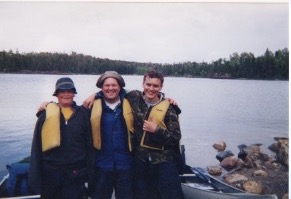
Tom and Willie, Rick and I, were canoeing and camping in Minnesota’s boundary waters. It wasn’t perfect weather, hot and sticky most of the time. Not unlike the kind of weather we’ve had recently, the kind of sky that you expect to rain down on you. Now rain is rain, you just get wet, but rain accompanied by wind is another matter entirely. As we looked toward the sky, we made a quick decision to bug out, pack up and outrun the storm we sensed was coming. We loaded up our canoes, me in the stern, Willie in the bow, Tom and Rick in the other canoe. We took to the water, and paddled into that wind like our lives depended on it. The water crashed over us, the wind pushed at us, I feared we may not find our way, and I believed for a time that that might be it. I remember clearly praying out loud, because I believe, Jesus transforms our fear into courage.

Jesus has spent the day teaching and tending to the needs of yet another large crowd gathered by the seashore, and the long hours of a hot humid day are coming to a close. Settling into the quiet of the evening as the disciples row toward the opposite side of the Galilee, we can imagine the gentle waves rocking the exhausted Jesus into a deep slumber. He falls fast and soundly asleep, seemingly oblivious to the catastrophe that is about to unfold around him. They watch the wind and the rain come at them across the lake. The waves beat into the boat filling it with water, nearly turning them over. Now, many of Jesus’ followers are fisher people, they’ve felt the wind and the rain before. This storm must have been a dousy given their terror. I’m right in the boat with them, feeling the chaos of that wind. Frightened beyond belief that I’d be at the bottom of that lake in no time.

The disciples are really just getting to know Jesus. I wonder if they assume that they deserve rewards for following Jesus. They clearly expect Jesus to protect them from this storm; they clearly expect Jesus to protect them from suffering. They have yet to meet the resurrected Jesus, like you and I have. In this boat, being tossed on the sea and filled with water, they don’t know what Jesus can and will do. For them, all in the same boat, the immediate future is terrifying; all they want is for Jesus to save them from that storm.

When the disciples awaken Jesus, they say “what are you doing Jesus, don’t you care that we are about to die in this storm?” And they accuse Jesus of being indifferent to their plight; and Jesus chides the disciples for their fear and lack of faith.

So they hold tight to the sides of the boat. But Jesus wakes up, and Jesus does something, Jesus transforms their fear into courage, and Jesus calms those waters.

A couple in their thirties rushed to the emergency room after receiving news that their teenage daughter had been injured while playing on a tire swing. The child arrived with a critical head injury sustained when the tree holding the swing fell on her. On his knees, the father prayed for God to heal his daughter from the crushing brain injury. A devout Christian, he asked, “Where are you, God? Do you not care that our child is about to perish?”

I know you’ve asked a similar question. Where are you God? Do you not care that your people suffer? Where are you God? Do you not care that so many are dying from opioid addiction? Where are you God? Do you not care that so many return from war with wounds of the head, and the heart, and the body? Where are you God? Do you not care that the powerful people have the authority to separate children from their parents? Where are you God?

We, like the disciples, pray that God will relieve us of our suffering, and reward us for doing well. We pray that God will somehow get us out of this boat alive, all the while knowing that none of us do. This world in which we live rocks our boat, the waves crash over us, it begins to feel like chaos. But in the chaos, Jesus transforms our fear into courage.


Who is this Jesus who was in the boat with them? This is Jesus who transforms our fear into courage. This is Jesus who cast out demons, this is Jesus who heals Simon Peter’s mother-in-law, this is Jesus who cleanses a leper, this is Jesus who heals a paralytic and a man with a withered hand, this is Jesus who feeds people. All of these stories show us how Jesus cares for us, God’s beloveds.

And this is Jesus who calms the storm. Just see him do it. Jesus had been sound asleep in the back of the boat; head on a pillow no less. The boat is rocking and swaying and filling with water. Just hear him do it, “Peace, be still!” Did you see that? Did you hear that? “Peace, be still!” Not like Moses when he raised his staff to part the waters. No, “Peace, be still!” In the middle of that chaos, that wind blowing, that water raging, Jesus, says, “Peace, be still!”

Jesus shows up and calms the storm. There are many storms, there is much suffering. Jesus doesn’t remove any of that, but Jesus shows up and cares for those he loves. Jesus doesn’t take away the pain, the sadness, the heartache. But Jesus transforms the disciples fear into courage. They can get to the other side of that lake; they can do what they must. Jesus transforms our fear into courage, so that we may also follow Jesus.

What I would have given to have Jesus in my boat with me that day. I was afraid, that day in that canoe, in that storm. My prayer calmed my fear, and gave me courage to go on. We did get to the shore that day, wet, tired, grateful.

The doctors came to that couple, whose daughter lay in that hospital bed, to say they had done everything within their power – she was not going to survive – and now was their chance to say good-bye. With faith-filled strength, they let go of their expectation that God would “fix” their daughter, that God would spare them from the heartbreaking chaos. Instead, they stepped into it and gathered her broken body in their arms, surrounded her with their love, and spoke the words she needed to hear: “Go to Jesus. He is waiting for you. Peace, be still.” For this family, Jesus transformed their fear into courage.

The good news is not that Jesus rescues us from our difficulty, or suffering, or pain. We know that because we know about Jesus’ journey to the cross. We know that because it is for love that Jesus hung on that cross. The good news is that Jesus does not leave us in the storm. The good news is “Peace, be still.” You see, it’s not so much the water that needs to hear “Peace, be still.” It’s you, and it’s me, it’s the disciples, it is this mom and dad and child. It is that promise of peace that calms our fears, and gives us courage to go on or to let go. It is the reality of God’s love that calms our fears, and gives us courage to step up and speak out. It is the truth that love wins that calms our fears, and gives us courage to embrace even what is hard.

Do not be afraid, have courage.

Story from Feasting on the Gospels

Saturday, January 21, 2017

3 Epiphany Yr A Jan 22 2017


3 Epiphany Yr A Jan 22 2017 Audio

Do not be afraid, the Angels tell us. Do not be afraid. It seems, these days, fear runs rampant. And yet, over and over, do not be afraid. We must take this admonition seriously. Because it is fear that gets in our way of doing what it is we must do. It is fear that gets in our way of loving the way God would have us love. It is fear that gets in our way of doing something extraordinary. Because we, who are ordinary people, are called to do extraordinary things.

We have lived through a vicious election, fear mongering was used as a tactic. Friday, here at Trinity we hosted prayers on the day of inauguration, we prayed for all our leaders, we prayed for so many, and we sang these words, a poem originally attributed to St. Teresa of Avila, "Nothing can trouble, nothing can frighten. Those who seek God shall never go wanting. Nothing can trouble, nothing can frighten. God alone fills us." When have you followed Jesus even when you were afraid? When has fear kept you from doing something extraordinary?.

So we have this story about Jesus, who shows up right in the middle of Andrew and Peter, James and John's ordinary lives, and calls them to do extraordinary things. Jesus calls ordinary people, right in the middle of their ordinary lives to do extraordinary things … and Jesus still does.  Jesus calls you right in the middle of your ordinary life to do extraordinary things. It says it right here in our bible, and I just don't think we believe it. We do believe Jesus calls other people, people who are good enough, or holy, or spiritual, or special, or something, but it's so much harder to believe that Jesus calls us ordinary people to do extraordinary things. But friends, the truth is right in front of us. And I believe that the reason we stay in our boat instead of getting up and out and follow Jesus, is that we are afraid, and that keeps us from doing something extraordinary. I do believe that Andrew and Peter, James and John are just like us, I think they were afraid as well, they wouldn't be humans just like us if they were not, but they followed Jesus anyway. What did they see in Jesus? What did they experience in Jesus?

"Follow me, and I will make you fishers of people." Ordinary people called to do extraordinary things. What is the extraordinary thing to which we are called? I believe that extraordinary thing to which we are called begins with the epic adventure of life with Jesus Christ, accompanied by this fellowship who has also said yes to this adventure.

What other story is worth the life of the one who is God in the flesh, whose love for us is so complete that this creator is willing to join us in the adventure, to walk the journey with us, and to lay down his very life for us. What other story is worth our own lives? I believe there is no other story worth our lives, and indeed, this adventure calls for our very lives.

There are stories we tell that follow this same arc of love, stories that are epic, stories that teach us about the Love that wins, stories that invite us into the knowing who this God may be. For example, the story many of us have read or watched about Harry Potter, which begins with the Love of parents that was so true and good that they laid down their lives for the hope that Love would win. That story continues in struggle against the dementors, struggle with pride, struggle with justice and prejudice. For Love to win in the Harry Potter story, one must conjure up a memory of goodness or rightness or family, a memory of strength in vulnerability, and that is the power that overcomes the dark forces. But as good as the Harry Potter story may be, as good as any epic story of our past or present, the story of Jesus is the story we give our lives to.

The extraordinary thing to which we are called is this epic adventure, this epic adventure of love and loss, pain and heartache, death and life. And on this epic adventure we are asked to be courageous. Courage is the willingness to show up and be seen in our lives. That is why this story that we tell about God, creator of all that is seen and unseen, Jesus, the one who pours out his life for us and collects our humanity in his, is our story. Each one of us has had our hearts broken, each one of us has been betrayed, each one of us has lost the ones we love, each one of us has failed. Jesus, God with us, shows us that the story of our lives has meaning. Jesus, God with us, shows us that no matter what we think about the story of our lives, God loves us, and Love wins.

And that vulnerability opens up hope. And hope is born. The epic adventure requires vulnerability, courage, and hope. You and I are equipped for this adventure.

And what fear do we need to release in order to respond to the call to do extraordinary things, to embark on this epic adventure? Fear runs roughshod over our families when we try to be perfect, or when we try to do it all. Fear hardens our hearts when we try to protect ourselves from any more loss. Fear causes us to do nothing because we don't want to fail. We begin to protect what we have when we are afraid, fear creates exclusivity. Do not be afraid, the angels tell us. Let go of the fear.

The epic adventure begins in love, but as in all adventures, there is loss, and heartache. But what makes it possible to continue, despite the adversity, what makes it possible to see the arc all the way to courage and hope, is God and each other. We need to find courage and hope in each other, and in the others who will join with us on the epic adventure.

Yesterday I walked with millions of other people, people all over our planet, in solidarity. We walked with love, and courage, and hope, we walked because I believe the arc of God's love includes all of us, every one of us. And it was extraordinary.

So what is the extraordinary thing you are called to? What is the extraordinary thing we are called to? Because, friends, I believe we, right in this moment, right at this time, are being called to continue this epic adventure to something extraordinary. I believe that the pain and loss that we are experiencing breaks us open to see the new thing, the extraordinary thing that we are to be. I don't know what it is yet, but I believe that we have the courage to do something great. I believe in Love, and that Love wins.

Find it, do it, talk about it. What is the extraordinary thing that God calls us ordinary people to? The seeds of it are here already. We are a loving community of faith, we welcome all who wish to worship with us. Can we see it, feel it, name it? We are fishers of people, what does that mean for us? We are courageous participants on this epic adventure of love. We have been pulled together to do this extraordinary thing God is calling us to. Now is the time for courage, now is the time for Love. Amen.

Saturday, July 23, 2016

10 Pentecost Yr C Proper 12 July 24 2016


10 Pentecost Yr C Proper 12 July 24 2016 Audio

Jesus was praying, and after he had finished, one of his disciples said to him, Lord, teach us to pray. Jesus responded in three ways. First, Jesus gave the disciples words to pray with. Father, hallowed be your name. Your kingdom come. Give us each day our daily bread. And forgive us our sins, for we ourselves forgive everyone indebted to us. And do not bring us to the time of trial.

Then, the gospel writer Luke shows the disciples what that prayer looks like. Luke has Jesus tell a story of a relationship. There is a person who needs some food for a visitor, even though the visitor arrives in the middle of the night. That person goes to the door of his friend, maybe his neighbor, and knocks on the door in the middle of the night and asks for some bread. The friend sounds mightily irritated to be awoken in the middle of the night, but the story suggests that he did in fact after a little convincing, give over the bread. Prayer is about relationship, and prayer is about sharing bread. Sometimes those who practice a life of prayer are accused of doing nothing. But prayer is not doing nothing, indeed, prayer is doing what needs to be done.

And then what we hear from Luke this morning is about boldness. What we have before us is not just the so familiar words we pray as the Lord’s Prayer, but we have those words in the context of relationship and bread and boldness. Ask, search, knock. Jesus' instruction invites trust and boldness, ask, search, knock, confident that you will receive what you ask. There is no one among us listening who would give a snake or a scorpion to a beseeching child, so how then, Jesus implies, can we not trust that God as divine parent will give us all that we need, including and especially the Holy Spirit?

Jesus seems most interested, at this point, in an invitation to a relationship rather than an explanation about the technique of prayer. Prayer is not a list, but a relationship. In this passage Jesus invites us into relationship with God through prayer, offering us the opportunity to approach the God whose name is too holy to speak and whose countenance too terrible to behold with the familiarity, boldness, and trust of a young child running to her parent for both provision and protection.

I do think that we tend to get caught up in all sorts of questions about prayer. How do we pray? What do we pray for? And the big ones, does God answer prayer and does prayer change God? Just as Jesus gave the disciples words to pray with, we Episcopalians have all sorts of beautiful prayers that have been handed to us through generations of the faithful in our Book of Common Prayer, and we have wonderful new prayers that broaden our imaginations. However we are a little bit challenged by extemporaneous prayer. We tend to be formed as people of well thought out and constructed prayer. We tend to rely on the beautiful words of those who came before us. When we are wordless, when the feeling we have is so awesome, so fearful, so sad, so joyful that we are left wordless, speechless, these prayers of our people can lift us up and carry us along.

And there are times, like Anne Lamott writes in a book called Traveling Mercies, that our two best prayers are, "help me, help me, help me" and "thank you, thank you, thank you." Like Anne Lamott suggests, spontaneous prayer comes without thinking. We pray like that all the time.

The point of all of this is that prayer is the work we do in building our end of the relationship we have with God. That relationship is both personal and corporate. Each of us engages the relationship in a very personal way, and need to discover a personal prayer life that is intentional, spirit filled and nurturing. There are myriad ways to grow our personal prayer; one size does not fit all. Personal prayer even changes over time, depending on where and when life takes us.

It’s only in the last few years I have been able to sit in quiet prayer. With young children, trying to find quiet time was near impossible, and if I tried to be quiet to begin my day, before anyone else was awake, I just fell asleep again. I also needed to exercise, so I did that early in the morning while everyone else was still asleep, and I learned that I could combine prayer and exercise. That is a discipline I continue even though small children have become large. But I have also found that I can spend some time now in quiet prayer, without fidgeting and without falling asleep, most of the time.

We also engage our relationship with God in a corporate way. We gather together in prayer, in fact that is who we are as Episcopalians, people who share common prayer. We sing together, we have silence together, we say our prayers together, we read and hear scripture together, we eat together, and together we are sent out into the world to continue the work God has given us to do.

Bottom line though, is that prayer is a relationship, and a relationship must be worked at, it can’t be taken for granted or set aside, or it will fail. This relationship with God has at its foundation good faith and reciprocal love. It is a relationship that is transformative. "I pray because I can't help myself. I pray because I'm helpless. I pray because the need flows out of me all the time- waking and sleeping. It doesn't change God- it changes me," writes C.S. Lewis. Prayer is really much more about us than about God. Prayer is about our overflowing need to know our creator, and to be known by our creator.

And yet I speak of boldness in prayer. How do we speak of boldness in this relationship with God? Especially when in our ears we hear, blessed are the meek for they will inherit the earth. How do we speak of asking for what we want, when it seems like God should already know that. Ask, search, knock. I think being bold and courageous in our prayer makes us clearer about what we are asking. I think being bold and courageous in prayer makes us discern what it is we really need. As we are bold in prayer, who we need to be, what we need to do, whom we need to serve, begins to dawn on us like a beautiful mountain sunrise. A sunrise that illuminates all else.

And I know that God always responds to prayer. Often that response is, no Kathy, not now, not ever. Sometimes that response is a surprise to me. I, in my infinite wisdom, would not do it the same way God does it. C.S. Lewis has also written, “There are two kinds of people: those who say to God, "Thy will be done," and those to whom God says, "All right, then, have it your way."”

Does prayer really work? I turn to Barbara Brown Taylor, a wonderful preacher and writer, in her collection Home by another way. She says about prayer, "It keeps our hearts chasing after God’s heart. It’s how we bother God, and it’s how God bothers us back. There’s nothing that works any better than that.”

Be bold, be courageous in your prayer and your relationship with God. And then do, do the thing, love, forgive, heal, feed, do the thing your prayer asks. You are the change you ask for.

Amen.

Saturday, August 9, 2014

9 Pentecost Yr A Proper 14 August 10 2014

Audio 8.10.2014

I get to tell one of my favorite jokes when we read this story. A priest, a rabbi and a minister were all in a boat out in the middle of a lake. The Priest says, "I’m thirsty. I’m going to shore and get something to drink." So she gets out of the boat walks across the water to shore, gets a drink, walks back across the water, and gets back in the boat. The minister says, "I’m thirsty also. I’m going to shore and get something to drink." So he gets out of the boat, walks across the water to shore, gets a drink, walks back across the water, and gets back in the boat. The rabbi thinks to himself "pretty cool. I’m trying it." So he says, "I’m thirsty also. I’m going to shore to get something to drink." He gets out of the boat and falls in the water and sputters around. Then the priest said to the minister, "Do you think we should have told him where the rocks were?"

The walking on water story goes like this in Eugene Peterson’s translation in the Message. Jesus came toward them walking on the water. They were scared out of their wits. “A ghost!” they said, crying out in terror. But Jesus was quick to comfort them. “Courage, it’s me. Don’t be afraid.” Peter, suddenly bold, said, “Master, if it’s really you, call me to come to you on the water.” Jesus said, “Come ahead.” Jumping out of the boat, Peter walked on the water to Jesus. But when he looked down at the waves churning beneath his feet, he lost his nerve and started to sink. He cried, Master, save me! Jesus didn’t hesitate. He reached down and grabbed Peter’s hand. Then Jesus said, “Faint heart, what got into you?” 

This story is the story that has given rise to the expression “oh ye of little faith.” But I’m not convinced it’s a story about a lack of faith, as much as it is a story about having a little faith. Peter actually has a little faith in this story, what he needs is courage after he steps out to keep on going. I think Peter is the quintessential human being. Peter is just like me. There are days I have a little faith, and days I need a lot of courage. Peter gives me hope. 

Let’s check this out. We heard the mustard seed story just two weeks ago. Jesus says in a version of that story, “if you had faith the size of a mustard seed, you will say to this mountain, ‘Move from here to there,’ and it will move; and nothing will be impossible for you.” Now we know that a mustard seed is a mighty tiny seed, so having faith the size of a mustard seed is a little faith. But these are stories not about what faith is lacking, and it is not about not having enough faith, it is about the faith that Peter has that causes him to courageously step out of the boat. And they are stories that include you and me, who, on most days, like Peter, have a little faith. 

So how much faith do you need to make a difference, to change the world, to move mountains, and, like the rest of the disciples in the boat that day, to know that Jesus is lord? You need a little faith. Faith is not about having enough, faith is not about knowing for absolute sure, faith is not about clarity or certainty. Faith isn’t about shouting most loudly about knowing exactly what God’s specific plans for everyone are, faith isn’t about knowing the future. 

Well then, what is faith about? Faith is a willingness to risk. Faith is about the courage to take that step out of the boat, to respond to Jesus when he says “come ahead,” and to do it whether you think you’ll sink or swim. And faith proceeds from love, the kind of love that makes a person willing to be the first to say “I love you”, not because of a certain expectation of a particular reply, but because of the possibilities that saying “I love you” opens. 

Faith doesn’t connote belief in a particular outcome, and it isn’t an intellectual assent to a particular proposition. Faith is not a wish for more money or a better life. Putting our faith in this particular story about death and resurrection, putting our faith in Jesus does not mean believing that we’ll be successful in a particular enterprise that Jesus is calling us to. Having faith in Jesus means a willingness to follow Jesus, not because we believe that we’ve already got the rest of the story plotted out once we’ve made that decision, but because we take seriously that Jesus is Lord.

So faith is the courage to risk, faith opens up the possibilities, and faith is taking seriously that Jesus is Lord. This faith opens up the possibility that we are fully capable of loving one another, that we are fully capable of respecting the dignity of every person, and the possibility that we must die in order to live again. This kind of faith also opens up the possibility that we may fall, and that we may wallow in the mess. And when that happens, we can look to resurrection and hope, and know that Jesus is right there with us in that mess. 

Faith is not certainty and it is not security in a right future. Faith is living each day knowing that Jesus lived each day. Faith is the courage to risk. Jesus loved, Jesus was hurt, Jesus even hurt others, Jesus risked everything, Jesus died and Jesus rose from the dead. Faith is responding to Jesus’ invitation, “come ahead, have courage,” and being transformed by the relationship. 

Faith is risking it all and being together in the mess. Peter wasn’t alone in that boat. All the disciples were there with him. Faith is finding love and hope here in the body of Christ. Because this risky business of faith is not to be undertaken by yourself. It is to be undertaken together, it is to be undertaken in the body of Christ. We do this together, no one is out there alone undertaking this risky business of faith, it’s too important, it’s too dangerous, it’s too perilous. Every one of us needs a support team. 

The body of Christ, the community of faith, is our support team in this risky venture of faith. I could not be your priest without all of your prayers and words of encouragement. I depend on your prayers, as you depend on my prayers and the prayers of all of us gathered. Not one of us can accomplish the risky work of faith out in the world without the support team that is our community of faith. I go to Sr. Margaret at St. Martin’s monastery once a month for spiritual direction, and I know I am and we are in the daily prayers of the sisters there, they are our support team. 

My favorite author, Madeleine L’engle once said during her recovery after a horrible accident she was in, that she could no longer pray, but that she knew that there were people who were praying on her behalf. We pray for others and on behalf of others all the time. That is the body of Christ, the community of faith doing its work. 

I believe faith is not one sided. Faith is not just about us. I believe that God has faith in me, and in us. Imagine the risk God takes at the creation of each and every child, each and every planet, each and every star. Will it be all that God intends for it to be? Will it be creative, will it be life-giving, will it fulfill all the hope in its creation? God is faithful. God risks everything with each and every one of us. If we have little faith, the size of a mustard seed, God has humungous faith, the size of millions of universes.

It is God’s huge faith in me that enables me to have little faith in Jesus. Little faith is enough to make a difference, little faith is enough to bring Light into the mess, little faith is enough to move mountains, and little faith is enough to find the rocks in the water so that we can make it to the other side. Thank God. Amen.

Saturday, February 1, 2014

The Presentation of Jesus in the Temple, Feb 2 2014

Audio 2.2.2014

Forty days ago we celebrated the joyful feast of the birth of Jesus. Today we recall the holy day on which he was presented in the temple, fulfilling the law of Moses. And an historical note, the traditional liturgy for the day is called Candlemas, because of its ancient rite of blessing of the candles to be used in the church for the next year, a practice dating from the middle of the fifth century. Today we hear, led by the Spirit, Simeon and Anna recognized Jesus as their Lord, and proclaimed him with joy. We recognize Jesus in all sorts of ways as well. We recognize Jesus in baptism, in one another, and in the breaking of the bread.  

This story, the Presentation of The Lord in the Temple is similar, and yet not the same, as our baptism of today. In this story, a Jewish family brings their son to the temple at eight days old and presented, and circumcised. And at the same time, the child is named. Jesus, God in our midst. At our sacrament of baptism, a baby is presented, named, gotten all wet, and marked as Christ's own forever. We trust that God shows up in a particular way at these times, but not once and for all, but to begin the journey with us. When we baptize a baby, we also trust that the community of faith, all of us, takes seriously the promises we make, especially the promise by our prayers and witness we will help this child to grow into the full stature of Christ. 

In our story today we meet Simeon and Anna, very old people who are living the end of their lives at the temple. Separately they understand who this baby Jesus is. Simeon is clear that this child is the light of revelation to the Gentiles, and this child is for glory to Israel. Simeon now can die in peace, because he has seen God in our midst. Simeon blesses Mary and Joseph. Anna, also recognized the child as the one everyone was looking for, for the redemption of Jerusalem. 

Simeon and Anna are you and me. Simeon and Anna are the witnesses to God's grace and love in the world. Simeon and Anna are the witnesses to pain and suffering in the world. Simeon and Anna speak to the hope that rises out of suffering and adversity, the hope that breeds courage, the hope that God is fully capable of doing something new, and indeed is doing something new. Each time a baby is presented here, at this font, and at any font in any church, it is a sign of hope, it is a time to recognize Jesus in our midst and the claim Jesus makes on our hearts and souls. The claim Jesus makes on each of us as we promise to raise our children with the story of life and death and resurrection. The claim Jesus makes on each of us to make us new creations. We respond to Jesus' claim on our hearts and souls by promising to be bearers of the light and builders of the Kingdom. We promise to show the world that Love wins. 

Simeon and Anna are you and me. We, like Simeon and Anna witness God's grace and love in the world, we witness pain and suffering in the world. And we must recognize Jesus in our midst, in baptism, but also in the world. We must recognize Jesus in our midst, we must recognize Jesus in the places in our world where Jesus resides. With those who are poor, those who need food and clothes, those who are broken and in need of healing. Sometimes those people are here in our midst, and sometimes we are those people. We recognize Jesus among us.  

Jesus is presented in the temple, we present our children for baptism, trusting that God claims our hearts and souls and walks with us, showing us the way through pain and suffering, death and resurrection. We recognize Jesus in the water of baptism, water that gives live and takes life, we recognize Jesus in the light of epiphany, the light that brightens the darkness, the light that will not be put out. We recognize Jesus in the hearts and souls of one another.

And we recognize Jesus in the breaking of the bread. This breaking of bread is central to what we do each time we gather here. We pray, we sing, we confess our sins and receive forgiveness, we break bread we give thanks and we are sent out to do the work God calls us to do. The epic story of the love that wins tells us that Jesus broke bread with his friends, and in a like fashion his body was broken for us. With our broken bread, in our broken lives, in our broken hearts, Jesus fills and floods us with the bread and wine, and puts us back together, in a way that alone we cannot. Jesus' love re-members us, and we are not just glued together, but we are enveloped in a love that will not let us go. 

Jesus is presented in the temple, and our work is to accompany Jesus into the world, being the light, and the food, of God's mission of healing and wholeness. You see, Jesus and Mary and Joseph did not stay in the safe and comforting confines in the temple. They went out to be on the journey of God's mission in their world. God's mission has always been the same, bringing each and every one of us and all of humanity into the healing love and embrace of God. God's mission is kingdom building. And in God's kingdom, all are welcome, no one is excluded. In God's kingdom our broken hearts and bodies are made whole. In God's kingdom everyone has enough to eat, everyone has a warm place to sleep. 

It takes courage to be about the work of kingdom building. Courage to step out into the work that God is already blessing. You, at your baptism, at your presentation to God, were marked as Christ's own forever, you have the courage to be a kingdom builder. 
Saturday, June 23, 2012

4th Sunday after Pentecost Yr B

I love stories about the underdog. We’ve watched Rudy so many times we can recite the lines, and I cry every time Rudy gets put into the game. Mighty Ducks, the first one, is another favorite, I sit on the edge of my seat until the end of the game, even though I’ve seen them win a bazillion times. The Rookie, Star Wars, Chariots of Fire, Remember the Titans, Field of Dreams, and the list goes on. The reason I bring all this up is that I wonder at the question, which comes first, our passion for rooting for the little guy, or the story of David and the story of Jesus?

During the time in which the story in Samuel first was told, Israel is constantly at war with the Philistines. Ancient warfare was highly ritualized. In Homer’s Iliad, we read how battles were conducted in ancient times in the epic story of the siege of Troy, about 1200 BC. We see that each side would send out its great champion who would fight on behalf of his people. Often the battle would end there, because whichever champion won the other side would be so demoralized it would retreat. In this story we read today, the Philistines have a champion who is described as well, huge, Goliath. And the problem is that the Jewish forces have no champion at all. The Jewish troops are stationed on the one side of the Elah Valley, south of Jerusalem, a place that you can still visit today in Israel, and the Philistines are on the other. Goliath is marching out in front of the Philistine lines, shouting curses at the Jews and challenging someone to come and fight him. Choose yourself a man and let him come down to me shouts Goliath. If he can fight me and kill me, we will be slaves to you; if I defeat him and kill him, you will be slaves to us and serve us. The mortified Israelite army has to listen to this, because no one is willing to take on Goliath. One day, David, who is still a shepherd and not a soldier, shows up on the battlefield bringing food for his brothers and he’s shocked by what he sees. Outraged at Goliath’s blasphemous insulting of the God of Israel, David volunteers to fight Goliath, though he has a hard time convincing everybody to let him go out into the field. Finally, he convinces King Saul with his steadfast faith in God.

I remember my first New Testament professor telling us that all history is written from the perspective of the winners. History published in history books is written from the perspective of the winners. The losers don’t write history, and their story is rarely told in history books. Western civilization loves its winners and they are often assigned near divine status, or, at the least, God is on the winner’s side status.

And yet we have before us this story of David in which the underdog becomes the champion. And we have this story of Jesus, in which those who are low are raised up, those who are on the margins are brought to the center, those who have no power are empowered, and lowly fisher folk become disciples.

I wonder if it is just part of human nature to claim to be on the side of the winner. Is it part of our DNA? The biological story may support that. We know the story of the survival of the strongest. We know that the human drive is to procreate, to survive and to thrive. In the animal kingdom the weakest and the smallest don’t last long. But Jesus shows us that in God’s kingdom in dying we are alive, as sorrowful yet always rejoicing; as poor, yet making many rich, as having nothing and yet possessing everything.

God’s kingdom is very different from humanity's kingdom. In God’s kingdom, the underdog becomes the champion. In God’s kingdom, fisher folk become disciples and bring the Good News to all nations, to all people, to the ends of the earth. In God’s kingdom, God has faith in the people, and the people respond with faith the size of a mustard seed in God. In God’s kingdom, faith the size of a mustard seed is enough to grow and accomplish great things. In God’s kingdom, not only does the underdog win, not only does the lowest get lifted up, but even what is dead has new life. In God's kingdom, Love wins every time. Even the faltering and fearful faith of the disciples can become awe.

The Good News is that God’s kingdom has begun. Jesus’ life, and love, suffering and death, and resurrection began God’s kingdom. In God’s time God’s kingdom will be fulfilled. In the meantime, you and I can be active participants in God’s kingdom. We can respond to God’s love, we can respond to God’s faith in us. We can be on the side of the underdog. We can be with the imperfect, fearful disciples in the boat. Both of these texts are about courage and fear and what happens when you let the fear take over. So they are also about what happens when Love wins. We are so much like those disciples in the boat, being afraid of what's under the bed. Every time we turn around someone is telling us to be afraid, someone is preaching gloom and doom. But God's message is not about fear. God's message is about love.

So I return to the all time best underdog movie, Rudy. For those of you who don’t know the story, Rudy grew up in a steel mill town where most people ended up working, but Rudy wanted to play football at Notre Dame instead. There were only a couple of problems. His grades were a little low, his athletic skills were poor, and he was only half the size of the other players. But he had the drive and the spirit of 5 people and has set his sights upon joining the team. He spent two years at St. Mary’s working on his grades and working his way through school. When he finally got into Notre Dame as a junior, he walked on to the team and served on the ‘scout’ team as pretty much a tackling dummy. By the time he was a senior, he had endeared himself to the really good football players, and they really wanted him to be officially recognized as a member of the Notre Dame Fighting Irish, and that would only happen if he participated in at least one play. Rudy’s teammates had already experienced his heart, and his steadfast faith, and insisted to the coach that Rudy suit up. So in the waning moments of the last game of Rudy’s senior year, the team and then the fans chanted Rudy, Rudy, coach put him in and Rudy ran a couple of plays. It wasn’t about winning at all, it was about a little guy who responded to life in big ways and with gusto. It was about faith, it was about being fully engaged in relationship with God and with others.

We are called to respond to life's challenges with courage, and not in fear. We are called to row the boat together, and when we do, we'll all get to the shore.

All Saints Day, Nov 1 2026, Sts. Martha and Mary, Eagan

All Saints Day, Nov 1 2026,  Sts. Martha and Mary, Eagan Revelation 7:9-17, Psalm 34:1-10, 22, 1 John 3:1-3, Matthew 5:1-12 We have some rea...