Saturday, January 28, 2023

4 Epiphany Yr A January 29 2023


4 Epiphany Yr A January 29 2023

Micah 6:1-8, 1 Corinthians 1:18-31, Matthew 5:1-12, Psalm 15


I am convinced the prophetic voices we hear in today’s readings can guide our walk with Jesus. We must listen to them. In Matthew’s gospel is Jesus’ sermon on the mount. This is the opening proclamation of the ministry to follow, and in it Jesus shows us what the kingdom of God looks like. In God’s kingdom, you are blessed, and the purpose and focus of Jesus ministry is to bless. So one of the ways we follow Jesus is blessing. The other prophetic text we hear today is Micah. We’ll begin there.


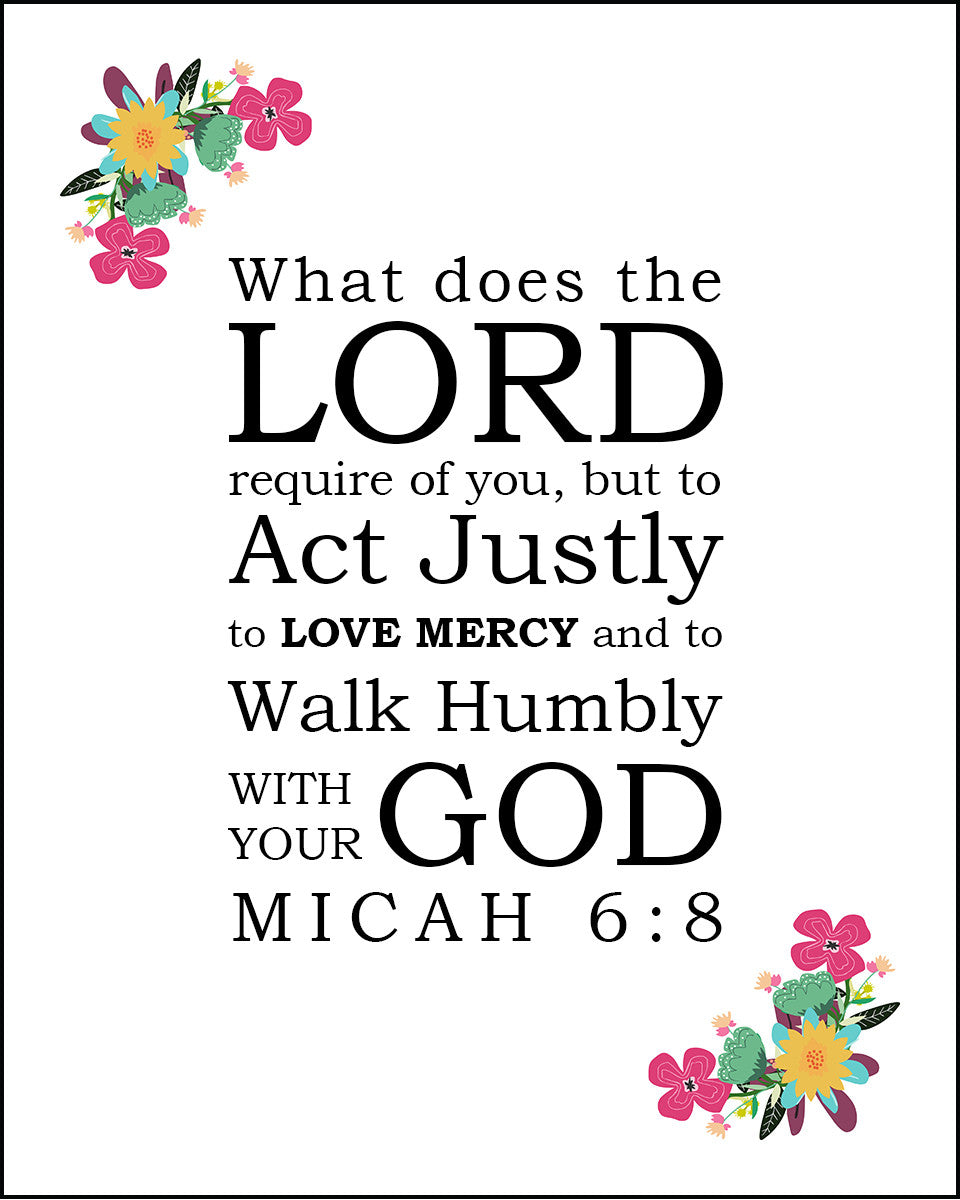
The last verses of what we hear from Micah are what we are most familiar with. I want to put those verses into some context. What we have is a sort of trial, with an indictment, and then sarcasm, a bit of a long-suffering Lord. In that voice we hear, “O my people, what have I done for you? All I've done for you is to bring you up from the land of Egypt, I redeemed you from the house of slavery; I sent before you Moses, and Aaron, and Miriam.” As if. And then the voice of the Lord calls us to remember, we are to remember what happened and to remember the saving acts of the Lord. And thirdly, how shall we come before the Lord? Shall we bring burnt-offerings, rivers of oil, our first-born child? And then there it is, what the Lord really needs of us is to do justice, and to love kindness, which is also mercy, and to walk humbly with our God. 


Do justice, love kindness, and walk humbly with our God. Wow. This is what God’s kingdom looks like, and this is also what it means to follow Jesus. Humbly isn’t quite an accurate translation, it should be more like walk intentionally, walk deliberately, with your God. Do justice, love kindness, and walk intentionally with God.


So then we move into how to recognize blessing in Matthew. We’ve heard these beatitudes so many times, haven’t we. You know, for a long time I taught children using Godly Play. Godly Play is a way to tell the sacred bible stories. So, I’d tell this story about Jesus teaching his friends when the children were in first grade, and then they’d hear it again in second grade, and by third grade they’d say, we’ve heard that one before! And I’d respond with, of course you have, but what’s different about it this time? Because you see, each time we hear these sacred stories, we are in a different place and a different time, so we hear something different from them. Friends, we are in a different place and a different time, we must hear these beatitudes differently.


Jesus is speaking directly to his disciples with this teaching. You and I are really just eavesdropping. Jesus is teaching his disciples about how to recognize blessing. Not, who is blessed, or how to bless, but how to recognize what God has already blessed. God has already blessed the poor in spirit, and theirs is the kingdom of heaven. God has already blessed those who mourn, and they will be comforted. God has already blessed the meek, and they will inherit the earth. God has already blessed those who hunger and thirst for righteousness, and they will be filled. God has already blessed the merciful, and they will receive mercy. God has already blessed the pure in heart, and they will see God. God has already blessed the peacemakers, and they will be called children of God. God has already blessed those who are persecuted for righteousness’ sake, and theirs is the kingdom of heaven. And God has already blessed those who are reviled and persecuted.


You see, our job, as followers of Jesus is to get with the program, God is already doing great things, our job is to see that and join forces. And what’s so hard about this is God has also already blessed those who we would not think are blessed. In our world, when we think of someone who is blessed we most often think of someone who is wealthy or powerful or famous or successful or beautiful or enviable. Blessing, at least according to the standards of this world, is most often of the material kind. Blessing is missing the close call, or getting something someone else doesn’t get. But that’s not what is revealed in Matthew’s story about Jesus teaching the disciples. God blesses those in need.


So now we have these two scriptures that are presented to us together on this day, in this church, in this community, in this country, and the question I ask of them is what does it have to do with us? What do these pieces of scripture have to do with following Jesus?


Following Jesus is about is doing justice, loving kindness, and walking intentionally with God. Following Jesus is to recognize blessing when it is staring us in the face. I think recognizing blessedness is about walking with God. I think recognizing blessedness has something to do with living in a community, a church of hospitality, a place where people of all stripes can come and find justice, and kindness and mercy.


Friday was International Holocaust Remembrance Day. When I was a kid in civics class, we learned about the Holocaust, and I remember being frightened and disgusted. In my own life I cannot come to terms with how people can do such horrible things to other people. And I learned that we learn about such atrocities, to never let it happen again. I have been to the Dachau Concentration Camp Memorial Site, I have been to the Holocaust Memorial in Washington DC, and I believe following Jesus is about offering hospitality and sanctuary to all who come seeking refuge from violence and persecution in their own countries. And I know that seems like it is way outside our control, so the question I bring to these texts today is, right here in our church, right here in our community, how do we follow Jesus by doing justice, loving kindness, and walking intentionally with God. How do we follow Jesus by recognizing blessing when it is staring us in the face?


So that’s what I want us to consider. What is it you can do, today, tomorrow, and the next day, to offer hospitality to the people you sit next to in these pews, to the people who walk by our church daily, to the people who are in our neighborhood and community. What is in your hands? How can you walk with God and be that light that shines in this darkness? How can you be a partner in God’s blessing?


Friends, we follow Jesus because we are convinced of God’s love for us, God’s love for all of creation. We follow Jesus because we are convinced that Love wins. We come here, to this place and we offer our own brokenness to be forgiven and healed, we are filled with bread and wine that are Jesus’ body and blood. In the mystery that is God’s love for us, we recognize blessing, we receive mercy, and we enact justice. You are loved, go out into the world to do the work you are called to do, to love and serve as faithful witnesses of Christ our Lord. Amen.

Saturday, January 14, 2023

2 Epiphany Yr A January 15, 2023


2 Epiphany Yr A January 15, 2023

Isaiah 49:1-7, 1 Corinthians 1:1-9, John 1:29-42, Psalm 40:1-12


Come and spend the day with me, Jesus says to Andrew and his friend. Come and see where I am staying, come and see who I am. Come and spend the day with me. Jesus is the one they were waiting for; Jesus is the one they believed the stories they told were all about. Jesus, the Lamb of God, Jesus, the Son of God, Jesus, the one to whom John points. And Jesus says, come and spend the day with me.


You know, the meaning of words change over time. For example, hospital was a once a place for the reception and entertainment of travelers and pilgrims, from the Latin, "hospitality." Another, if you invested in someone, you clothed them, from the Latin "to clothe." So, investment once meant "putting clothes on" which were vestments. The place I am going with this is the place we seem to be today with the word "evangelism," a word Episcopalians have had a hard time with for a while now. Even hearing the word strikes fear in the heart of any native Episcopalian, and even those of us who have come later in life to the light. We think of soap box yellers, we cringe at the thought of the question, "Have you accepted Jesus Christ as your lord and savior?" We are polite people and know that this does not make for good dinner table or cocktail party conversation. Besides, what can stop conversation faster than, "Do you know where you're going when you die?" Or the one I like the very best, "Have you found Jesus?" I am always tempted to answer with, "I didn't know Jesus was lost!" Or "yes, he's been behind the couch the whole time!" The point is, that the word evangelist means "bringer of good news," therefore evangelism is to "bring good news."


Come and spend the day with me and I will bring you good news. Not such a bad way to evangelize, is it? Today I would like us to take back evangelism, to not be afraid of the word or of the activity. Today I would like us to respond to Jesus' invitation to spend the day, and listen to who Jesus calls us to be, and how Jesus calls us to be evangelists, how Jesus calls us to bring good news.


Another related word that elicits fear in many Episcopalians these days is mission. Historically mission has been related to the violent act of colonizing a people with the result that those people look and act and talk like the dominant culture. Our church, and others, have been guilty of this kind of mission in our history. And yet that is not what mission is all about. Mission is about building bridges and forming relationships and partnerships that may result in mutual growth and learning and compassion and healing.


Come and spend the day with me, and I will teach you about the good news, I will teach you about forgiveness and reconciliation, and you can bring that into the world and show others how to follow me. We claim to be followers of Jesus. Our baptismal identity is grounded in that claim. We reiterate that claim when we renew our baptismal promises, and we live out that claim every time we gather together to break bread. In the story we hear today, Andrew brings the good news to his brother and his friends, and together they follow Jesus.


Evangelism and mission are nothing more, and nothing less, than the invitation to come and spend the day with Jesus; to notice the amazing creation, to see where God is in your life, and to invite those you encounter into the Love, Freedom, and Truth that Jesus is. As with anything and everything, this takes practice. And it takes practice to tell your story. God is at work, and we need to practice noticing that and describing that. So, the first part of evangelism is to notice what God is up to.


The second part of evangelism is to share what is important about your faith or your church. Why do you come here to Trinity every Sunday? Why do you seek Jesus? Is it because here you can be your broken, messy, confident, joyful, self in front of God and the rest of us? Is it because you are not perfect, but you want to find out what it is to be perfectly loved? Is it because you miss the mark, just like the rest of us, and in some way, you know the freedom of forgiveness? Is it because you always have come here? Is it because you have been wounded elsewhere, and here you find peace and acceptance? Is it because you have a place here, you belong here? Is it because you help with GIFTS, or you deliver meals, or you give food and clothes to those who have none, and on some level, you bring Jesus' incarnation to people who just need to eat?


The third part of evangelism is the inviting, and sometimes we think the hardest part is the inviting. Like Andrew, who goes to get his brother, we too can invite those we work with, those we go to school with, those who we see in pain, to come and see. It may seem hard, but you invite people all the time, you invite them to your home, or to a movie, or to the concert, or to take a walk with you. It's no different. Come and see what God is doing. Come and see what God is doing at Trinity. Come and see the Love that wins. Come and see how your life matters. Come and see the good news of Jesus in the word and music, in the bread and the wine, in prayer and silence, in who we are and what we do. Jesus says, come and spend the day with me. Come, and see who I am. Come and find healing, forgiveness, and love. Come.


And then go. Follow Jesus out into the world. Bring the Good News into your families and your work, bring the Good News into the marketplace and the community. Bring the Good News of God's healing love. Our voice matters. Our actions matter. We are the people who can make a difference. We are the people who know the true freedom of God's love. We are the people who know that no matter what we've done, how broken we truly are, that God loves us anyway. Preach this Good News with your life and your love. Proclaim this Good News with your heart and your soul. We are all related in God, show with your life the ways God's love is in the world. Amen.

Sunday, January 8, 2023

The Feast of the Epiphany (transferred) Jan 8 2023


The Feast of the Epiphany (transferred) Jan 8 2023

Isaiah 60:1-6, Ephesians 3:1-12, Matthew 2:1-12, Psalm 72:1-7,10-14


Game of Thrones, anyone read it, or seen it? I read all the books, and I’ve seen none of the television show. For those of you who know little about it, except some sort of meme that reads, Winter is Coming, it is an epic story of power, greed, mystery, love, and violence. Oh so much violence. Record numbers of people watched it on HBO for eight years. Some binge watched it, some watched every week for most of eight years. In order to do all that watching you really have to be committed.


Sometimes I wonder why more people don’t commit to the Bible like that. Boring it is not. Power, greed, mystery, love, and violence are all there. The story we have before us today is as good as any violent and bloody movie you’ve ever seen.


Herod is a desperate, ruthless, dictator, and he tried to enlist these foreign mystics to be his spies to help him discover this child’s identity and whereabouts so he could have the child killed. But the wise people were informed in a dream to go home by another way and avoid being Herod’s unwitting accomplices. Herod’s Plan A failed, so he went to Plan B, a violent and grisly alternative. But by then, the boy Herod was looking for had already fled with his parents to a foreign land. The result however, was brutal. The slaughter of innocent life.


Matthew includes this grisly story in his gospel for a reason, what is that reason? We can only guess, so guess we will. The Wise People have a very particular role to play in this story. Their exotic nature as astrologers from a faraway land show us that there is something amazing about this birth. This may look like an ordinary birth, to two immigrant parents, looking for a place to stay in the very crowded city of Bethlehem. But when the Wise People show up, we know that things are not as they seem. This becomes no ordinary birth.


And, we tend to look toward this story as one of our reasons for gift-giving at Christmas and during these days of Christmas, which actually concluded on Friday, the Epiphany. Epiphany means, “when God appears”, it is when and how God shows Godself. Gold, frankincense, and myrrh brought by these Magi from the east are spectacularly generous gifts. God gives a spectacularly generous gift in Jesus: love and new life. However, at its core, this is a story about God appearing, it is a story about Jesus, it is a story about encountering Jesus, it is a story about kingdom.


In the kingdom of God love wins. You see, the baby Herod seeks to kill models another way. Jesus’ way is the way of love. Jesus uses power to heal and empower others. Jesus reveals God’s dream of healing and reconciliation. This is Good News indeed.


And yet, we do not live in an ideal world. Children continue to suffer from hunger, abuse, homelessness, imprisonment. Children in our own community suffer from inattention, social media bullying, disbelief in their own worth. We are not perfect, our church is not perfect, our community is not perfect, but God’s perfect love calls us to another way, not the way of power, greed, judgment, prejudice. God’s perfect love calls us to be different. God’s perfect love calls us to go home by another way. God’s perfect love calls us to love with abandon, flinging ourselves into the arms of Jesus.


That’s why the birth of Jesus takes place in a manger, a feed trough, in an ordinary home, in an ordinary town, and not in the towers of power, not in the courts of kings, not in the temples of priests. This is not a life of luxury, it is not a life of prosperity, it is not a life of transaction. There is no reward. There is no gold, frankincense and myrrh waiting at the end of the rainbow. But there is love. And love matters. Love that causes you and me to know our worth, what’s that Christmas song? O Holy Night! The stars are brightly shining, It is the night of the dear Savior's birth! Long lay the world in sin and error pining, Till he appear'd and the soul felt its worth. A thrill of hope the weary soul rejoices, For yonder breaks a new and glorious morn! This is it, God breaks into our lives, as a vulnerable baby, these wise people from the east come to pay homage, and foil Herod’s plot, and everything changes. God shows us that our lives are of incomprehensible worth. All our lives, in all our joy, and beauty, in all our brokenness and pain.


And God seems to do whatever it takes to reach out to and embrace all people. God announces the birth of the Messiah to shepherds through angels on Christmas, to Magi via a star on Epiphany, and to the political and religious authorities of God’s own people through visitors from the East. From a manger, where a child lies wrapped in bands of cloth, God’s reach, God’s embrace in Jesus, gets bigger and bigger and bigger. Jesus eats with outcasts and sinners. Jesus touches people who are sick and people who live with pain and suffering. Jesus even calls the dead back to life. Ultimately, Jesus draws all people to himself as he is lifted up on the cross. In Jesus, no one is beyond God’s embrace.

God’s radical grace is wondrously frightening. The Light that shines in the darkness, the Love that wins is wondrously frightening. That is what this story is about. God comes to us in wondrously surprising ways. Ways we do not expect. Ways which we would never choose for ourselves. And once we have encountered Jesus, we are changed, we are transformed, and we must go home by another way. Or not, the alternative, of course, is to join Herod in not seeing God’s ever-expanding embrace, or feeling threatened by it, and instead giving way to just plain fear and violence. Herod jealously reached out himself, just far enough to violently protect his place and preserve his power.


We are called to bring God’s Love to a fragmented society, to a culture that is pulled apart by greed and fear and violence. We are called to bring God’s Love to a culture that engages more and more in meanness and name calling and judgement. God’s Love, God’s Power, is the most powerful integrating force in creation. God’s Love moves us from brokenness, from fragmentation, to wholeness, and to healing.


Be the light shining in the darkness, see the light shining in the darkness, and go home by another way. Amen. 

Saturday, December 24, 2022

4 Advent Yr A Dec 18 2022


4 Advent Yr A Dec 18 2022

Isaiah 7:10-16, Romans 1:1-7, Matthew 1:18-25, Psalm 80:1-7, 16-18


Here we are, the fourth Sunday in Advent, ever so close to incarnation, God with us, Emmanuel. Ever so close to the completion of God’s arc toward love, and mercy, and compassion. And even though we celebrate again and so very soon, the birth of the baby born in Bethlehem, the birth of the Messiah, we continue to wait. We continue to wait for the completion, the fulfillment, the promise, that God will bring all creation to Godself. We hear that promise in the collect for today, “Purify our conscience, Almighty God, by your daily visitation, that your Son Jesus Christ, at his coming, may find in us a dwelling prepared for himself.”


Matthew’s story of Jesus’ birth is so very different from Luke’s. Luke gives us the story from Mary’s perspective; Matthew tells the story from Joseph’s perspective. And Mark and John don’t include a birth story at all. In Matthew’s story, Mary is pregnant by the Holy Spirit. Joseph could have had her publicly ridiculed and even stoned, but being a just man, decides to part ways with her quietly. But Joseph listened to an angel, who told him that this baby is the fulfilment of all the yearning and all of the stories that Joseph knew, this child is Emmanuel, God with us. And Joseph knew, that in this child to be called Jesus, God comes to be right where we are. Matthew also tells us later in his story of the promise that Jesus will be with the people to the end of the age. Matthew looks to all the stories of his people that came before him and sees in those stories this promise of God’s fulfillment, that God will and does dwell with God’s people.


Matthew’s perspective points us in the direction of the coming of Christ, the climax of creation. Advent puts us amid the celebration of birth, incarnation, God coming to be right where we are, and the fulfillment of all things, the completion of the arc of God’s love for all of creation. It is all right here in front of us, and yet we forget. We forget that this story of God with us, is a story that is full of cosmic consequences. It is a story about new birth, incarnation, and it is a story about now, and not yet. Advent calls us to consider this reality. Alongside of the romantic versions of a baby and angels, is the appearance of the messenger to which the reaction can only be, “do not be afraid.”


We are afraid of many things. Afraid of the end of times. Anxious when we must wait. We either avoid the stories in scripture, or we become afraid of them, or we pass them off as the visions of a stark raving madman. And we live in a culture that teaches us to be afraid of so much. Be afraid of change, be afraid of the madman who stalks in the night, be afraid of the unknown man. Be afraid of what you cannot control, be afraid of the weather, be afraid of the additives in your food, be afraid of your neighbor. In a world that makes us afraid at every turn, every angel that appears begins with, “do not be afraid.”


But because Advent gives us time to be present in the then, the now, and the not yet, and presents us with stories that point us both to birth and growth and to the end of time, we enter this most uncomfortable of places, and wonder what it may be all about. We rest in the in between, counting on transformation, growth, and just like pregnancy, we will be forever changed.


I am reminded of a scene that I love in the first Jurassic Park movie. I realize that Jurassic Park is an old movie now, but I have such fond memories watching it with our kids. So try and picture this with me. Shortly after arriving on the tropical island that is Jurassic Park, the scientists tour the whole park, and then they sit down to dinner with Mr. Hammond the owner of the park, and Ian Malcolm, a mathematician and scientist at the park. They are talking about the cloning that has been done to create the dinosaurs at the park, and that the safeguard to not having more dinosaurs out there is that they created them all female. At the table while they are eating this gourmet meal, Ian delivers this brilliant line. He says, “Life will not be contained! Life breaks free, it expands to new territories, and crashes through barriers, painfully, maybe even dangerously, but, ah, well, there it is.”


That is what has happened, is happening, and will continue to happen with Jesus and incarnation. God breaks into our world. God interrupts our lives. The life that God creates breaks free, it expands to new territories, and it crashes through barriers, sometimes painfully and dangerously. It is the life in Mary’s womb, and in Elizabeth’s womb, that exists not because of biology and despite humanity’s tendency to end life, but because of God’s awesome, creative, power. It is the life to which Joseph joins Mary in saying yes. It is the life which God pours out upon us the Love that wins.


This is the Fourth Sunday of Advent. We are ever so close to that inbreaking. How do you prepare your heart and mind and body for the crashing in of God? How do you join with Mary and Joseph and say yes to this incarnation? The question at the mall, the question asked by the culture is “Are you ready for Christmas?” Are you ready for Christmas? This question is asked from the perspective of perceived expectations, not from the perspective of this inconceivable conception. What that question really asks is do you have your decorating done, are your lights up, did you get your cookies baked, is your house clean and ready for the guests, do you have all your gifts purchased or made and wrapped?


But the real question is, are you ready for God crashing into our world, are you ready for God crashing into your life and into your heart? Are you ready to be transformed into the person God would have you be? Are you ready to say yes? Now those are hard questions.


I am ready for Christmas, and I am not yet ready for Christmas. I have experienced the inbreaking of God into my life and I know that God’s inbreaking continues in new and life changing ways. I know that God has broken into this particular church and the universal church; and at the very same time, I continue to wait and prepare for the cosmic coming of Christ, for all times and all places, and the church continues to wait and prepare, and we have no idea what that will look like.


But we do know what God’s inbreaking, God’s incarnation looks like today, right now. It looks like the clerk at the store, the one who really needs someone to say, “you’re doing a great job in the midst of this madness.” It looks like the guy in the car beside you, who needs a smile and a nod, not a raised finger. It looks like the mom and children who really could use something good to eat in these days, and a warm coat to wear. It looks like the family that works two and three jobs just to make it to the end of the month and still needs a little help from the food shelf. And it also looks like the executive who works 80 hours in a week, and long ago forgot that it’s not about the stuff that he can give to his family, it’s about the time he can spend with his family. Or it looks like the young person desperately trying to fit into a world that values contingency over commitment. Sometimes it looks like the sadness we feel when our loved one has died, and it is so very hard to remember that life will not be contained, life breaks free.


God’s inbreaking, God’s incarnation looks like when we gather around this altar and are made into the body of Christ, it looks like when we invite others, sometimes people who don’t look like us or speak like us, to eat at this table with us. You see, God’s incarnation is not exclusive, it is us, all of us. God is with us. God’s incarnation looks like the love we share with one another; and it is made real when we say yes with Joseph and Mary.


For me, the experience of the inbreaking of God in my life and into the life of the church has everything to do with God being revealed in absolutely new ways, in ways I couldn’t have imagined, even in ways the church hasn’t imagined before. Because that is what and who Jesus is, God comes as a lowly child, born in a barn, not as the expected King. The breaking forth of new life is sometimes painful, but always creative. Our waiting and watching is almost complete. Amen. 

Christmas 2022


Christmas 2022

Isaiah 9:2-7, Titus 2:11-14, Luke 2:1-14(15-20), Psalm 96


Many of you got to meet my grandson Elijah last week, he was here visiting with his dad, and aunt and uncle. Elijah. Elijah means, my God is Yahweh. What a wonderful child he is, the cutest and happiest I know, of course. Remember when your baby was born? We all have stories about our baby’s birth, or the day and circumstances of adopting. When we tell those stories we often have a bit of a bias. When I’m with a first-time pregnant mom, I usually talk about how wonderful the births were. But I leave the details of pain, and long labor, and exhaustion for when I’m talking to a well-seasoned mom.


I think the nativity passage from Luke is something like that, the writer has left out a lot of details. Like all the details, no pushing, or pain, no mess, no exhaustion. Except one, one detail. Mary swaddled her baby. Mary wrapped her baby in bands of cloth. Swaddling is an age-old practice of wrapping infants in blankets or similar cloths so that movement of the limbs is tightly restricted. Our kids called swaddling a “baby burrito.” A blanket wrapped snuggly around a baby’s body can resemble the mother’s womb and help soothe a newborn baby. What a lavishing love Mary shows.


I understand why the gospel writer Luke has left out all the other details, it’s not his birth story. It’s Mary’s. If Mary told the story she would have included how uncomfortable she was making that journey from Nazareth to Bethlehem when she was 9 months pregnant, ready at any moment for this birth that was so surprising, so unexpected, so fearfully awesome. Mary would have told us about knocking on the doors of the homes in Bethlehem, small structures, with a room for all the animals to be taken in at night, with a manger, a feeding box for the animals, and a space nearby for the whole family to sleep. Mary would have told us that there were so many people in Bethlehem that she and Joseph had trouble finding someplace to lay down and rest. Mary would have told us about those who finally took them in, let them stay with their animals that were also in for the night.


Mary would have told us that the birth came quickly, much more quickly than she had expected. And that by the time the baby was born she was exhausted, and messy, and nestled in for the night with the animals. Mary would have told us that she knew this child, Mary would have told us that she knew someday her heart would break.


So Mary took what she had, some bands of cloth, and Mary swaddled her baby, her baby Jesus. She wrapped him up, comforted him, nursed him. She held him to herself, she whispered in his ear, she sang to him and she knew, as every mother knows, that her heart was now exposed to the world to be broken.


This was an ordinary birth, a salt of the earth birth, a birth attended by livestock, and people these parents hardly knew. This was an ordinary birth, these were ordinary parents, they didn’t have much, but they had enough; today we may even describe them as poor. Also in attendance were the shepherds, and along with Mary and Joseph they have a front-row seat to welcome the good news of great joy for all the people. You know that shepherds were, well, undesirable. They lived rough all the time, guarding sheep from wolves and thieves, guiding them to suitable pasture. A younger son for whom there was no hope of inheriting the family farm might become a shepherd, as would a man who for some reason was not suitable for marriage. It was among these that Jesus’ birth was first celebrated.


But the attendance of angels alerts us to the reality that this was also an extraordinary birth, a totally unreasonable, inconceivable, glorious impossible birth. The angels alerted the shepherds to this birth, and they alert us to this birth, and they alert all of creation to this birth. Because not only is there a baby born in Bethlehem, of ordinary people in an ordinary way, but there is a baby born in Bethlehem that changes the world. As Mary held her newly born son, she also holds all possibility, all love, and all creation waits as God’s dream blossoms.


God’s dream for creation is born in Jesus, on that day, on this day, and on each day we choose to follow. Jesus is born in us. God’s dream for us is much like Mary’s dream for her child. God’s dream for us is much like your dream for your child, and those whom you love. And love for a child is a lot like having your heart exposed to the wills of the world. Our hearts break in pain, and our hearts soar with joy, as does God’s, I believe.


God’s dream for us is to love one another, God’s dream for us is to serve one another, God’s dream for us is to forgive one another. We live in a world that is at times messy, hateful, imperfect. We bring our whole selves to this space, often messy, sometimes hateful, always imperfect. And this baby born in Bethlehem, near a very messy manger, to a very young mother who may not have known much about motherhood, but who wrapped her baby tight and loved him, this baby who is God with us, accepts us with all of our imperfections, and loves us perfectly. We are not unlike Mary and Joseph, searching for a place to be home and give birth. Mary and Joseph and the shepherds, all of these, for whom there was no room, find room in Jesus. We find love, a love that is compassionate, and merciful, and just. May we, here at Trinity church, always be a home for those who like the shepherds, have no other home, may we always welcome each one of God’s children home.


As we come to this glorious impossible each year, we must remember it is not about nostalgia or romance. It is about welcoming into our lives, people who are like the shepherds and the keepers of the livestock, it is about welcoming the disenfranchised, the outlier, the wanderer. It is about making space for those whom Jesus consorted with, sinners, outcasts, women, children. It is about looking toward a future that looks nothing like the past or the present, that creates new patterns of compassion, justice, and mercy. It is about the song Mary sings, 


My soul gives glory to the Lord, rejoicing in my saving God, 

who looks upon me in my state, and all the world will call me blest;


For God works marvels in my sight, and holy, holy is God's name.


God's mercy is from age to age, on those who follow in fear;


Whose arm is power and strength, and scatters all the proud of heart;


Who casts the mighty from their thrones and raises up the lowly ones!


God fills the starving with good things, the rich are left with empty hands;


Protecting all the faithful ones, remembering Israel with mercy,


the promise known to those before and to their children for ever!


This child who arrives in the ordinary way, becomes a home for humanity. This child who arrives in the ordinary way welcomes us home and heals us, puts us back together when we are broken. This child in whom God’s dream is made real, whose birth is impossible and unreasonable. Because remember, it is not for reason that God comes to be with us and all of creation, it is for love.


Amen

Saturday, December 10, 2022

3 Advent Yr A Dec 11 2022


3 Advent Yr A Dec 11 2022

Isaiah 35:1-10, James 5:7-10, Matthew 11:2-11, Psalm 146:4-9 or Canticle 15


"Are you the one who is to come, or are we to wait for another?" John asks of Jesus. "Are you looking for someone dressed in soft robes, people like that live in palaces" Jesus says to the people. You see, the people are mightily disappointed with God, the people are looking for a King, a ruler who will take power and subdue all those who are wrong about their worship of God. And what they get is this Jesus, born in a barn, born to poor parents, born without fanfare. A baby, wrapped in rags, to set the people free.


As far as they are concerned, and maybe even to John who is in prison, something is mightily wrong with this picture. Jesus surely does not look like the one they were expecting. The ruler they were waiting for can't be like this, it must be someone else.


Jesus had no power, at least not the way the world measures power. Jesus didn't command troops of warriors; Jesus didn't make crowds bow as he approached. Jesus healed, Jesus loved, Jesus accepted sinners and outcasts. That's not how those with power behaved in first century Mediterranean culture. What are our examples of power in 21st century American culture? People who take in millions of dollars, people who command large corporations, people who make decisions for the rest of us. As I thought about an example of power that is more like the kind that Jesus shows us, Nelson Mandela came to mind. Nelson Mandela is maybe most notable for having been South Africa's first president. He was the country's first black head of state and the first elected in a fully representative democratic election. Mandela's power was not in wealth, class, or anything he had or owned. Mandela's power flowed from his years in prison. Change in South Africa did not come from a powerful leader, change came from a man who after 27 years in prison lived a life of forgiveness and reconciliation and counted among his friends those who were his jailers. The ruler South Africa got, looked nothing like the ruler many may have hoped for, and was indeed disappointing for many. Change doesn't look like what we expect.


It is out of these humble beginnings and challenging lives, that healing may begin. And isn't that where most of us live? We live trying to hold it together, trying to do our best, loving our kids the best way we know how. Sometimes we let the drive to show a perfect front, a well laid out plan, a secure future, have such a tight hold on us we just eventually must break. Break up, break apart, break down. But it is into those fissures that the power Jesus has to heal can seep. It is in the breaking apart that Love wins and Love heals and Love forgives.


I am also reminded of another theme in our readings today, to which Nelson Mandela's 27 years of imprisonment also speaks. Twenty-seven years seems like a lifetime to me. Twenty-seven years is about how long it takes to raise children into independence, 27 years is a good chunk of time to work at one job, 27 years is about a quarter of one's life, 27 years is about one generation.


Our readings show us that God's work in the world, God's promise to humanity isn't just to one generation. God's work in the world spans all of time. The arc of God's dream for creation is wide and long. What's 27 years to that? And yet, you and I, when we want change, we want the change now, immediately. That is evidenced so clearly in our cultural jump to Christmas as soon as we were done with Halloween. Four weeks of waiting, a mere 24 days, 24 days of preparation, of expectation, of quiet, of building hope, promise, and love. Our impatience is stunning. Twenty-seven years of imprisonment, and Nelson Mandela is released and quietly changes his world. And God's work spans generations.


This conundrum is stunning. God's work spans generations, and looks nothing like we expect it to look. The world is about to turn. Twenty-seven years feels like a lifetime. We want Christmas now, 24 days seems like forever. And at the very same time, sometimes we are so afraid of change we feel like we may break apart.


Into all of this, Love bursts. Into this messy, complex, hurt-filled, broken, joyful reality, Love bursts. This is our hope. The prophet Isaiah, generations past, knew it. "The wilderness and the dry land shall be glad, the desert shall rejoice and blossom; like the crocus it shall blossom abundantly and rejoice with joy and singing." Mary, generations past, knew it. "Surely, from now on all generations will call me blessed for the Mighty One has done great things for me, and holy is his name." The world, in very recent generations knew it. Nelson Mandela created hope in a country where there seemed to be nothing to hope for.


You, in this present generation know about hope. You in your darkest times, know the hope of the One who loves you no matter what, the hope of the One who is born in a barn, and nailed to a cross, the hope of the One who can free you from your own prison, the hope of the One whose body and blood seeps into your brokenness and makes you whole, the hope of the One who calls us together, here at this table, to hold one another up, to love one another, to work together as we discern God's work for us.


You in your most joy-filled moments know the hope of the One who gives you strength to share your coat, your food, your warmth with those who have none. You in your most joy-filled moments know the hope of the One who gives you the patience to listen to the one whose hurt is deep. You in your most joy-filled moments know the hope of the One who binds us together, generation after generation.


Jesus, born in a barn, born to poor parents, born without fanfare. A baby, wrapped in rags, to set the people free. Jesus, a man who eats with outcasts, sinners, and women, who welcomes children. Jesus, a man who heals, teaches, feeds and forgives. Not what we expect of the One who turns the world.


Twenty-seven years, twenty-four days, wait for it. Amen.

Saturday, December 3, 2022

2 Advent Year A December 4 2022


2 Advent Year A December 4 2022

Isaiah 11:1-10, Romans 15:4-13, Matthew 3:1-12, Psalm 72:1-7, 18-19


Today we light the candle of Peace. Our candle lighting prayers remind us that God’s peace is coming on earth as it already is in heaven. That is the promise of course, but sometimes it just doesn’t feel so peaceful. 


This season we call Advent when we await the coming of the Christ child, and the secular world calls Christmas, is full of expectations. Lights on the house, the perfect Christmas tree, baking, apple pies, lefse, shopping, wrapping, and meaningful family time.


When I was a little girl, some of my siblings, and our mom, would go Christmas tree shopping. I actually don't have fond memories of that experience. We were expected to get a perfect Christmas tree, just the right height and width, a Norway pine, with the long needles, and a good, straight trunk, and not too expensive. It seemed to take hours, and I'd be so cold, frozen feet and hands. Finally we'd get the tree strapped to the top of the car, or stuffed into the back of the station wagon. We'd get our chosen tree home, let it thaw out in the garage, and finally get it into the house. Inevitably it was not right, too tall, too wide, too crooked. At least one of those trees fell right over, after it was fully decorated. It was hard to set all of those expectations of perfection aside, and take joy in the beauty of the tree.


We feel expectations put upon us during this season, by family and friends, we have our own expectations of what we should do, what we want to do, what we have time to do. And amid all these things we think we must do, I ask you to sit in the quiet and listen for the coming of Christ. 


So this morning, I'd like you to call to mind your "to do" list. What do you think you need to get done in these three weeks before Christmas? Now, just set that list to the side for a few minutes and listen to what John and Jesus call us to in these readings this morning.


John, in Matthew's gospel, calls us to repentance. At the risk of laying on some guilt, which is what we seem to feel when we hear the word repent, and which I do not intend to do, I want to help you reframe that word and action. Repent simply is to turn. It is to change direction. Repent is reorientation, particularly, reorientation toward God. It’s like your mapping app in your car or on your mobile device, every wrong turn you take she says, recalculating. She is reorienting us as we make minor, or not so minor, deviations in our route. Repent may even be like confession and repair. So our opportunity in this season of Advent is to reorient ourselves to God, change direction, and repair broken relationships.


So now recall your to do list. Amid all that you feel you have to do, or that you want to do, or that you think people expect you to do, how may you turn, recalculate, or reorient yourself to God? I'm not saying that the items on your list are not worthwhile, but I am asking you to consider how you may make room in that list to embrace the holy pregnancy, the new life, of this Advent season.


The prophet Isaiah, has something to say about that new life. "A shoot shall come out from the stump of Jesse, and a branch shall grow out of his roots." Picture that stump. Stumps of trees that look like they are dead. But a branch shall grow out of the roots. There shall be new life, delicate and fragile, like a newborn baby. What if we believe this fragile sign is God’s beginning? Perhaps then we will tend the seedling in our hearts, the place where faith longs to break through the hardness of our disbelief. Do not wait for the tree to be full grown. God comes to us in this Advent time and invites us to turn, to reorient ourselves, to slow down and be quiet, to give room for the branch that emerges, ever so slowly and small, from the stump. We may want to sit on the stump for a while, and God will sit with us. But God will also keep nudging us: “Look! Look -- there on the stump. Do you see that green shoot growing?”


Turn around, reorient yourself to God this Advent season. See that green shoot growing. Watch the new life take shape. Keep awake as the light grows bright. Is it possible for you to look at your list of everything you need to get done, and day dream about what you hope Christmas will be like. What kind of Christmas do you want to have? More than that, what kind of relationships do you want to be a part of? Even more, what kind of world do you want to live in this Christmas and beyond? The world is about to turn.


The prophet Isaiah is all about hope, change, turning toward God. "The wolf shall live with the lamb, the leopard shall lie down with the kid, the calf and the lion and the fatling together, and a little child shall lead them." Our hopes, after all, surely aren’t limited to our immediate wants and needs but reach out to include our larger families, communities, and world. That is what repentance and repair are also about. What needs repairing?


So maybe Advent is about leaving our familiar and well-trodden path, making a turn, maybe venturing out on another way. Maybe Advent is about trying something different this time, something that gives us a sense of the grace and glory of God, the babe in Bethlehem, the Word made flesh. Advent is a time to turn toward God, a time to reorient ourselves to the holiness of the birth of this baby, the birth of love, the birth of change.


And as John alludes to in the gospel this day, turning toward God, reorientation and even repair, will bear good fruit. It will bear the fruit of compassion, and we will be free to give our time to others. It will bear the fruit of mercy, and we will be free to give our love to others. It will bear the fruit of justice, and we will be free to give food and shelter to others. And maybe we even work toward a time when there is no longer a need to provide food and shelter, because there are no longer any hungry or cold people in our towns. The world is about to turn, but we need to be part of the turning toward mercy, compassion, and justice. So what if our Advent expectations were about turning toward justice, turning toward compassion, turning toward mercy. I still believe we change the world, one person, one phone call, one kind act at a time. Gandhi once said, be the change you wish to see in the world. The world is about to turn, we need to lead the turning toward compassion, and mercy, and justice and peace. 


I leave you today with a poem, by Madeleine L’engle.


He did not wait till the world was ready,

till men and nations were at peace.

He came when the Heavens were unsteady,

and prisoners cried out for release.


He did not wait for the perfect time.

He came when the need was deep and great.

He dined with sinners in all their grime,

turned water into wine.


He did not wait till hearts were pure.

In joy he came to a tarnished world of sin and doubt.

To a world like ours, of anguished shame

he came, and his Light would not go out.


He came to a world which did not mesh,

to heal its tangles, shield its scorn.

In the mystery of the Word made Flesh

the Maker of the stars was born.


We cannot wait till the world is sane

to raise our songs with joyful voice,

for to share our grief, to touch our pain,

He came with Love: Rejoice! Rejoice


Amen.

Nineteenth Sunday after Pentecost, Proper 22 Yr A October 4 2026, Sts. Martha and Mary, Eagan

Nineteenth Sunday after Pentecost, Proper 22 Yr A October 4 2026, Sts. Martha and Mary, Eagan Exodus 20:1-4, 7-9, 12-20, Psalm 19, Philippia...