Saturday, November 19, 2022

Christ the King, Last Sunday after Pentecost Yr C Nov 20 2022

(Photo credit - Billie Jo Wicks)

Christ the King, Last Sunday after Pentecost Yr C Nov 20 2022

Jeremiah 23:1-6, Psalm 46, Colossians 1:11-20, Luke 23:33-43


Christ the King Sunday, for me the ultimate paradox. Christ the King, whose throne is the cross. What we see is not what we get. This particular paradox is difficult for me. Kingship as we have learned throughout history has been much more about tyranny than about justice and mercy and charity.


You may have gathered that some of my favorite reading material is science fiction and fantasy, with some historical fiction thrown in. There are two books in which I have learned most about the kingship of the cross. In The Horse and His Boy, book 5 in the Chronicles of Narnia series, by C.S. Lewis, King Lune says to his son Prince Cor, “For this is what it means to be a king: to be first in every desperate attack and last in every desperate retreat, and when there's hunger in the land to laugh louder over a scantier meal than any man in your land.”


And the other book is a trilogy of stories called collectively The Song of Albion, by Stephen R Lawhead. This is an epic story about a young man who enters into an alternate world, a world of kings and queens, of quests and wars, an alternate world that is quite related to our own world, what happens in one affects the other. Our main character enters this alternate world through one of the thin places of Celtic mythology. Upon entering, he begins to live a new life with new hopes and dreams. Eventually it becomes clear that he is to be the king of this land. He becomes a king who understands his kingship as constituted by the people, he is only king as much as they are his people. He leads his army into the battles, he gives up his coat, his food, for those of his land that need it. Eventually he comes to the time when he must ultimately sacrifice his life for his people, it brings him great sadness, but he does so out of mercy and compassion.


Christ the King, whose throne is the cross. Jesus, the shepherd through whom we know God. Jesus is the image of the invisible God, the firstborn of all creation; for in Jesus all things in heaven and on earth were created. In Jesus all the fullness of God was pleased to dwell, and through Jesus God was pleased to reconcile all things, whether on earth or in heaven, by making peace through the cross.


One of the criminals who was hanged there with Jesus said to him “Are you not the Messiah? Save yourself and us!” And it is as if Jesus thought to himself, “I am King of the Jews, but I can’t save myself because I am saving you.” Here is the paradox. This is kingship as presented by God through Jesus. It runs absolutely counter to Messiah as it had been conceived in those times, Messiah as those who waited were prepared for.


Jesus, born in a barn, proclaimed as a King, as Mary’s song proclaims, he has scattered the proud in the thoughts of their hearts, he has brought down the powerful from their thrones and lifted up the lowly, he has filled the hungry with good things, and sent the rich away empty.


We use Kingly language, like sovereign Lord; we use Kingly images, like Christ who sits on a throne, and yet we also tell the story of the baby born in a stable, to parents who had nothing, who grew to be a man who was thrown out of the temple and whose throne is a cross.


Jesus announced the kingdom of God was drawing near. But Jesus upended and undermined the whole concept of kingship. The world’s kingdoms are about power and prestige; Jesus is about mercy and compassion. The rulers of this world may be about coercion and violence; Jesus’ life was characterized by peace and reconciliation.


I think this paradox of Jesus as King, and Jesus as the one who eats with tax collectors and women, whose closest friends were of bunch of smelly fisherpeople, is the most difficult image for me to reconcile. I am much more comfortable with the Jesus who wears Birkenstocks and jeans and a tee shirt, than Jesus who wears a crown and a robe. Kings spent all of their time building up riches of gold, silver, and jewels, but Jesus owned nothing at all. Kings surround themselves with servants; Jesus chose to be a servant. But, today, we are asked to hold both images in tension, Christ the king, whose throne is a cross, and in so doing we see a fuller picture.


Worldly kingship implies power; power over others, authority over people. But Jesus did not exercise this sort of power and authority. Jesus’ power and authority are shared, not possessed. Jesus’ power is not over people, but with and through people. Kingdom is the inbreaking of a new order, an order that doesn’t just drive out the old order, but that reorders all relationships. The criminal hanging on the cross next to Jesus recognized this power and authority, the power and authority to love absolutely, the power and authority to forgive. Jesus, remember me when you come into your kingdom.


Jesus, the one who comes to show us the way to God, Jesus, the one who is King of all creation, is at the very same time the one who lived life just like you and me, who loved his friends and family, who suffered and died, just like you and me. For what good is a God who sits back and watches, what good is a God who rules from afar, what good is a God that holds power over people. Jesus is the one who loves, the criminal who hangs next to him, the mother who cries below him, the friends who betray him.


Kingship for Jesus is giving himself totally and absolutely for the love of his people. It is this love that you and I must respond to. It is this love that is transforming love. It is this love that reconciles and redeems. It is this love that causes us to love ourselves, it is this love that causes us to love one another, it is this love that gives us hope. Jesus’ love changes us.


We begin our Advent journey next week. We begin our preparations for the coming of Christ into our hearts, and into our lives, for all time and all places. We begin our waiting in hope at this place of the cross, and this place of paradox, at this place where kingdom comes, and where love and forgiveness prevail. We begin at the place of remembering, Jesus, remember me when you come into your kingdom. We begin at the place of forgiveness, today you will be with me in Paradise. We begin at the place of grace, for you are absolutely and abundantly loved. 


So today, as we prepare for the new year, Advent, I wonder if you could remember, relive, a moment when you knew, fully, God’s presence. A moment that caused reverence from your heart and veneration from your soul. A moment when you trusted, with all your heart, that when Jesus says, “today, you will be with me in paradise,” it’s really true—without needing to understand. Without needing to figure it out. In this season, we usher in the reality of God’s presence with us, we usher in the growing light, we usher in the holiness that is Advent. In what moment do you fully know God’s presence?


Thanks be to God.

Tuesday, November 15, 2022

23 Pentecost Yr C Proper 28 Nov 13 2022


23 Pentecost Yr C Proper 28 Nov 13 2022

Malachi 4:1-2a, Psalm 98, 2 Thessalonians 3:6-13, Luke 21:5-19


So, it was a fabulous trip to the Holy Land, so much to process and so much to say about it, so many photos! So many sites to see. One of the things we heard over and over again was from a historical and archeological perspective. What you see are Roman ruins, with churches built by the Byzantines over the ruins, those altered into mosques, changed back to churches. All with, tradition suggests that this is the spot where ….. the cross was, or maybe it was over there, or this is the spot where Jesus’ body was laid, or where Mary and Elizabeth met, or where Mary gave birth, or where the Samaritan woman met Jesus at the well, none of that can be known for sure. 


But, does it change anything? You see, what I really experienced was incarnation, the reality of Jesus, for me, is not in the place where Jesus is, or Mary, or Elizabeth, the place is Holy, the place is amazing, and I am so thankful to have gotten to go to this place. The place where Jesus is, is in the people. 


The people who I was traveling with. Danielle, the young parole officer whose faith in ex-offenders gives me hope. Clara, the 80 year old retired teacher who reminded me of the everready bunny, Rebecca, my roommate who recently had a knee replacement and who was bound and determined to keep on going. Tom, who is so generous, who didn’t know a stranger and whose baby died in infancy and whose wife died a few years ago. Billie Jo, Megan, Sarah, Natalie, Elise, all young, brave, fierce, pastors negotiating being women in a world where people continue to prioritize men. 


The people who made this such a rich experience, our bus driver Mahood, who cheerfully drove us to every site to see, and who had to leave us a couple days before the end because his wife was in the hospital. Lama, who spoke so passionately about the archeology and history, and who got us into every site and guarded our place in the line. Rena, who is a dean at an Arts and Music university in Bethlehem and who believes higher education is the key to peace. And our guide, the Rev Dr Karoline Lewis, who keeps our focus on the women who accompanied Jesus on the way. 


And the people of Palestine, and the people of Israel. Within the walls of Jerusalem and Bethlehem, there continues to be one to two deaths every day of Palestinians who stand up for their right to live there. People live in a walled city, through which they cannot pass freely. 


Although the sites are amazing, being in the Holy Land for me was not about the buildings or the sites, but about the real presence of Jesus in the people, because it is people who follow Jesus, not buildings, not even sacred sites. And that, I believe, is what Luke is showing us today. 


Just as following Jesus and being church is not about the building. We may be unabashedly proud of our building, but we know that church is something else. Church is God's work in the world, church is people who profess God's love for them and for all, church is body and bread, blood and wine, church is forgiveness and reconciliation, church is people who agree and disagree with each other, church is messy and beautiful. Church is all of the above.


And it is these things that we hear about in Luke and in Isaiah today. Luke writes, "As for these things that you see, the days will come when not one stone will be left upon another; all will be thrown down." 


We need to remember that this good news was told after the events of Jesus' life and death. The events are already known to the author, they tell of what happened, not of what will happen. The temple in Jerusalem which was the place where God lived, was destroyed. Not one stone was left upon another. So in the story, the people are asking Jesus, what does this mean? What does it mean to not have a place for God to live? What does it mean to not have a place in which to worship God? The destruction of the temple was life changing for the Jews, but in this story Jesus is reassuring them that all will be well, do not be afraid. 


We live in that place as well. Here is our church building, and we love it and take care of it and it is beautiful. Humans do this over and over. We erect a beautiful building, and eventually it is the building that becomes important, and we become afraid of losing it. And our focus shifts from doing the work of reconciliation and healing that God calls us to, to keeping the institution alive, we become afraid of dieing.


But God calls us to live, God calls us to love, God calls us as agents of resurrection. The new heavens and the new earth are being created right now, and we are agents of that new creation. We have a part to play. Our job is to bring the love that wins to the world so that the world will know God's love and be transformed. As we do that, the world turns, the world turns toward love and away from hate, the world turns toward wholeness and away from fracture and fragment.


It's messy though, it's not this or that, one or the other, black or white, good or bad. Just like it's not only about heaven or hell at the end of time. It's about living fully and completely as God's new creation right here, today. And that is not clear or certain. God reveals Godself on the path we are on, and it is our job to pay attention, and to help the one who is walking next to us, to give them our coat if they need it, to share our food. We will fall down, every one of us. Whether it's because we turn our ankle, wear ourselves out, or goof around too much, we will fall down. It is those who accompany us on the journey, our church, who help raise us up again, and show us the way forward. How we are with one another on the road matters. How we respond to the challenge and joy of the journey matters. That we share the challenge and joy of the journey matters.


So we find ourselves today, after an exhausting couple of years, feeling like the stones keep tumbling down. So much of what we thought about our world and our church seems to have changed, maybe even ended, and it's hard to find the hope in our future together. All of us together must imagine a new way. We must imagine the ways we can be God's word of mercy, compassion, charity, and justice in our world. God's word matters, our words matter. 


The Good News is that we are followers of Jesus. When we were listening to Rena Khoury, a dean at the university for Palestinian students, we heard a story of pain and oppression. We asked her what she thought we could do about that when we got home. She said work for justice. Take the right action, have courage, be bold. You and I have all we need, stand up for those who don't. We are the church, not this building, not even the holy sites. Give your love, your forgiveness, your mercy, your compassion. Use your words wisely. Speak love into the world, speak forgiveness into the world. Speak on the behalf of those whose voices are silenced through fear and intimidation and violence. And don't go it alone, we are the church. We are all on this rock together, and none of us get off of it alive.


God is at work with us. God is already about healing and reconciliation that changes the world. Jesus is really present with us, in and through each other. We are living the reality of the new heavens and the new earth. We are living the reality that God loves us and all of creation so much, God walks with us in this life making us new, transforming our sadness into joy, our pain into hope, our death into life.  Amen.

Friday, November 4, 2022

Nov 4 2022


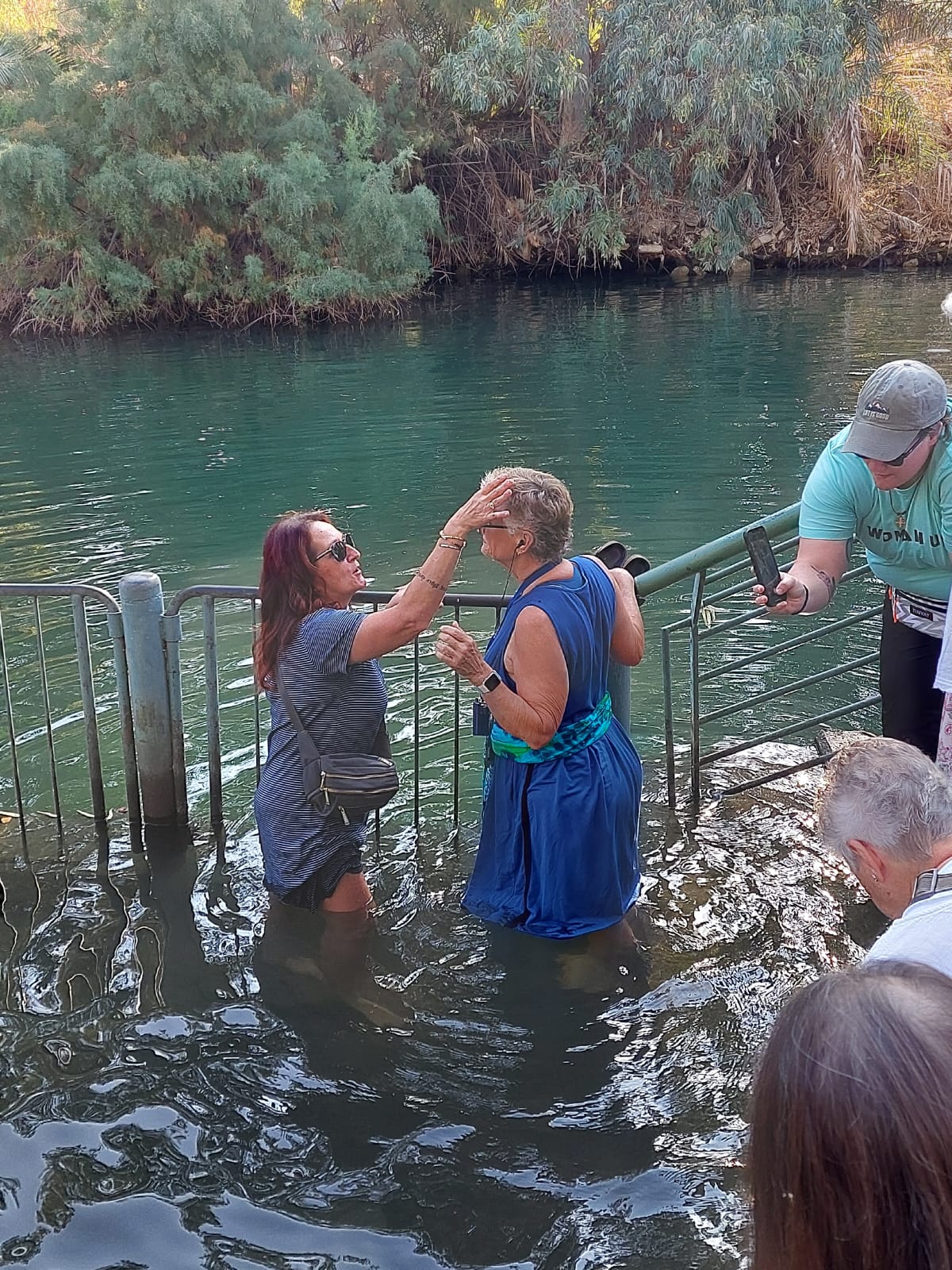
Reaffirming baptismal promises in the Jordan River
Magdala 

Magdala 
Magdala 
 

An amazing day at the Jordan River and at Magdala.

Wednesday, November 2, 2022

Nov 2 2022


 Getting ready to float in the Dead Sea. And from my balcony looking at the water. Spectacular!

Saturday, October 29, 2022

All Saints (transferred) Yr C October 30 2022


All Saints (transferred) Yr C October 30 2022

Daniel 7:1-3,15-18, Psalm 149, Ephesians 1:11-23, Luke 6:20-31


We arrive back at Luke’s story after Jesus has chosen the disciples, and he sets about teaching them everything he can as they embark on their journey to Jerusalem. Jesus comes down from the mountain, stands on the plain, raises his head to look at his disciples, his friends, and begins this teaching. Luke has every intention that any onlookers, including you and I, will overhear what Jesus says.


Jesus says, blessed are you who are poor now, for yours is the kingdom of heaven. Blessed are you who are hungry now, for you will be filled. And immediately the disciple’s ears prick up, your ears prick up. Who’s he really talking to? The disciples are not poor, the disciples are not hungry, we are not poor, we are not hungry. And all of a sudden the disciples know, and we should know too, that this is not about us, it is about people who are poor and hungry. In Luke’s beatitudes it is Jesus who has attitude. You will also notice that these beatitudes are not the same as the beatitudes in Matthew’s gospel. Luke’s seem much more strident, much less spiritual, than Matthew’s. In Luke’s gospel, Jesus is clearly including those who are on the margins, those who are disenfranchised, those who have nothing, those who are blessed.


You see, you remember, near the beginning of Luke’s story, we hear Mary’s song, the Magnificat. This song frames Luke’s gospel, none of this gospel can be read without referring to it.

“My soul proclaims the greatness of the Lord,

my spirit rejoices in God my Savior;

for he has looked with favor on his lowly servant.

From this day all generations will call me blessed:

the Almighty has done great things for me,

and holy is his Name.

He has mercy on those who fear him

in every generation.

He has shown the strength of his arm,

he has scattered the proud in their conceit.

He has cast down the mighty from their thrones,

and has lifted up the lowly.

He has filled the hungry with good things,

and the rich he has sent away empty.


Jesus does indeed speak about those who are rich and powerful being cast down. "Woe to you who are full now, for you will be hungry. "Woe to you who are laughing now, for you will mourn and weep. These are hard words for us, as we sit here many of us have had plenty to eat. But, blessing, according to Jesus, far from being about material abundance, is to enjoy the regard and favor of God. And the God of Israel to whom Jesus bears witness reserves special regard for the poor, the maligned, the downtrodden. This God shows particular favor to those in need. While this may at first seem threatening to those of us who enjoy so much of the world's bounty, it also clarifies our calling to identify and help those in need, and it promises that God stands also with all of us in our moments of loss, distress, and poverty.


And this remains good news, it is good news because Jesus says directly to us, Love your enemies, do good to those who turn their backs on you, give your coat to someone who needs it. The good news here is that the heart of God is full of mercy and compassion, abounding in steadfast love. The good news here is that God loves every one of God’s children, and that God’s dream for us is to act in love.


We read these beatitudes on this All Saints Day, the day we remember the cloud of witnesses, all those who came before us to walk this journey of love, all those who show us what it means to be blessed. Because a saint is an ordinary person like you and me who is made holy, and who is blessed by God.


We too are blessed to be a blessing. We are filled with God’s love, and mercy, and compassion, Yes, we can be saints too. The words we pray at a funeral, “Into your hands, O merciful Savior, we commend your servant. Acknowledge, we humbly beseech you, a sheep of your own fold, a lamb of your own flock, a sinner of your own redeeming. Receive her into the arms of your mercy, into the blessed rest of everlasting peace, and into the glorious company of the saints in light,” remind us that we are numbered in the ranks of those who are sinners made into saints, we are not perfect, but perfectly loved. And we are called specifically to welcome all God’s children, we are called to love our enemies, and we are called to bless those with whom we disagree.


Along with the saints we name today we too are called to bless others with mercy and compassion, with love and forgiveness. And on this day of all saints, we reaffirm our baptismal promises. We remember who and whose we are, we recall our identity as beloved sons and daughters of God. We vow to live our lives from that center, from that identity, God’s beloved. On this day of all saints, we remember, we reaffirm, and we renew our courage and bravery to be witnesses to God's amazing and abundant love.


As we reaffirm our identity as God's beloved, we are renewed for the journey. This community of faithful saints, along with the cloud of witnesses, the saints who have gone before us, we are renewed by hope and blessing for the journey we take together. We call upon each other and God to stand here beside us as we follow Jesus into the world to do the work that we are called to do, and that work is to be agents of God's healing and reconciliation, agents of God’s love in the world. 

And all the saints of God say, Amen. 


Sunday, October 23, 2022

20 Pentecost Yr C Proper 25 October 23 2022


20 Pentecost Yr C Proper 25 October 23 2022

Jeremiah 14:7-10,19-22, Psalm 84:1-6, 2 Timothy 4:6-8,16-18, Luke 18:9-14


We continue in Luke with this parable, no easier than any that have come before it. What is the kingdom of God like? The kingdom of God is like the Pharisee and the tax collector who both pray before God.


The Pharisee stands by himself and says, "thankfully I am not like those other people, I fast, I give a tenth of my income, and I'm just downright good." Or words to that effect. And really, the Pharisee is actually just telling the truth, a Pharisee is righteous before the law, he’s not really a bad guy. He is also doing exactly what is asked of him, he’s giving a tenth of everything he has. But the portrait that the gospel paints is not only of a righteous man before the law, but also of a self-righteous man who looks down on others for not being as good as he.


The tax collector is standing off on his own, beating his breast and lamenting his wretchedness. A tax collector works for the Roman government, and the Roman government is the occupying power. Tax collectors are not really in good favor with the Jewish people. But this tax collector seems to recognize his need for God. And on the pharisee’s terms, a tax collector is not righteous before the law.


Maybe what the Kingdom of God looks like in this parable, is the difference between being self-righteous like the Pharisee, and being humble, like the tax collector. The tax collector shows us that we stand before God and recognize that we are recipients of a profound gift. Recognizing that God is God and we are not, recognizing Love and forgiveness are the key elements of the relationship we are called into.


But, if we jump too quickly to the sentence that finishes this piece of scripture, "all who exalt themselves will be humbled, but all who humble themselves will be exalted," we might think this is easy and straightforward. But parables just cannot be read that way, they are never easy and straightforward, there are always layers of meaning, and even innuendo. Jesus does not teach in easy and straightforward ways.

So, what do we do with the pharisee and the tax collector? You see, as soon as you decide you are humble like the tax collector, you become prideful like the pharisee. So, this isn't about not being righteous or even self-righteous like the pharisee and instead being humble like the tax collector. As soon as we do that, we are in danger of puffing ourselves up with humility.

This story is about God, and God's relationship with us. So, what does this story show us about God? It continues to show us that God's heart’s desire is to be in relationship with us. What gets in the way of that relationship is judging others about their behavior, those thieves, rogues, adulterers or even this wretched tax collector. What gets in the way of that relationship with God is being dishonest with yourself, being self-righteous.

God's heart's desire is to be in relationship with each of us and all of us together. God's heart’s desire is to love us into our true selves. What that means is that we don't have to be perfect before coming into God's presence. That means that we don't have to have our lives all put together before coming into this church. That means that we are imperfect and sinful people. That means that this Pharisee, and the tax collector and all of us who are like him, are equally welcome in God's presence and we are loved by God.

The children’s story Old Turtle and the Broken Truth gets at this nicely. In it, the truth of the universe comes to earth but on its way is broken in two. One half – that we are special and deserve to be loved – gives strength and happiness but over time leads to arrogance and disregard for others. Only when we discover the other half – that so also all others are also special and deserve to be loved – can we live into the peace and goodness of the universe and of God. This is the heart of justification. A word used in this to describe the tax collector, a word whose meaning we have trouble understanding. But justification is the empowering word that frees us from insecurity and despair and then frees us again to share that same good news and love of God with others. And for this reason, recognizing that we are justified has the capacity to provide our central identity and to illumine all our decisions and choices, particularly regarding those around us.

When are you like the Pharisee? We are like the Pharisee when we come to the conclusion that there is nothing we can learn from those with whom we disagree. We are like the Pharisee when we put up a wall around us so thick and so tall that no one and nothing can get in. We are like the Pharisee when we decide that we are right and everyone else is wrong.

When are you like the tax collector? We are like the tax collector when we sit in the lowest seat only because we hope we will be invited into the highest seat. We are like the tax collector when we don't speak up for those who are oppressed because we don't want anyone to know that we are followers of Jesus.

God's heart’s desire is to be in relationship with both the Pharisee and the tax collector. God's heart’s desire is to love us into our true selves. And our true selves are imperfect and perfectly loved. God's invitation to us is into relationship, and that relationship is through prayer, and song, worship and service, and learning God's word. That relationship is through one another, because when one with another, we are Christ for each other. In our lives and in our witness to the love that wins, we are in relationship with God.

As I pondered this passage for the last few days, I wonder about us, here at Trinity. I wonder about how we show people in our community how God's heart’s desire is to be in relationship with each and every person. We, here at Trinity are not perfect. Our worship is not perfect, it's sometimes messy, but everyone is welcome. All of us are not perfect, sometimes we come sad or angry, but we always are forgiven.

You see, the invitation to worship the God who is love is God's invitation, and there are thousands of people who still haven't heard the invitation, or who refuse the invitation. Today I encourage you to invite someone you know into God's love. Invite someone you know to Trinity for a cup of coffee and conversation, and to stay for the community. Invite someone you know to Trinity to experience the God whose heart’s desire is to love them. Invite someone you know to Trinity to find meaning and acceptance for themselves and their children. Invite someone you know to Trinity who is searching and has lost their way.

Invite the Pharisees, invite the tax collectors. You know that here they will find themselves, here they will find the love that wins, here they will be home. It is God's invitation, but you must bear the invitation into the world. Go out into the world, bearing God's invitation to love.

Amen.


All Saints Day, Nov 1 2026, Sts. Martha and Mary, Eagan

All Saints Day, Nov 1 2026,  Sts. Martha and Mary, Eagan Revelation 7:9-17, Psalm 34:1-10, 22, 1 John 3:1-3, Matthew 5:1-12 We have some rea...