Monday, February 21, 2022

Seventh Sunday after the Epiphany Yr C Feb 20 2022


Seventh Sunday after the Epiphany Yr C Feb 20 2022

Genesis 45:3-11, 15, 1 Corinthians 15:35-38,42-50, Luke 6:27-38, Psalm 37:1-12, 41-42


The kingdom that Jesus preached and lived was all about a glorious, uproarious, absurd, generosity. Think about the best thing you can do for the worst person and go ahead and do it. That’s what this continuation of the Sermon on the Plain is all about. We remember what comes immediately before the passage we just heard, we call that the Beatitudes, and we heard all about that last week. This continues Jesus painting the picture of what God’s absurdly abundant love looks like.


The trouble in the text is that it can’t be true. Love your enemies? Do good to people who hate you? Bless people who curse you? Pray for people who treat you badly? If someone hits you on the cheek offer him the other cheek? If someone takes away your coat don’t stop them from taking your shirt?


That is not the way the world works. That is not the way business works, or government. And why would we want it to be that way anyway. Who cares about enemies, who cares about people who hate you, or give you a raw deal, or curse you. Who cares about the people who treat you badly, you want them out of your life! Who cares? This is the cause and effect world we live in. Love deserves love, hate deserves hate, deeds both good and bad should be repaid in kind, force must be returned with force, violence begets violence, and so on and so on. It seems that many people are involved in the unholy work of ripping and shredding our social fabric, through dehumanizing language, racial prejudice, misogyny, and exclusion. Sound bites lead news stories that heap judgment upon judgment, and unless we question, research, and educate ourselves, we are lead to believe that what we read is all fake news and conspiracy anyway. 


But the kingdom that Jesus preached and lived was all about a glorious, uproarious, absurd, generosity. That is the good news that we hear in Luke, even though it makes no sense. Love your enemies, do good to those who hate you, bless those who curse you, pray for those who abuse you. If anyone strikes you on the cheek, offer the other also; and from anyone who takes away your coat do not withhold even your shirt. Do to others as you would have them do to you.


Is this a command or a promise? If it’s a command then it is just one more thing someone has told us and that we’ll be held accountable for and then we’ll likely continue to live in fear and, while we may behave a little better for a time, at least when someone’s watching, ultimately we will be no different.


But if it’s a promise, then we might just imagine that there is another way, a way of love, available to us at this very moment, and see each other as gifts of God and experience the transformation Jesus offers. I believe this is the case, and that other world, that kingdom, that way of love, is right here in front of us, right here for us to participate in.


Because Love itself, when you think about it, makes no sense in a kind of mechanistic view of the universe, or a transactional way to interact. For love, defined most simply, is seeking the good of another above your own. Love is not a means to an end, it is an end unto itself which, in turn, creates morality and justice and all the rest of the things we strive for yet fail to find or manifest without love. Love is not about how you feel, it is about what you do.


So what we do is about the holy work of love. And this kind of work is about building relationships. If people in our community and in our neighborhood are about the unholy work of ripping and shredding our social fabric through dehumanizing language, racial prejudice, misogyny, and exclusion, then we must be about the holy work of building relationships.


And the good news is that is possible because of God’s absurdly abundant love. It is possible because each and every one of us is created in God’s image, each and every one of us has the mark of God’s love upon us. Even those who don’t know it; even those who would not do to others as you would have them do to you. The holy work of love is possible because Jesus is showing us how. Do not judge. Forgive.


And ultimately the place where Jesus shows us about judging and forgiving is on the cross. Jesus says from the cross, forgive them, they do not know what they are doing. It is in that horrifying moment, it is in that place of death, that love wins.


I am reminded of the story of Ruby Bridges. In 1960, young Ruby was six years old, and one of the first children to be bused to an all white school to begin the process of integrating people whose skin colors were different. Ruby was called names, and some wanted to hurt her. Ruby was accompanied by federal marshals to protect her. She would stop on her way to school and on her way home each day to pray, “Please, God, try to forgive those people. Because even if they say those bad things, they don’t know what they’re doing. So you could forgive them. Just like you did those folks a long time ago when they said terrible things about you.”


The kingdom that Jesus preached and lived and died for is all about a glorious, uproarious, absurd, generosity. A generosity that includes all who are created in God’s image, all of God’s beloveds. An absurdly abundant love that includes all and forgives all, loves all. Let us pray it is so. Amen.

Sunday, February 6, 2022

Fifth Sunday after the Epiphany Yr C Feb 6 2022


Fifth Sunday after the Epiphany Yr C Feb 6 2022

Isaiah 6:1-8, [9-13], 1 Corinthians 15:1-11, Luke 5:1-11, Psalm 138


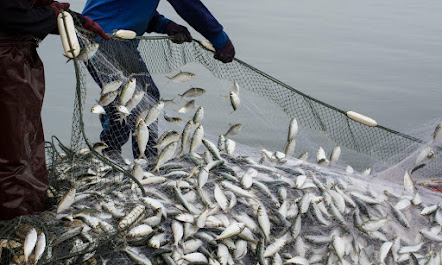
My dad loved to fish. I remember being very small out in the boat with him holding my fishing pole. I don’t remember catching anything, which I think was a good thing because I really didn’t like the worms or the fish. But I’d sit with him in the boat, for hours. Years later my dad finally built his lake cabin, out of concrete blocks of course, because he was a block layer, and he loved fishing in the summer and ice fishing in the winter. In his later years it was catch and release, but I don’t recall too many fish either way. For my dad, fishin was always more about recognizing the wonder of the lake, the cool breeze in the summer, the amazing trees forming the cathedral that is the shore of the lake, and the eerie and beautiful call of the loon.


This fishing story we hear today is about that same kind of recognition and amazement, as much as it is about fish. I think it is about recognizing Jesus and then following. The setting is out beside the lake, where there was a huge crowd that had gathered to listen to Jesus teach, it was such a huge crowd it was pressing in on him. It’s in the morning, the fisherman had come in for the day, after having fished all night, that’s the way fishermen did it on the lake of Gennesaret, they could get their biggest catch in the night. They were cleaning up, washing and repairing their nets. Jesus needed some relief from the crowds, so he asked Simon Peter if he could get into one of the boats and do some teaching from out in the water. When he was finished teaching, he told Simon Peter, the captain of the fishing boat, to put out into deep water and let down his nets.


This is where the story gets funny. Jesus, who is the son of a carpenter, and who we assume to be a carpenter himself, is telling Simon, a well-seasoned fishing boat captain, how to do his job. Jesus is like a city boy telling a farmer how to farm. Jesus is absolutely out of his element; he has no fishing credentials. You can hear Simon rolling his eyes as he tells Jesus that they had been out all night and hadn’t caught anything. And you may hear the sarcasm in his voice as he says, “well, if you say so.” Simon conceded and put the nets out one more time. And when they put their nets out, they caught so many fish that their nets were beginning to break. And then, Simon, the fishing boat captain, the big fish if you will, drops down at Jesus’ knees, and confesses, right there in front of his whole crew, he acknowledges Jesus as Lord. And everyone was amazed.


And Jesus tells those fisherpeople not to be afraid, from now on they will be fishing for people, not fish. How stupid is that. Fishing for people sure won’t pay the bills. So what is this story about? It’s not about how to pay the bills. Simon, James and John, and all the others left the catch of their lives, what they caught that morning probably would have kept them all in food, clothes, and new sandals for the foreseeable future.


Simon recognized that day something amazing. He recognized Jesus. Simon Peter recognized Jesus and was willing to leave life as he knew it, life that was probably not cushy, but comfortable, for something that was completely unknown, for something that would scare him to death.


Jesus introduced to them that day a new way, a new economy if you will. So what does that have to do with us, we’re not fisher people.


You see, we live in an absurdly abundant world. A world where worldly success rests in our power to choose and our power to get. Our world is about an economy of getting, having, possessing. But Jesus’ economy costs us everything. After an absurdly abundant catch that Simon, James and John and the others made that day, what on earth would make them pull their fishing boats up on the beach, leave them with all those fish still in them, and follow this prophet, this Jesus, the one who ate with sinners and women, the one who healed anyone, Jews and Greeks alike, the one who would be tortured and put to death. Wouldn’t they say, wouldn’t you say, do it again? Just do it again Jesus, we can all be rich. Or maybe they would say, no Jesus, we got work to do. But instead, Simon recognizes Jesus, and falls on his knees. And Jesus responds to Simon and the rest with the call to bring in people, not fish. In the midst of the abundance, in the midst of this the wealth right there in their boats, they turn to follow Jesus and the new economy that he has for them.


What on earth would make anyone of us say yes to Jesus’ call of a new life, a new economy? In the midst of the absurdly abundant life many of us live, how do we recognize Jesus in our midst, how do we follow Jesus? People who recognize Jesus are not necessarily holy people, just ordinary people, we are ordinary fisher people and wives and mothers, fathers and children, youth and elders.


Recognizing Jesus in our midst is the call to be fishers of people. Recognizing Jesus is recognizing the truth that God loves us so much, God came into this world as one of us, so that we may love God and one another. God’s love is absurdly abundant. God’s love washes over us, as do the waters of baptism. God’s love nourishes us, as does the bread we break each time we meet together. God’s love is absurdly abundant, as the fish that were caught that day in the boat. How can we not be fishers of people, how can we not spread the Good News, when we know this truth.


But following Jesus is costly. Following Jesus has always been costly, and continues to be costly these days. Following Jesus means we stand up for inclusion. It means we work hard at listening to our stories and our history with open ears and open minds, that’ll get you into trouble. Following Jesus means we stand up for each and every one of God’s creation, and we tell the truth about our own complicity in racism and genderism, and that’ll get you into trouble. Following Jesus means we increase our sphere of influence and advocate for access to health care and fair paying jobs, and that’ll get you into trouble. 


Following Jesus is to speak, and live, and behave in ways that Jesus in our midst is evident. It is to be with the other, as grace and gift and wonder.


It is to go to the grocery store and give thanks for the opportunity to choose, and it is to choose to fill others as well as ourselves. It is to give thanks for the opportunity to be able to afford to buy food, and it is to advocate for those who cannot.


It is to go shopping and give thanks for the opportunity to choose, and it is to give a pair of shoes away for each pair of shoes we have sitting in our closets. It is to work for fair wages for those who make shoes.


It is to give thanks for the opportunity to learn each day, to go to school or work each day, and it is to approach those who are different than us with love and respect, with open arms and open hearts. We live in an absurdly abundant world. Thanks be to God.

Sunday, January 30, 2022

Fourth Sunday after the Epiphany Yr C Jan 30 2022


Fourth Sunday after the Epiphany Yr C Jan 30 2022

Jeremiah 1:4-10, 1 Corinthians 13:1-13, Luke 4:21-30, Psalm 71:1-6


On a Saturday afternoon, when I was in elementary school, all of us would load up the yellow school buses, our moms and maybe our dads, and all the kids, would head downtown Minneapolis for the Shrine Circus. What an adventure, people squished together to get in, people squished together in their seats. The smell of cotton candy wafting through the air, hot dogs, and cracker jacks. All of those light up whirring toys tempting us, calling to us, and our moms saying no. At least my mom saying no. But it's the trapeze that I am imagining today. The men and women climbing all the way to the top of the big top, swinging the swings back and forth. One person on each swing, swinging back and forth. And then the flyer, hands clasped to the swinger, swings back and forth, until it's time to let go and fly. That's it, right there, flying through the air, exhilarating and frightening all at the same time. 


That's the place Jesus puts us. That's where this story puts us. It continues the story we began to hear last week, Jesus takes up the scroll in his neighborhood synagogue, the place he grew up, the place he crawled around on the floor as a kid, the place he played with his friends, the place he learned to read. His friends and his parent's friends in the synagogue were thinking, this is Joseph's son, isn't he a nice boy. And he knows his Bible so well. 


And then as Jesus is reading from the prophet Isaiah, he claims that he himself is in the line of the prophets. He is a prophet like Elijah and Elisha. This is an important theme in Luke’s gospel; the main identifier for Jesus in Luke is as prophet. And no prophet is welcome in their hometown. Just like that the story takes a dramatic shift. The old story had always been told about events in the future, the messiah will come, the messiah will be a political event, and all of a sudden the tense changes from Messiah's fulfillment in the future, to now, this is happening now. It gets really tense. And it surely doesn't look anything like any of them had imagined. 


And that's where we are, like the trapeze flyer, we have left one swing behind, and have not yet grasped the other one. We live in this place of exhilaration and fright all at one time. We live in this presence that Jesus gives us. The past has been, the future is yet, and Jesus pulls us squarely into the present, and claims that God's love and grace are available to you right here and right now. Not only is it available to you, it is available to everyone, God's love knows no bounds.


And the reading from first Corinthians shows us what we are doing while we are flying. We are loving. And if we are not loving, we are falling. 


The good news though, might actually be about the net, the net that is always there under those flyers. Now, you may think the net is there to catch you when you miss the connection, and that is helpful. But I would suggest it's even more than that. I suggest the net is there to help the flyers be bold and courageous, to help us be bold and courageous. Without the net we tend to be timid, and you can't be timid and fly, the net helps us to love boldly and courageously. The net helps us to let go and live the life of love that Jesus invites us to live, not in the past, not in the future, but right now. 


Love is patient and kind, love is not envious or boastful or arrogant or rude. Love does not rejoice in wrongdoing but in the truth. Love bears all things, believes all things, hopes all things, endures all things, Love wins. 


And the net reminds us there is a cost to flying, there is a cost to following Jesus. Because the Word of God is for all people including the poor and the oppressed, the outcast and the sinner, those we love and those we hate, you and me, the Word of God threatened and continues to threaten those who are in positions of power. Jesus tells stories that show God’s grace, available to all, not to just some. Like rain, God's grace falls touching all – Gentiles as well as Jews, insiders as well as outsiders. To speak and act in God’s name sets one apart, and sets one up for ridicule, sets one up to be thrown over the cliff. 


And the net also reminds us that forgiveness is about living boldly and courageously. Loving, loving as first Corinthians encourages us to love, does not mean that we get it perfect or even right. But not loving, not even trying, is to not even live at all. We may miss our mark, but you can't miss if you don't fly, you can't miss if you don't Love. The net reminds us that when we miss, God's forgiveness and grace is there to catch us. 


When they realized what Jesus was saying, they got angry, is this not just Joseph's son? Who does he think he is? They led him to the cliff so that they could hurl him off. Now, in all those Marvel Universe movies I watch, the hero, gets hurled off the cliff, and somehow the hero flies, or is rescued. But Jesus doesn't get rescued in a dramatic sort of way, instead, he passes through the midst of them and goes on his way. And that too is bold and courageous.


Jesus is in our midst, Jesus is fully and completely present with us. Jesus didn't get somehow whisked off the cliff, and Jesus doesn't get whisked off the cross. That's not the way the story goes. After some pain and suffering, Jesus dies on the cross. Pain and suffering are a part of living and loving. The new life that is offered goes through the cross, not around it, and Jesus is not magically whisked off of it or out of it. 


Nor are we. We might fall or fail when we are living and loving boldly and courageously, and as we hit the net there's nothing that guarantees that we don't get hurt, it may even kill us. But that's not the end of the story, because you and I know that Love wins.


The claim that Jesus makes, that God's kingdom is fulfilled in the present, in our presence, is transformational. We are partners with Jesus in kingdom building, and we have our roadmap in Corinthians, "And now faith, hope, and love abide, these three; and the greatest of these is love." And as partners with Jesus we love boldly and courageously. We remember that love is not a way we feel, but that love is what we do. It seems to me, in these days, loving boldly and courageously is hard work. But we've already acknowledged there's no guarantee for easy. This call is to live and do mercy, compassion, and justice. There is so much injustice happening in the world around us. God's love calls us to do it differently. And God's love helps us to fly. Let's fly together. Amen.  

Monday, January 24, 2022

Third Sunday after Epiphany Jan 23 2022


Third Sunday after Epiphany Jan 23 2022

Nehemiah 8:1-3, 5-6, 8-10, 1 Corinthians 12:12-31a, Luke 4:14-21, Psalm 19


After having just spent forty days in the wilderness, on the heels of his own baptism, Jesus returns to his hometown of Galilee in Nazareth. He attends his neighborhood synagogue. Here everyone watched him grow up and knows his family well. As an honored guest who is already gathering a reputation as a great teacher, Jesus is invited to read the Scriptures and to offer an interpretation. Jesus stands up and reads from the scroll of Isaiah the prophet, and says to the people, today this scripture has been fulfilled in your hearing. No wonder they want to hurl him off a cliff, we’ll read all about that next week. 


We have read through the first three chapters of Luke during advent and Christmas, and today we turn to the fourth chapter of Luke. So let’s just take a moment to remind ourselves of where we have been. Jesus was born in a place no king would ever be caught, in stables out behind a nondescript house. The announcement was made to people who would never be invited to the palace, the shepherds. The mother was a young girl, too young really, who ran to her elderly cousin, who recognizes just who it is that Mary carries within her. Jesus was anointed by the Spirit and baptized in the river, and immediately finds himself in the wilderness being tempted by the devil. 


The story really is all wrong, isn’t it? The Messiah, the savior of the world, should be born to a Queen, in a beautiful palace, attended by servants day and night, raised to be King. But that is not the story. The stage is set when we hear Mary’s song, My soul magnifies the Lord, and my spirit rejoices in God my Savior, for he has looked with favor on the lowliness of his servant. He has brought down the powerful from their thrones, and lifted up the lowly; he has filled the hungry with good things, and sent the rich away empty. Mary knows who Jesus is, Elizabeth knows who Jesus is, and even before that, Hannah knows who Jesus is, and in this story we have before us today, Jesus knows who Jesus is. And the powers and principalities have spent the last 2022 years trying to deny it. 


Last week we read the story about the wedding at Cana, in which Jesus, pushed into it by his mother, turned water into wine. In John’s gospel, that was the inauguration of Jesus’ ministry, the first of the signs, and the demonstration that Jesus’ ministry is grace upon grace. 


This story is the inauguration of Jesus’ ministry in Luke, and that ministry is a direct result of all that came before it. And that is important. Right here, at the beginning of his ministry, Jesus tells us clearly what his mission is about. Jesus boldly claims to fulfill the words of Isaiah, who speaks of the Spirit anointing him, sending him, compelling him to bring good news to every one of God’s children who is bound up, pressed down, broken in spirit, impoverished, imprisoned, and desperately hungry for good news. 


Wow, again, no wonder they wanted to hurl Jesus off the cliff, anyone who fears the loss of their privileged position might want to. But do you hear this? This good news is for every one of God’s children. So often people mistakenly believe that this, what we do here in church and the proclamation of the good news is for the already put back together people, or for the better not show anyone I’m falling apart people, or the look at me I’m perfect people. But that’s not what this says. Given Jesus’ rather questionable background and the circumstances of his birth, the people who came to visit when he was born, his association with the devil in the wilderness, and especially his mother’s song about what’s going on, it’s pretty clear that Jesus is here for me, and you, for all of us who are bound up, pressed down, broken, and desperately hungry for good news.


We could sure use some good news. Your worth is not dependent on your status, or your earning power, or the degree to which you have your act together, or your gender, or your grades, or your attraction to others, or how hard you work. The good news, as Jesus proclaims in his hometown synagogue, is that you are released from all that binds you.


And then we take the next step. Because there is an implicit invitation that we are to be part of God’s fulfillment of God’s promises. Today. Tomorrow. And the next day. What we do in response to God’s promise, in response to Jesus’ invitation to be a part of healing and reconciliation, matters. Even when the problems seem so big, so insurmountable. We can make a difference. Even small things matter. 


Many of you know of Howard Thurman’s wonderfully challenging and equally empowering poem “The Work of Christmas”. And, a month beyond our celebration of Jesus’ birth, as we continue in this season to understand the implications of God’s invasion of humanity through the Word made flesh, the 3rd Sunday after the Epiphany seems like just the right time to hear it again. Thurman’s poem, definitely challenging, as it calls us to something that, if taken seriously, is daunting. But it is simultaneously empowering, calling us to something worthwhile and simultaneously also giving us the confidence that we can do it. Which is the way, when you think about it, the Gospel pretty much always works. It’s exactly what Jesus is doing as he inaugurates his own ministry. These words invite us to see God at work in Jesus and through us today. Each day. Every day. For good. Because it matters.


“The Work of Christmas” by Howard Thurman

When the song of the angels is stilled,
when the star in the sky is gone,
when the kings and princes are home,
when the shepherds are back with their flocks,
the work of Christmas begins:
to find the lost,
to heal the broken,
to feed the hungry,
to release the prisoner,
to rebuild the nations,
to bring peace among the people,
to make music in the heart.

Amen.

Second Sunday after the Epiphany Yr C Jan 16 2022


Second Sunday after the Epiphany Yr C Jan 16 2022

Isaiah 62:1-5, 1 Corinthians 12:1-11, John 2:1-11, Psalm 36:5-10


I want you parents, or grandparents, to think back to the day you sent your babies off to school. They had their brand-new backpacks stuffed with everything they needed for the day. You checked the list, you made sure. You put them on the bus, or you sent them out the door to walk to school like I did, not without a little trepidation, anxiousness, and excitement. And you said to them, “you can do it! You’re going to have a great day! I love you.” We do all we can to make sure that they know we trust them, we have confidence in them, and this is the beginning of a new part of their lives. 


Now imagine that’s what is happening in this story. This is the first time Jesus is out there, the very beginning of the work he is called to do, and his mother is there saying to him, “go on, I know you can do this.” She sees something in her son, and it takes her initiative to move Jesus into his ministry. She trusts him and knows this is a new part of his life. 


Running out of wine at weddings, and in ancient Palestine weddings went on for a week, is a major hospitality blunder. And with all that trust in him, Jesus’ mother approaches him to tell him the hosts ran out of wine. What did she see in that moment, what had she seen in her life with him thus far, what had Jesus revealed to her that would cause her to believe such a miracle was possible? How did she know that this was the time for revelation? Clearly this was a time when Mary knew. We can’t look past the humor in this story as well. His response to her, “well mom, that’s not my problem, they should have hired a better wedding planner,” or words to that effect. 


What is happening in this story that follows closely after John’s beginning, the Word became flesh, the light shines, and the identification of Jesus as the Lamb of God, is this: God is revealing God’s whole self, God becoming flesh, the fullness of God into humanity. And when God gets revealed, sometimes we hear joy, delight, surprise. What you see is not always what you get. The full glory of God continues to be revealed. And we might ask, what is God going to do next?


So what does this story show to us about this first sign in John’s gospel? John doesn’t call these miracles, very intentionally they are signs that John uses to point us to something about Jesus, a critical revelation of Jesus. There are seven of them, this, the Wedding at Cana, Healing of the Official’s Son, Healing of a Man Ill for Thirty-eight Years, Feeding of the Five Thousand, Walking on Water, Healing of the Man Blind from Birth, and Raising of Lazarus. Numbers 2-6 are followed by a dialogue in which observers try to make sense of what happened and ending with Jesus’ own interpretation of the sign. However, this first sign, and the Raising of Lazarus are just a bit different. Instead of waiting until after the sign, Jesus talks to them before the sign happens, so that they will not misconstrue the meaning. 


So for this sign, Jesus’ mother calling Jesus to change water into wine, John has already told us about the importance of grace, and shows us grace upon grace. This is a miracle of abundance, and it signals resurrection, and new and abundant life. And in the gospel of John, grace upon grace, abundance, new life, is about abiding in the relationship that bears fruit. Jesus’ mother abides with Jesus, witnessing Jesus’ life and death, and we are to do the same. 


Also, as the mother of Jesus calls out to Jesus to do something about this breach of hospitality, she pushes Jesus out into public, into his public ministry. In so doing, she pushes him out into the course of events that will end in Jesus’ crucifixion. Imagine what that costs her. We see the pain of parenting right here. She could have kept him at home, wrapped him in bubble wrap and denied a hostile world. But she didn’t. Her heart would break over and over again, and now we see the cost of following Jesus, right here. Following Jesus is filled with joy, grace, abundance, pain, heartache… these are the risks of love, this is the cost of love. Love in the flesh. Relationship is revealed in the flesh, lived out in the flesh. The next time we see Jesus’ mother in John’s gospel is at the foot of the cross. 


This is the kind of God we have. Once God starts doing something wonderful, God doesn’t know when to stop. Providing enough wine not for just one toast, but enough to fill six thirty-gallon jars. Enough wine to get everybody in serious trouble. In Mark the first thing Jesus does is to cast out a demon, something rather useful. But here in John, there is nothing useful about this. It is purely and simply grace, joy, and abundance. And this abundance is available to everyone, and it just keeps on getting better. That’s what John has to show us, each story shows God’s grace available to all, each story shows us God’s love and joy, available to all, and that continues on.


Tomorrow we turn to the celebration of Martin Luther King Jr., a faithful witness who points us to the arc of God’s kingdom. Dr. King believed that the justice, equality and freedom of the kingdom was yet to come when he said, “the arc of the moral universe is long, but it bends toward justice.”


You see, John’s gospel shows us that God’s grace just keeps going, and with Jesus, the best is yet to come. God’s kingdom would become real when God’s people participate with Jesus and do their part. For the justice of God comes when God’s people notice and speak up when there is a crisis, like Jesus’s mother did at this wedding. The equality of God comes when God’s people who know Jesus speak up that there’s another way, like Jesus’s mother did at this wedding. The freedom of God comes when God’s people get to work and gather their resources. The abundance of God comes when God’s people do what Jesus says—love your neighbor as yourself, bind up the broken-hearted, free the captive, feed the hungry, clothe the naked, and set at liberty those who are oppressed. This is what being a faithful witness looks like. 


With Jesus the best is yet to come—it was true at the Wedding at Cana, it was true during the Civil Rights movement, and it’s true today as we participate in bringing about God’s reign of peace and love. God calls us to pay attention to the underlying issues of justice in our community and the world, to listen to the lowly rather than powerful, and to trust in God’s abundance for all, knowing that with Jesus the best is yet to come. and that God is not done with us yet, that God still has surprises in store for us, and that God is still empowering us to know and learn and develop and create all manner of things to make this life better. God still wants joy and abundance for us. 


Let us go forth as faithful witness to this sign of grace, abundance, and joy, as partners in the kingdom that is, and the kingdom that is to come. Amen.


Monday, January 10, 2022

The Feast of the Epiphany, transferred Jan 9 2022


The Feast of the Epiphany, transferred Jan 9 2022

Isaiah 60:1-6, Ephesians 3:1-12, Matthew 2:1-12, Psalm 72:1-7,10-14


A New Year dawns, and with it hope and promise, light and love. Even in the midst of this present darkness, more light has already begun to shine, I can see it and I can feel it. "Lift up your eyes and look around...you shall see and be radiant; your heart shall thrill and rejoice, because the abundance of the sea shall be brought to you, the wealth of the nations shall come to you." 


And yet life continues to feel hard, sometimes even scary. The events we are living through seem unbelievable, even unimaginable. I didn’t think our culture could sink much lower than the events of a year ago, but…. 


This story, unique to Matthew, is a story with peculiar characters, with wisdom from outside of the mainstream, gentiles, powerful, politically savvy people. And King Herod who looms large as a despot, for whom power, instead of love, wins, and who is afraid of this baby, a threat to his empire. God’s presence in Jesus is going to upend the powers that be, and thwart Herod’s plans. And yet we are reminded of God’s activity – God’s intervention; these wise men from the east were warned in a dream to go home by another way. 


How does this story, the story of God in the flesh, the manifestation of Christ in the world, change things, change us? And how do we make Christ known in the world? You see, there is so much hope, so much promise, so much light, so much love. God has broken into our world, and continues to break into our world, and walks with us in the flesh. What does that mean?


The story we have before us today, this story of the wise ones from the east who follow the Light to the child born in a barn, helps us to see the cosmic importance of this birth. This birth happened in a particular place at a particular time in the context of a particular tribe, but the arrival of these wise ones from the east shows us that it wasn't just for a particular people at a particular time in a particular tribe. Matthew's intent in telling this story in this way with these characters is to show us that this birth changes the world, the wise ones from the east know that.


God does whatever it takes to reach out to and embrace all people. God announces the birth of the Messiah to shepherds through angels on Christmas, to Magi via a star on Epiphany, and to the political and religious authorities of God’s own people through visitors from the East. From a manger, where a child lies wrapped in bands of cloth, God’s reach, God’s embrace in Jesus, gets bigger and bigger and bigger. Jesus eats with outcasts and sinners. Jesus touches people who are sick and people who live with pain and suffering. Jesus even calls the dead back to life. Ultimately, Jesus draws all people to himself as he is lifted up on the cross. In Jesus, no one is beyond God’s embrace.


God’s radical grace is wondrously frightening. The Light that shines in the darkness, the Love that wins is wondrously frightening. That is what this story is about. God comes to us in wondrously surprising ways. Ways we do not expect. Ways which we would never choose for ourselves. We are changed, we are transformed, the world is turned, and we must go home by another way, a different way, the way of Love. 


Or not, the alternative, of course, is to join Herod in not seeing God’s ever-expanding embrace, or feel threatened by it, and instead giving way to just plain fear: “When King Herod heard this, he was frightened, and all Jerusalem with him”. Herod jealously reached out himself, far enough to violently protect his place and preserve his power.


But I would suggest not being like Herod, and instead of living in fear of what is next, what is new, what could happen, we live in God's embrace, we live in God's light, we live in confidence that Love wins. Instead of living in fear of what the future may bring to us, we live in God's abundant and amazing grace. Instead of holding fast to that which someday we will lose, we get on board with God's mission in the world of healing and reconciliation.


Taking the way of the wise ones from the east, going home by another way, going home by Jesus' way, surely provides a life of adventure, of risk, of surprise. Jesus leads us in a radical route. It takes us through green pastures, and more dangerous waters, it is a route that is filled with wolves and sheep. This is a route that calls us through transformation to wholeness; it is a route on which the adventure is not about you, but about whom we are together, the people on the adventure with us, and it is about how we are related to God. On this route home we are called to be Light bearers. We are called to be Love bearers. We are called to bring God’s Love to dark corners, to mountaintops, to raging waters.


We are called to bring God’s Love to a fragmented society, to a culture that is pulled apart by greed and fear. We are called to bring God’s Love to a world that seems to be moving toward injustice than away. In Bishop Curry’s book, Love is the Way he writes, “Love is God's way, the moral way, but it's also the only thing that works. It's the rare moment where idealism overlaps with pragmatism. People don't think of Jesus as a strategist, but he was a leader who successfully built what was essentially a radical equal rights movement within a brutal empire.”


You see, God’s Love, God’s Power, is the most powerful integrating force in creation. God’s Love moves us from brokenness, from fragmentation, to wholeness, to healing and it is the only way.


How do you bring God’s Love and God’s Light into the world, how do you bring God’s wholeness into your work or your school? It is our call to bring God’s transforming love to those who have not yet seen or felt or known that love. It is our call to bear the Love that wins into the world. What glory will you manifest?


And, it is God's dream that we do this together. After all, it was three kings, not just one, who came to see Jesus. We don't go this life on our own, we journey together, we go home by another way, together.


Again, I leave you with an Epiphany poem, by Madeleine L'Engle.


Unclench your fists

Hold out you hands.

Take mine.

Let us hold each other.

Thus is God’s Glory Manifest.


Amen


First Sunday after Christmas transferred Jan 2 2022


First Sunday after Christmas transferred Jan 2 2022

Isaiah 61:10-62:3, Galatians 3:23-25; 4:4-7, John 1:1-18, Psalm 147 or 147:13-21


John begins at the beginning; in the beginning was the Word. John, very intentionally, places us at the beginning, the first words of the first book of the Holy Scripture that John had on his heart, in the beginning when God created the heavens and the earth. And John very intentionally introduces us to one of the themes that for him shape all of faith, the light that is in the world.


In John 1 from The Message we hear, “The Word was first, the Word present to God, God present to the Word. The Word was God, in readiness for God from day one. Everything was created through him; nothing—not one thing!—came into being without him. What came into existence was Life, and the Life was Light to live by. The Life-Light blazed out of the darkness; the darkness couldn’t put it out.”


John’s beginning parallels Genesis 1. From the Message we hear “God spoke: “Light!” And light appeared. God saw that light was good and separated light from dark. God named the light Day, he named the dark Night. It was evening, it was morning—Day One.”


How do we imagine this wondrous thing that God does? Creation, incarnation, resurrection. Try this. Imagine you are swimming, maybe snorkeling or even SCUBA diving in a beautiful, sun filled ocean. You dive. You dive deep. You dive to the depths of the ocean. It is cold, and dark, and beautiful. You see fish you’ve never seen before, and vegetation, but it is through the darkness of that ocean water. You see only what is in front of your face. Your breath is shallow, not deep and complete. Not only are there beautiful fish, but there are fish that look like monsters. You return to the surface and the sun and warmth and light, but very slowly, because you must having dived so deep. At your return, you see more clearly, breath more deeply.


You may love completely; in ways you could never have imagined before, feeling the warmth of the sunshine all over your body. I think this is what incarnation is like, this is what resurrection is like, this is what life is like. God dives down deep into our dimly lit lives, our lives as we live them in the depths of the ocean. And this is what Jesus does, Jesus swims around and enlightens our underwater vision so we can see and care for all of the teeming creation. And Jesus picks us up off the bottom of the ocean and carries us into that sunshine, into that new life that we inhabit.


Incarnation, resurrection, birthed out of the waters of creation, the waters of baptism, the waters of new life. Bathed in the light that dispels the darkness. For John, there is hope that the smallest source of light might create the possibility of belief. 


And for John, the darkness represents the lack of relationship. God speaks the Word into this world, Jesus dives into our lives for light, for love, for relationship. John calls us to turn around and face the Light, to fall on our knees and be forgiven. And today John calls us to be partners with him in showing the way to the Light.

We are yet in the season of incarnation, God in the flesh meeting us in the flesh. God came to be with us in the flesh not to relieve us of the mess and the muck of this life, but in the flesh God stands by our side, takes our hand, sometimes even carries us, and loves us. And that kind of love changes us, we can't help but be changed. God in the flesh reminds us in our flesh that we don't need to be perfect because we are perfectly loved. We don't need to consume and acquire to possess worth; we are enough just the way we are created. God in the flesh reminds us in our flesh that we don't need to gain attention to earn God's love, God has already loved us into ourselves. 


Incarnation is a mystery, and yet it is not so hard. Incarnation, God in the flesh, is about love in a very real sense, it is about God’s commitment to you and to me to walk this journey with us, or maybe to swim this journey with us, and it is about our commitment to love. Christmas is not about the presents; it is about God’s presence with us, and your presence with those whose path you cross.


Incarnation is about showing up, and showing forth the light that covers all darkness, and the love that wins. I’ve watched you do these things. You show up at the GIFTS men’s shelter to feed people, by providing hot food and by building relationships, you bring food to people who cannot get out of their homes, you are prayer warriors as evidenced by the length of our prayer list. You’ve practiced music and lifted this congregation in singing God’s praises. You’ve made this space beautiful for all of us, and many more, to come and experience the light that is growing stronger. You’ve hosted your own families and friends and given gifts. It’s been both joyful and difficult for many of you.


Love is born into human flesh. We are at the beginning, and we are at the end. But here in the middle, is where love turns us around, turns our world around. Here is our commitment to love as we have been loved.


I leave you with a poem today. Because Madeleine L’engle can always say it better than me.


He did not wait till the world was ready,
till men and nations were at peace.
He came when the Heavens were unsteady,
and prisoners cried out for release.

He did not wait for the perfect time.
He came when the need was deep and great.
He dined with sinners in all their grime,
turned water into wine.

He did not wait till hearts were pure.
In joy he came to a tarnished world of sin and doubt.
To a world like ours, of anguished shame
he came, and his Light would not go out.

He came to a world which did not mesh,
to heal its tangles, shield its scorn.
In the mystery of the Word made Flesh
the Maker of the stars was born.

We cannot wait till the world is sane
to raise our songs with joyful voice,
for to share our grief, to touch our pain,
He came with Love: Rejoice! Rejoice!


Madeleine L’Engle, First Coming, from A Cry Like a Bell


Amen.


Fifteenth Sunday after Pentecost, Proper 18, Yr A, Sept. 6 2026, Sts. Martha and Mary, Eagan MN

Rev. Dr. Kathy Monson Lutes Fifteenth Sunday after Pentecost, Proper 18, Yr A, Sept. 6 2026, Sts. Martha and Mary, Eagan MN Exodus 12:1-14, ...